Last updated on June 13th, 2026 at 02:04 am
Why a pram matters for your newborn
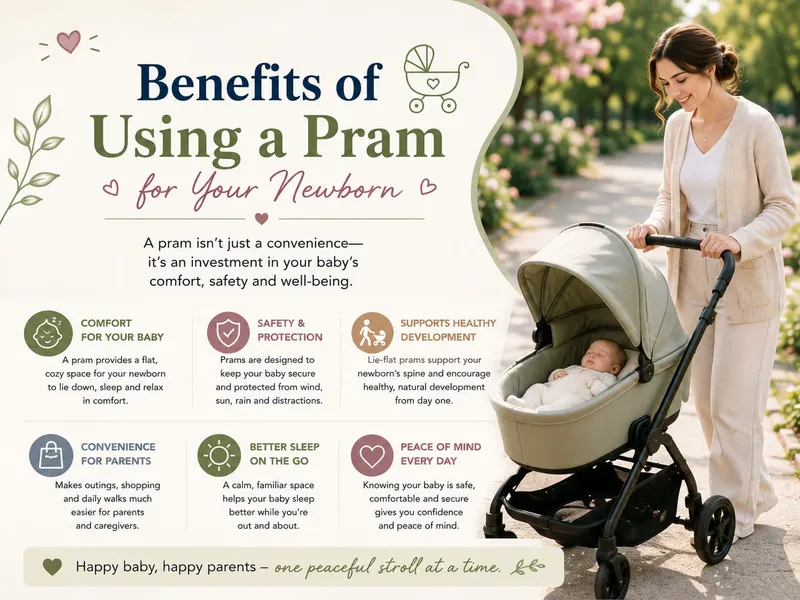
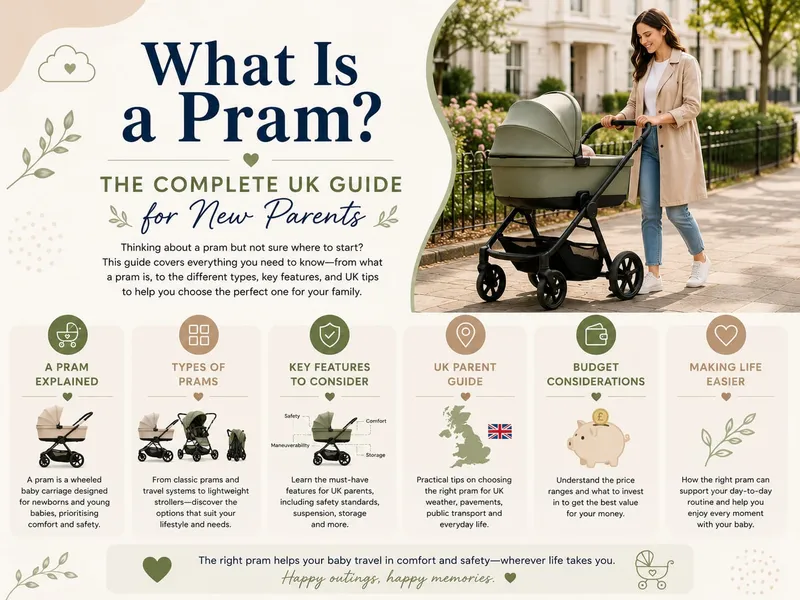
Thinking about your first walks with a newborn? A pram gives your baby a lie-flat, supportive space ideal for tiny necks and developing spines, unlike many upright pushchairs. It’s designed for newborn sleep, protection from weather, and secure positioning so you can move with confidence.
Choosing a pram isn’t just about convenience — it’s about safety and peace of mind. From busy high streets in London to muddy family walks in the Lake District, a good pram helps you get out and about. This article will show how prams support sleep, practical UK-friendly travel, long-term value, and the health and social benefits for both you and your baby. You’ll find options at John Lewis.


Benefits of Baby Stroller Prams: Why You Should Use Them
Safety and baby support: how a pram protects your newborn
Design features that protect tiny bodies
A newborn’s neck, spine and delicate breathing need a flat, well-supported surface. Prams built for newborns give you that: a fully flat carrycot or a lie-flat recline, a firm mattress that doesn’t sag, shaped head support and a secure harness to stop rolling or sliding. When your baby sleeps, that flat position keeps airways open and reduces pressure on the developing spine — exactly what you want for long naps on the move.
Quick safety checks you can do in-store or at home
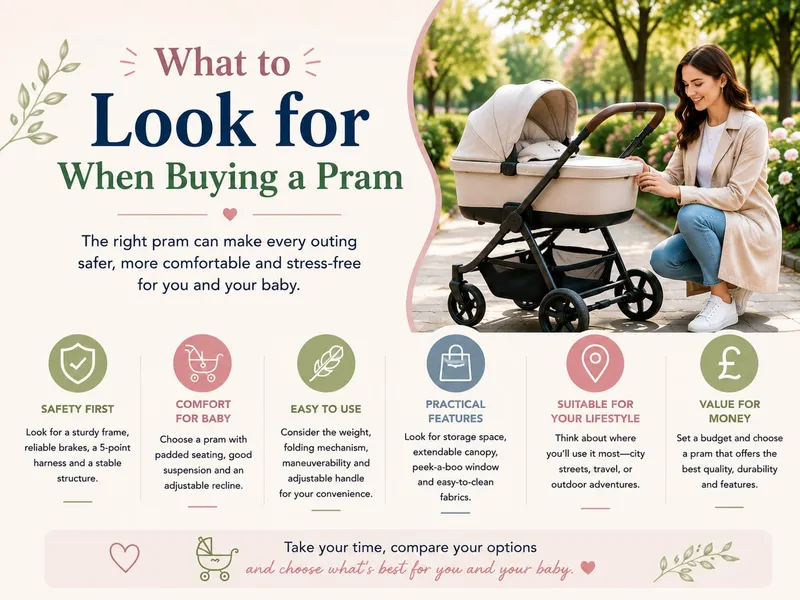
Before you buy or use a pram, run these simple checks so you feel confident it’s safe:
Knowing UK expectations and staying updated
UK pram buyers should look for products made to the retained EN safety standards (for example EN 1888 for pushchairs). Don’t get bogged down in jargon — the practical step is to check the product information or label for compliance and to register your pram with the manufacturer. Registering means you’ll receive safety update emails and recall notices.
Also, if you plan to use a travel system, check compatibility with car seats sold by retailers you know — John Lewis, Mamas & Papas or Argos all list which pushchairs work with which car seats or adapters. Finally, before each outing give a quick visual check: harness threaded correctly, brakes working, wheels secure — a 60‑second routine that keeps every walk peaceful and safe.
Better sleep and comfort: why newborns rest well in prams
Lie-flat carrycots and roomy space
A newborn sleeps best on a flat, well-supported surface — and that’s exactly what a carrycot or fully lie-flat pram gives you. The flat position keeps the spine neutral and gives plenty of room for your baby to stretch, which often means fewer wakeups and less fussiness. For babies who reflux, a lie-flat carrycot can feel more comfortable than being curled in a sling because there’s less pressure on the tummy and no awkward folding at the hips.
Mattress, toppers and breathable layers
Pick a firm, thin mattress or topper that’s explicitly marketed as breathable and safe for newborns. Aim for:
Avoid thick, squishy pads or loose bedding. Instead, use a fitted sleep sack or a light muslin over the baby to keep them warm without adding hazards.
Shade, airflow and weather protection
On sunny UK days adjust the hood to create a shaded, cool spot — many pram hoods now have extendable sun visors and UPF fabrics (useful for summer trips to the seaside or the park). For airflow, use mesh side panels or a breathable carrycot lining so air circulates without drafts. For changeable British weather, keep a compact rain cover and a fine-mesh mosquito net in your basket — both are easy to buy from Argos, John Lewis or specialist baby shops and mean you can protect naptime from drizzle or midges.
Practical nap tips for better outdoor sleep
Many parents find prams create more predictable nap windows than front-facing slings when life gets busy, making a short walk to the park or around the block a realistic nap strategy. Next, let’s look at how that convenience helps you actually get around the UK with ease.
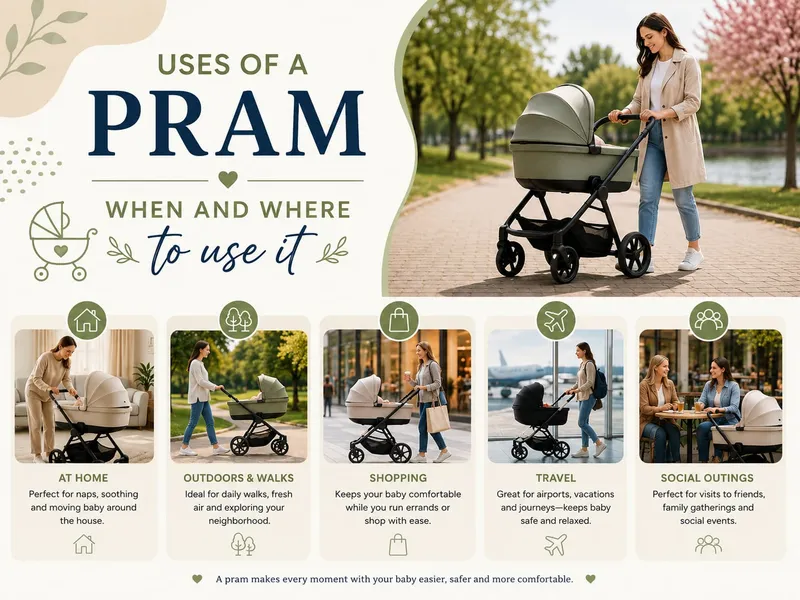
Practical convenience: getting around the UK with ease
Easy manoeuvrability on pavements and busy high streets
City pavements, cobbles in old towns and bustling high streets are a fact of life in the UK. Choose a pram with swivel front wheels that lock for rougher surfaces and a narrow chassis so you can pass shopfronts without squeezing past pedestrians. Practise one-handed steering at home — you’ll thank yourself when juggling a shopping bag and a damp ten-minute tantrum outside Waitrose. Models like the Bugaboo Bee or Silver Cross Wave are often recommended for tight urban routes thanks to their compact footprints.
Buses, trains and the London Underground
Public transport is workable with a pram if you plan a little. On local buses the driver may ask you to fold if space is tight; on most modern double-deckers there’s a priority area but you should be ready to fold if necessary. On National Rail and regional services, ramps and staff assistance are generally available — off-peak travel makes life much easier.
On the London Underground, avoid rush hour, use step-free stations where possible and plan routes with the TfL Journey Planner or CityMapper. If you regularly use the Tube, consider a lightweight umbrella or compact fold buggy for emergency squeezes. Top tips:
Folding, car boots and travel systems
Modern prams often fold quickly with one hand and include carry straps or compact “stand-fold” designs that fit more easily in a car boot. Before you buy, test the fold in your boot — take a pram and a friend to the shop and try it in your car. If you visit family in another town, you’ll appreciate a fold that’s genuinely compact.
Many prams convert into travel systems using compatible infant car seats for short trips (airport runs or nipping to the GP). If you plan to drive, check compatibility and ISOFIX options so changing between pram and car seat is fast.
Shopping, parking and what to pack
Parking a pram outside a shop is common — use visible areas and don’t leave valuables. Some supermarkets and shopping centres have buggy bays or cloakrooms.
Pack the under-seat basket smartly for Tesco or Sainsbury’s runs:
A pram can double as a mobile changing station: keep a wipe-clean mat and all essentials in an organiser, but never leave your baby unattended. When buying, try before you buy at John Lewis or a local baby boutique, compare prices at Argos and Mamas & Papas, and consider preloved finds on Facebook Marketplace, Gumtree or NCT groups — just check condition and cleanliness.
Next, we’ll explore how a pram can adapt as your family grows, offering long-term value and flexibility.
Versatility and value: how a pram grows with your family
Modular systems that keep up
Many modern prams are built as modular travel systems so you’re not buying something short‑lived. You can start with a flat, protective newborn carrycot, swap to a reversible seat for when your baby wants to face you or the world, and add car‑seat adaptors for quick school‑run-style transfers. Brands you’ll see across UK shops like John Lewis, Mamas & Papas, Bugaboo (Fox) and Silver Cross (Wave) emphasise this adaptability — it’s about one chassis doing many jobs.

Useful accessories (tiny additions, big difference)
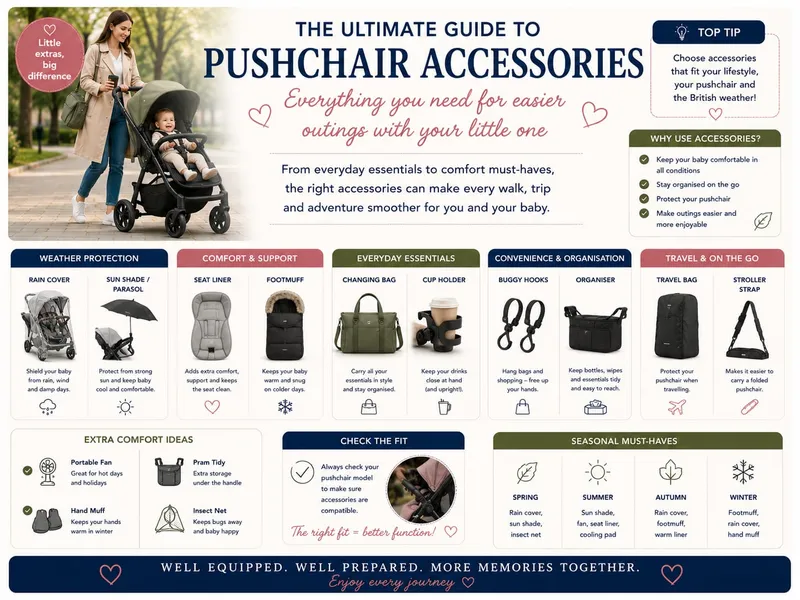
Accessories extend usefulness and comfort. Consider:
These small extras mean you won’t need a completely new setup as needs change.
Adapting for siblings
If you plan more children or have a toddler already, look at:
Parents often tell stories of using one robust pram across two or three children simply by rearranging seats and adding a board.
Space, car boots and practical checks
UK homes and cars vary: narrow hallways, flats with shared lifts and small boots are common. Always test the folded size in your own car (Ford Focus or Vauxhall Astra boots are smaller than many MPVs). Consider measuring your hallway and lift — and try the pram fold in-store if possible.
Cost‑benefit and after‑sales care
A quality pram can be an investment, but you frequently recoup value by reusing it for subsequent children or selling it on the busy UK preloved market (Gumtree, Facebook Marketplace, NCT nearly-new sales). Before buying, check warranty length, spare‑parts availability and whether the brand has UK service centres. Larger retailers (John Lewis, Boots or specialist independents) often offer shop‑based fitting, parts and maintenance — a small fee for peace of mind that can save money long term.
Next you’ll see how pram use supports both your baby’s health and your social life.
Health, social and lifestyle benefits for you and your baby
Fresh air, sunlight and gentle stimulation
Fresh air and a change of scenery do wonders for newborns. Regular, calm walks in a carrycot or fully‑reclined seat provide gentle vestibular stimulation, new sights and soothing motion that can help settling and naps. In the UK, daylight can be patchy — especially between October and March — so aim for short midday outings when possible and follow NHS advice on vitamin D supplements for babies rather than relying on sun exposure alone.

Your recovery and mental health
Walking with a pram is one of the gentlest ways to rebuild fitness after birth. Even a 20–30 minute walk boosts circulation, helps pelvic floor recovery (pair with prescribed postnatal exercises) and releases mood‑lifting endorphins. Many parents find that making a regular pram walk part of the day establishes a calming routine — which can ease anxiety and reduce feelings of isolation. If you’re concerned about postpartum mood, speaking to your GP or health visitor is important.
Meet other parents and find routes
Pram walks are also social. NCT pram‑walks, local Sure Start groups or toddler meetups are great ways to meet parents at a similar stage. Local Facebook groups often share favourite stroller‑friendly routes, tips on muddy paths to avoid and café recommendations. Search “[your town] baby group” or “pram‑walks” on Facebook to find nearby options.
Weatherproofing and finding pram‑friendly places
Plan for British weather and look for venues that make outings easy:
Check council websites or Google Maps photos for access information, and ring ahead to cafés if you’re unsure about steps or space for a pram.
Simple hygiene habits that keep outings comfortable
These small habits extend the life of your pram and keep outings pleasant.
With these health, social and lifestyle perks in mind, you’ll be well placed to choose a pram that supports both baby and you — next, we’ll look at making the right choice for your family.
Making the right choice for you and your newborn
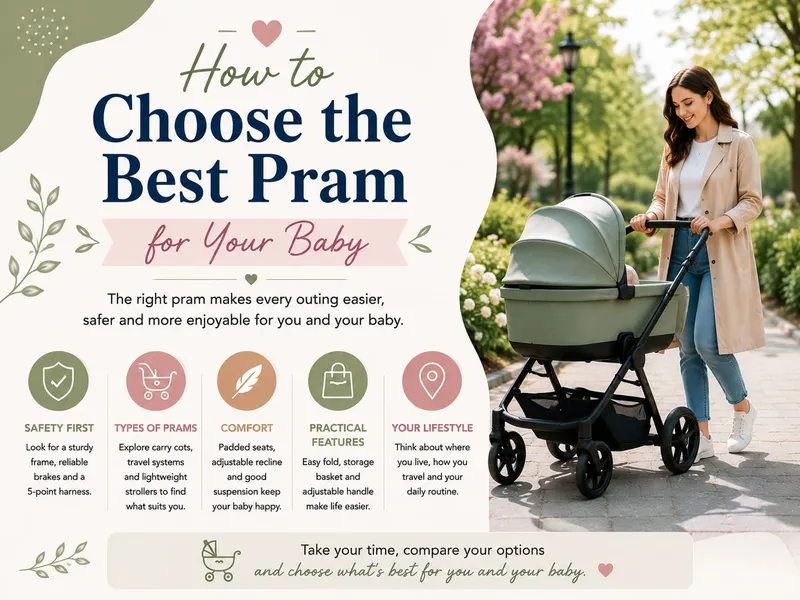
Remember, a good pram keeps your baby safe, supports restful sleep, makes travel around the UK easier, adapts as your family grows and boosts wellbeing for both of you.
Try models in-store at John Lewis, Mamas & Papas or Argos, read UK parent reviews, weigh new versus preloved options on eBay or local Buy and Sell groups, and register your warranty after purchase. Balance budget, lifestyle and transport needs — pushchair sizes for Tube or car boot matter — so you can confidently enjoy those early days with your baby. Happy strolling ahead.

Absolutely loved the lifestyle benefits section. Going on walks became our social time — mums meetups, coffee, fresh air, baby snoozing away in the pushchair. We used the Kinderkraft ESME 2-in-1 and it handled everything from pavements to park paths.
Also worth mentioning: getting outside helped with my mood after the birth. Not just the baby benefits!
If you enjoyed the ESME, you might also like the carrycot add-ons some brands offer for extra sun and rain protection on longer walks.
100% this. Those short walks helped me reset mentally even on bad days. Plus the baby slept better outdoors — a win-win.
Totally! We swapped recommendations for footmuffs and waterproofs at our last meet 🙌
Thanks for sharing, Chloe. The social and mental health benefits for parents are often underrated. Glad you found a setup that supported both practical needs and wellbeing.
Also join local pram walks—great way to make friends and swap tips on gear 👶☕️
Love the point about better sleep — my little one actually napped longer in our Maxi-Cosi Lara2 than in the moses basket at first. The lie-flat is a game changer for those newborn necks. Took it on a few rainy Bristol walks and the hood kept him cosy.
Only thing — the fold is a bit fiddly if you’re juggling a bag and a buggy, but worth it for the comfort imo.
Bristol walks are the best! Glad it worked out. The Lara2 is surprisingly comfy, even compared to bulkier prams.
Glad it helped, Emma — the Lara2’s lie-flat feature gets a lot of praise for that reason. If the fold’s awkward, try practicing at home a few times or using a strap to hold the handle while you fold; it helps when you’re hands-full.
Totally — I had the same with my Maxi-Cosi. Pro tip: keep the rain cover in an outside pocket so you don’t faff around when it starts pouring ☔️
Good section on safety and support. I’m wondering how well the Kinderkraft ESME 3-in-1 supports newborns in the upright seat — do you need the carrycot for proper neck support? Also interested if it’s easy to clean (spit-up city over here).
If spit-up is a major concern, consider also getting a waterproof liner or an extra set of seat covers so you can swap and wash quickly.
Great questions. For newborns it’s safest to use the lie-flat carrycot or the fully reclined position designed for infants — upright seats typically aren’t recommended until the baby has good head control. As for cleaning, many models (including the Kinderkraft range) have removable, washable fabrics — but always check the product care instructions for specific parts.
We had the ESME and used the carrycot until 4-5 months. It was easy to wipe down and the covers came off for machine wash. Saved my sanity with the constant milk explosions 😅
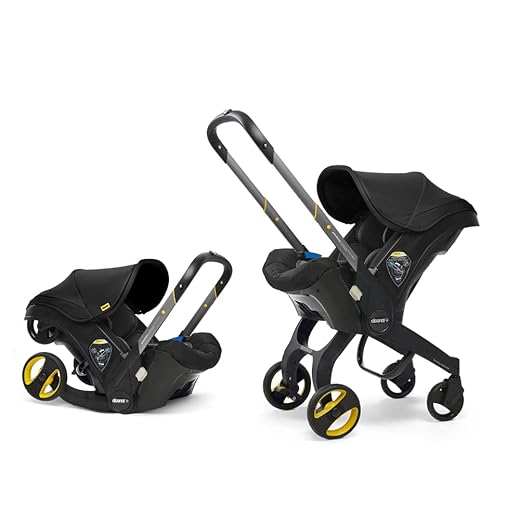
Question — anyone used the Doona+ as a newborn car seat and stroller? Seems brilliant for quick trips but worried about the newborn neck support when used as a stroller for longer walks. Thoughts?
We used Doona for the first few months for nipping into shops and it was a lifesaver. For longer park walks we switched to a proper carrycot. Saved us from buying two separate things though.
Doona+ is excellent for short trips and city runs — it’s very handy for taxi/car to shop transitions. However, for long walks I’d prefer a dedicated lie-flat carrycot or a pram with good recline for newborn spinal support. The Doona is great for convenience but not ideal as a primary stroller for long strolls.
Also check the weight — carrying it in and out of the car can be a bit heavy if you have stairs.
Agree with admin — super handy but not a replace-all. If you live in a flat and mostly do short trips it’s brilliant.
This article nailed the practical convenience part. Living in London, getting around on the Tube with a newborn is stressful — we ended up going for the Graco EZLite because of the compact fold and light weight.
Pros: folds small, easy to pop in the bus bay, doesn’t feel like lugging a small car.
Cons: not as plush as some full-size prams so probably not the best for long newborn naps outdoors.
Still, if you’re on the move a lot the compromise is worth it. 🙂
Haha I remember folding a pram on the escalator like some urban origami. EZLite sounds like the right tool for that circus.
London mum here too — seconding the EZLite for day trips. If you can afford it, get a comfy footmuff for winter, helps loads.
Thanks for sharing your London experience, Priya — that’s exactly the trade-off many parents face. The Graco EZLite is designed for travel and short trips; for longer nap comfort combining it with a proper carrycot or using it alongside a lie-flat option works well.
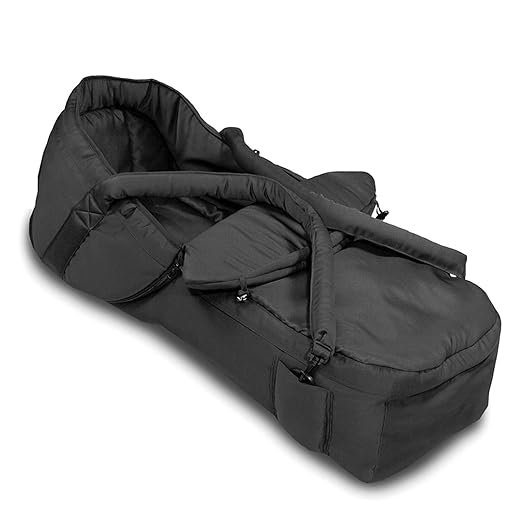
Quick note: some parents pair a lightweight travel stroller like the Graco with a hauck carrycot for newborn support. It’s a slightly bulkier combo but offers the best of both worlds.
We also used a lightweight stroller for the Tube — totally saved our backs. For overnight travels we had a separate carrycot setup at home.
Quick ask — for a first-time parent who wants versatility and easy travel, which would you pick: Kinderkraft ESME 3-in-1 or Maxi-Cosi Lara2? Can’t decide and sleep is optional at this point 😂
Both are solid options. If travel/compact folding is your priority, the Lara2 (depending on the exact model) is often lighter and more compact. If you want a true 3-in-1 that grows with the baby and value carrycot versatility, the Kinderkraft ESME is great. Consider what you use daily (car vs public transport vs long walks) and choose accordingly.
I picked ESME for the carrycot and laterness to convert — really handy. But if you’re in the city and need small folds, go Lara2. Good luck with the sleep situation 😂
I’m trying to be budget-conscious — the hauck 2-in-1 carrycot and footmuff sounds like decent value. Anyone used it long-term? How does it hold up on UK pavements and muddy parks? Also, are spare parts easy to get?
If you expect frequent rough-path use, consider wheel guards or sturdier-tyred models. But for mixed urban/park use the hauck performs well for the price.
Hauck is generally a good value brand. The 2-in-1 carrycot/footmuff combo is versatile and usually durable for urban walks and park paths. For muddy parks, regular cleaning helps; check if the manufacturer sells replacement covers — many do. Also look for local retailers or marketplaces for spare parts if the brand’s service is slow.
Also check if your local pram shop stocks parts — sometimes they have compatible items even if the exact part is discontinued.
We had ours for about a year and it was solid. Wheels did pick up grit from grassy paths but a quick wipe and some lubricant sorted that. Spares were a tad tricky but Amazon and eBay saved the day.
Small gripe: some ‘lightweight’ prams still feel bulky on narrow UK pavements and pushchair ramps. The Graco and Maxi-Cosi claim compact fold, but are they actually small enough for 2-person pavements? Anyone measured them side-by-side?
We found the Graco noticeably narrower. Maxi-Cosi was bulkier but comfier for the baby. Trade-offs…
Measure the boot of your car too — some prams that are narrow on pavements still don’t fit in smaller boots easily.
You’re right — ‘compact’ is relative. The Graco EZLite tends to fold smaller than the Maxi-Cosi Lara2. If pavement width is a daily issue, look for stroller dimensions when folded (width especially). Also consider wheelbase and handle height — narrower frame and swivel front wheels help in tight spots.
Short and sweet: pram = sanity. Our little one slept so much better in the carrycot (we had the Kinderkraft ESME 2-in-1 carrycot to pushchair) — naps during strolls became a lifesaver. The transition to pushchair was smoother than I expected too.
That’s the dream! Naps in public mean parents win the day.
So happy to hear that, Laura. Transitions are easier when the carrycot is comfortable and familiar to the baby — good choice.
Pram vs baby carrier debate — I’ll take my pram, thanks. Can’t imagine carrying a wriggly newborn for hours. The Doona looks like magic tho, lol. Too many options, too little sleep 😂
Both have their place. Carriers are great for bonding and quick errands, prams offer better posture support and hands-free time. Doona sits in the convenience niche — great for quick transitions between car and stroller.
Same here, Tom. Carried for short bursts, pram for long walks. The prank of choosing is real — check what fits your lifestyle before splurging.