Last updated on June 27th, 2026 at 10:25 am
Why a pram matters for you and your baby
You want your baby to be safe, comfortable on pavements, buses and in your car. A pram usually means a bassinet-style lie-flat carrycot for newborns, while a pushchair often refers to an upright seat for older babies. Knowing the difference helps you pick what suits your routine.
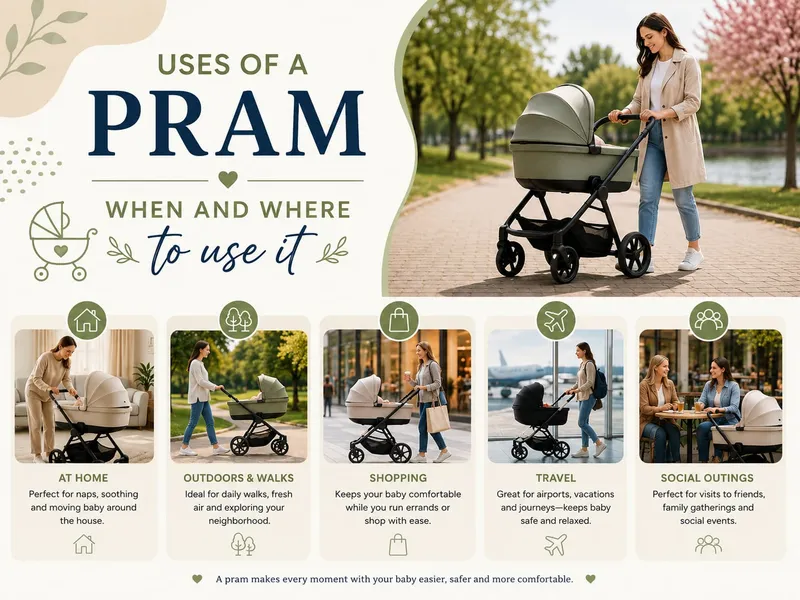
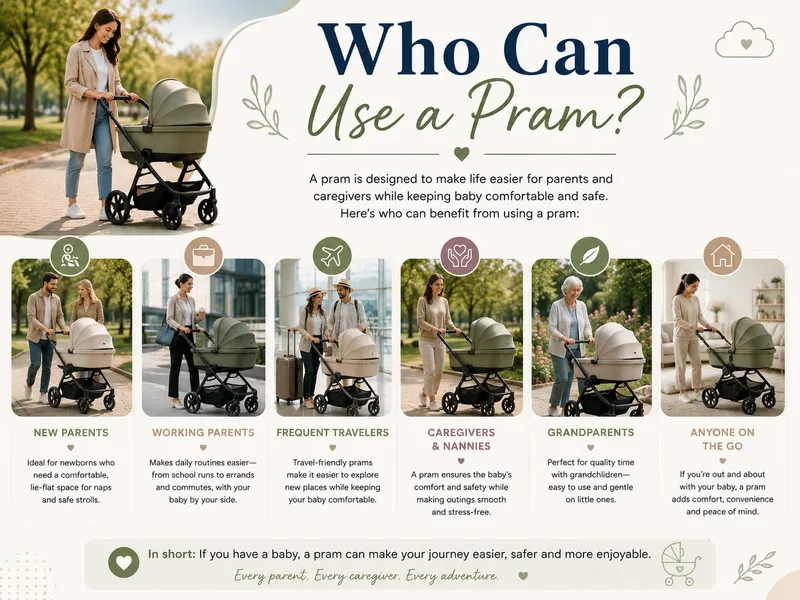
Choosing the right pram makes days out easier, whether on narrow London pavements or country walks. This guide gives a quick overview to expect.


Smart Tips for Choosing the Right Pram
Pram, pushchair or travel system: understanding the terms
What people usually mean
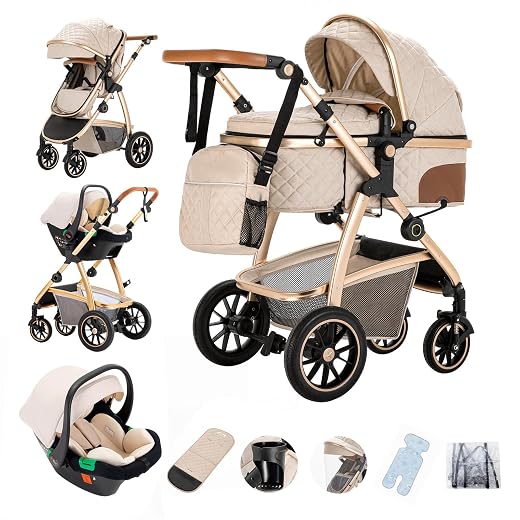
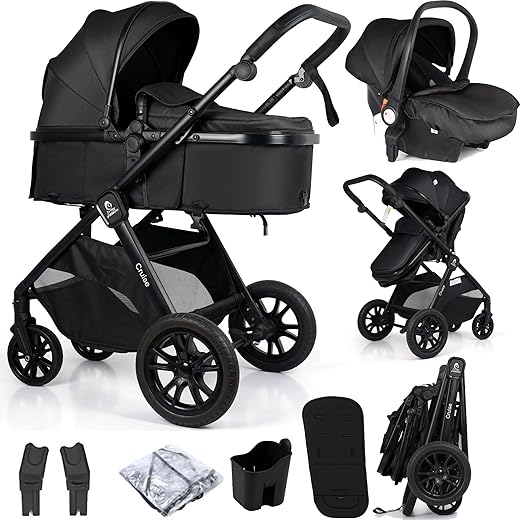
In the UK, “pram” commonly means a lie‑flat carrycot for newborns; “pushchair” tends to mean a forward‑ or parent‑facing seat for older babies and toddlers. A “travel system” bundles a pushchair chassis plus an infant car seat that clicks on and off — handy if you want to move baby from car to pavement without waking them.
Practical differences that matter to you
How shops label them
John Lewis and Argos usually mark products clearly: “pram”, “pushchair”, “travel system” or “3‑in‑1”. Specialist baby shops may use brand names (Silver Cross, Nuna) and explain features — useful if you want personalised advice or to try a fold in store.
Quick shopping tips
Next, you’ll learn about the different types of prams and when each is best for your family.
Types of prams and when to choose them
Classic carrycot prams
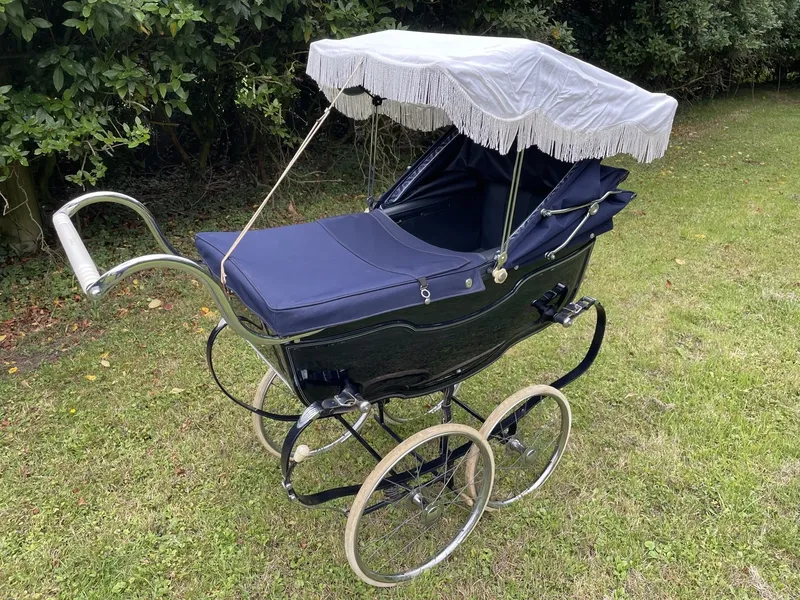
Think traditional, luxurious lie‑flat carrycots — Silver Cross Balmoral is a good example. Choose this if you want a cosy, mattress‑style bed for long naps and smoother suspension for cobbles and uneven country paths.
Hybrid / modular prams
Modular systems (e.g., iCandy Peach) let you swap carrycot, seat and car‑seat adaptors. Great if you want one chassis that grows with baby and handles school runs one minute, airport travel the next.
Lightweight compact prams
Models like the Bugaboo Ant or Baby Jogger City Mini suit daily commutes and tight kerbs. Pick these if you use the Tube, buses, or have limited car‑boot space.
Twin and tandem options
For twins or close‑age siblings, decide side‑by‑side (roomy) versus tandem (narrower). Tandems often fit narrow pavements and shop aisles better; side‑by‑side is quicker for two awake toddlers.
Next you’ll look at the safety, comfort and practical features to prioritise when comparing these styles.
Key features to look for: safety, comfort and practicality
Safety first
In the UK you should check compliance with EN/BS standards — look for EN 1888 (pushchairs/prams) and any British Standards or retailer safety checks. Key safety items:
Comfort and seating
Look for seats that recline fully for naps, or a true lie‑flat carrycot for newborns. Reversible seats are handy so baby can face you on the busy pavement or face out on leafy walks. Check hood size and ventilation: larger canopies with SPF are brilliant for summer park trips.
Wheels, suspension and brakes
Choose wheel types to match your routine: foam or air‑filled tyres with suspension handle cobbles and gravel better. Test the brakes — push a loaded pushchair up a slight UK kerb or hill in the shop car park to feel if the park brake holds.
Practicality — everyday tests
Before you buy, try these quick checks in store:
Extras worth the price: rain cover, good harness pads, and a sturdy travel bag; avoid gimmicks you won’t use daily.
Choosing for newborns, premature babies and twins
Newborns: flat, firm and breathable
For the first months your baby needs a true lie‑flat surface. That means a certified carrycot or a seat that reclines fully flat with a firm, well‑fitting mattress. In practice, look for:
Premature or medically vulnerable babies
If your baby was born early or has medical needs, talk to your health visitor or paediatrician before buying. They can advise on prone positioning, oxygen tubing, or hospital-transfer requirements. Ask manufacturers or shops about:
Twins and siblings: side‑by‑side vs tandem
Decide based on your daily routes. Side‑by‑side is sociable but wider; tandem is narrower and easier through UK shop aisles and older terraced-house doors. Practical checks:
Accessories, car-seat compatibility and where to buy in the UK
Accessories that make a pram a travel system
A few well-chosen extras turn a pram into everyday magic in British weather. Useful items include:
Try brands in store to test fit and fabric feel; a cosy footmuff can make a winter walk feel like a warm hug.
Car-seat compatibility: how to check
To use a travel system safely check:
Where to buy in the UK (new and second‑hand)
High‑street: John Lewis, Mamas & Papas and Argos for try-before-you-buy.
Specialist retailers and brand showrooms (Silver Cross, iCandy) for premium fittings.
Online: Amazon UK, Pramworld and manufacturer sites often have wider stock.
Second‑hand: eBay, Facebook Marketplace, Gumtree — check for recalls, clean linings, intact harnesses and ask for receipts or manuals before you buy.
Next, you’ll learn how to budget, maintain and safely buy second‑hand prams.
Budgeting, maintenance and buying second-hand
Budgeting smartly
Decide your must-haves first: spend on a strong chassis and reliable brakes (brands like Silver Cross Wave or iCandy Peach are built to last) and on a safe, well‑fitting harness or carrycot for newborns. Save on extras—aftermarket footmuffs, cup holders and many adapters are inexpensive. Lightweight umbrella buggies (e.g., Mountain Buggy Nano, Baby Jogger City Mini) give great value for travel.
Maintenance and seasonal care
Keep your pram ready for UK weather with simple routines:
Buying second‑hand (or hiring)
When buying used inspect frame for cracks, wheel wear, brake function, harness integrity and cleanliness of the carrycot. Ask for manuals, proof of purchase and check the model against UK recall lists. Safe sources: Gumtree, Facebook Marketplace, Preloved, eBay and nearly‑new shops (Nearly New Baby or local NCT sales). Consider hiring or borrowing for short-term needs or holidays—cheaper and stress‑free if you only need a pram briefly.
Next, you’ll pull everything together to choose the right pram for your family.
Making the right pram choice for your family
Choosing a pram is about matching your daily life to safety, comfort and practicality for UK streets and travel.
Try models in person at John Lewis or Argos, ask your health visitor, then care for your pram and enjoy freedom.

Quick question: does the Cruise 3-in-1 i-Size Travel System come with a decent raincover, or should I buy one separately? UK weather is brutal 😅
I bought a universal raincover and it fits fine. Cheaper than buying a replacement from the manufacturer.
Some Cruise packages include a raincover, but not all. The ‘Accessories’ section recommends checking the box contents before buying; if there’s no cover, look for universal raincovers or brand-specific ones to ensure a good fit.
Question from a mum of a preemie: the article mentions choosing for premature babies — anyone used the Gcarebb 3-in-1 Travel Pram with a very small newborn? I’m worried about head/neck support and whether the bassinet is deep enough.
For premature babies, the guide recommends consulting your neonatal team first. Not all bassinets provide the same support; look for specialist newborn inserts and a flat, firm surface. If in doubt, choose a pram with a lie-flat seat and good head support — the article lists criteria to compare models.
We had a late-preemie and used a travel system with a proper bassinet insert. Talk to your health visitor — they can point you to models other parents used locally.
Really useful guide — thanks! I was completely lost between “pram”, “pushchair” and “travel system” before reading this. The section on car-seat compatibility was gold. I’m leaning towards the Cruise 3-in-1 i-Size Travel System for peace of mind (i-Size compliance seems handy for safety checks in the UK).
One question: has anyone used the Ickle Bubba Car Seat Adapters with the Cruise? Are they straightforward to click in and out when you’re juggling bags and a sleepy baby? Also, any tips on folding with one hand would be amazing 🙏
Glad it helped, Lucy! The article points out that compatibility varies by brand — Ickle Bubba adapters are generally made for a few stroller frames, so double-check the Cruise model number. For one-handed folding, look for strollers marketed as ‘compact’ or ‘one-hand fold’ like the Graco EZLite; practice at home without the baby until it feels natural.
I’ve used adapters before — they click in fine but get a bit stiff in cold weather. Definitely test in-store if you can. Also, a buggy board for older siblings is a life-saver when carrying bags 😂
I tried the Ickle Bubba adapters with a different i-Size car seat. Worked well, but keep wipes handy — the connectors collect crumbs surprisingly fast.
Short and practical — comparing the Gcarebb 3-in-1 Travel Pram and the Graco EZLite for commuters: go EZLite for trains/buses (lighter, compact), go Gcarebb if you want full travel system features and don’t mind the heft. UK train journeys made me appreciate the compact fold more than I thought I would.
Agree — I swapped to a compact stroller after a few peak-hour commutes. Saved so much stress.
Also check quick-release wheels if you’re lifting a pram into train luggage racks — makes life easier.
If you switch between car and public transport often, a travel system with easy car-seat click-ins can be a middle ground.
Nice summary, Ben. The article’s ‘Choosing for newborns’ and ‘Key features’ sections recommend matching daily routines (commute vs long walks) to pram capabilities — sounds like you made the right call.
Tiny but important: how hygienic is the Rotatable Baby Bottle Cleaning Brush Set for premature babies? We were told to be extra careful and sterilise everything. Does that brush set hold up to regular steriliser use?
Good question. The article suggests checking product material and cleaning instructions. Many brush sets are designed to withstand boiling or steriliser solutions but confirm the product listing. For preemies, follow neonatal unit guidance and sterilise per their recommendations.
I used a brush set and sterilised plastic parts only — silicone handles sometimes warped in boiling water. Check the manufacturer’s care instructions before sterilising.
Confession: I almost bought every accessory in the guide 😂 Bottle brush, raincovers, blankets, adapters… It’s a slippery slope. The budgeting tips saved me from going full Amazon-cart madness.
Also, pro tip — label all little bits (adapters, raincovers) if you go to nurseries or grandparents’ houses. They mysteriously disappear otherwise.
Also join local parenting groups — people often share or sell accessories cheaply.
I put coloured zip ties on my stroller bits. Ugly but effective 😂
Ha — glad the budgeting section helped! Labeling is a genius idea. The ‘Where to buy in the UK’ part suggests local retailers for spare parts if something goes missing.
I appreciate the thoroughness, but a word of caution: the guide could spell out the weight issue more. Some 3-in-1s (looking at you, heavier travel systems) are brilliant for newborns but impossible to lift into a car boot alone.
The Graco EZLite Lightweight Compact Travel Stroller sounds like the opposite end of the spectrum — lightweight but maybe less sturdy on gravel. Balance matters.
If you use a hatchback, measure boot space with a folded pram. EZLite types are great for trains/buses in the UK.
Totally this. I bought a heavy all-terrain pram and my back hated me. Switched to a lighter stroller for errands and kept the heavier one for long walks.
Also check the wheel suspension if you walk a lot — lightweight doesn’t always mean bumpy rides for baby, but you lose some shock absorption.
Good point, David. We added a ‘budgeting and maintenance’ note about realistic handling — test lifting and closing weight in-store. The ‘Key features’ section does encourage checking weight limits and fold dimensions for daily use.
Long post from me — this guide arrived at the right time.
We’re expecting twins and were overwhelmed by choices. The article’s twin section helped narrow things down: tandem vs side-by-side, and the pros/cons for car boots and narrow streets. We ended up leaning towards the Graco Stadium Duo Tandem Double Pushchair because we need a narrow option that fits through our local shops.
Safety and comfort were my top priorities. I also appreciated the maintenance checklist and the reminder about checking harnesses and tyres before every walk. Emotional bit: choosing the right pram felt like choosing the first car for our little team — a big step! 💙
Congratulations, Emily — and great to hear the twin section was helpful. Tandems are often a good compromise for narrow spaces. Remember to factor in car-seat compatibility if you want to use infant carriers, and practice folding the pram with both seats occupied if possible.
Huge congrats! For twin parents: get a bag that clips to the handle — life-saver when both hands are full.
Also consider double raincovers and footmuff compatibility. Twins mean double the kit, sadly.
Great read! Quick Q: We live in an old flat with super narrow doorways — anyone tried the Graco Stadium Duo Tandem Double Pushchair in tight spaces? I’d love something that fits through standard UK doors and still handles two kids without becoming a small car.
The Stadium Duo is long but not too wide. I measured it before buying — think about aisle widths and whether you need to lift it over curbs. Tandems can be surprisingly nimble if the front wheel swivels.
Good point, Sam. The article’s ‘Types of prams’ section suggests measuring doorways and checking folded dimensions on manufacturers’ pages. Tandems are narrower than side-by-side doubles, but confirm folded width and handle height for staircases.
If width is the thing, a tandem is your friend. But if you use lots of public transport, check weight — some doubles are beasts. Graco Stadium Duo is okay, but test it in the station if you can.
Loved the section on accessories. I didn’t realise a simple Rotatable Baby Bottle Cleaning Brush Set could save so much time — it really makes cleaning bottles less grim 😂
Also, top tip: if you’re buying a travel system like the Gcarebb 3-in-1 or the 3-in-1 Baby Buggy Pram Travel System, check whether the bassinet is suitable for overnight sleeping (some are only for daytime naps).
Haha the bottle brush is underrated. Also, consider a dedicated drying rack to avoid damp smells.
Agree about the brush set — also use a small bottle of sterilising solution occasionally. And yes, many travel-system bassinets are day-nap only, so read the fine print!
Great tip, Hannah. The article notes that not all bassinets meet safety standards for overnight sleep — always check the product specs and look for a full UK safety approval if you plan to use it overnight.
Thanks for the heads-up about buying second-hand. I’m trying to keep costs down and the article’s maintenance checklist was very helpful. Two things I’m unsure about:
1) How strictly should I follow recalls lists? If a pram has a recalled part that’s been replaced, is that ok?
2) Anyone had luck fitting an Ickle Bubba adapter on an older stroller frame?
Recalls are serious: only accept a second-hand pram if you have paperwork proving the recall fix was completed or the manufacturer confirms it’s safe. For adapters, older frames may not have compatible attachment points — check with both adapter and stroller brands before buying.
I bought a hand-me-down once and later found a recall online — had to stop using it immediately. Definitely get serial numbers and check gov.uk recall listings. Better safe than sorry.
Buying second-hand? Do this: check for recalls, inspect the frame for cracks, test the brake, and most important — fold and unfold it several times to make sure nothing sticks. I once bought a ‘mint’ pram that jammed after a week 🙄 Also, check compatibility for car seats (Ickle Bubba adapters are lifesavers if they fit).
ps: don’t forget to ask for receipts or age of the pram. If it’s ancient, walk away. 😬
Great checklist, Chloe. We included many of those points in the ‘Buying second-hand’ section. Receipts/serial numbers and visible evidence of maintenance are key — if in doubt, the small cost of a new safety part is worth peace of mind.
Totally — brakes and harnesses are what I always focus on.
If the seller won’t let you test fold, that’s a red flag. Walk away or ask for a video demo.
Very practical guide for UK buyers. A few thoughts from someone who tested several in shops:
– Try before you buy. UK pavements, bus steps and cobbles are a different game to showroom floors.
– Buying used saved us a ton, but we insisted on service history and receipts.
– If you live near a big retailer, use their showroom to test folding, then look online for deals.
Also, anyone had experience fitting the Rotatable Baby Bottle Cleaning Brush Set into small kitchen drawers? I have tiny space!
If you buy Amazon, check dimensions — some sets come in a bucket that doubles as storage.
I store mine in a tall mug on a shelf. Not elegant but works 😂
I zip-tied a small loop on the brush and hang it behind the sink. Space saved!
I keep mine in a slim hanging caddy inside a cupboard door — saves drawer space and dries well.
Excellent practical tips, Zoe. The article encourages in-person testing for exactly those reasons. As for the brush set, some are compact — check dimensions and look for collapsible handles if space is tight.