Last updated on June 13th, 2026 at 02:03 am
Why choosing the right pram matters
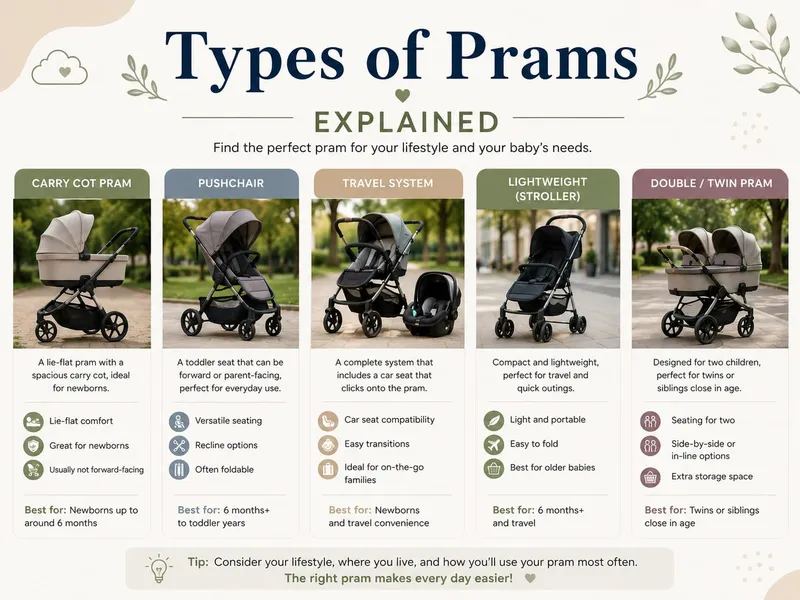
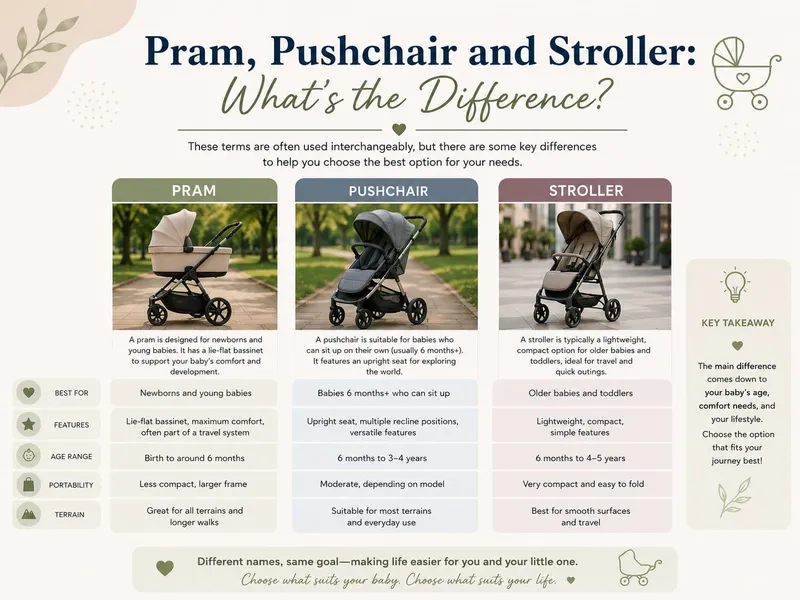
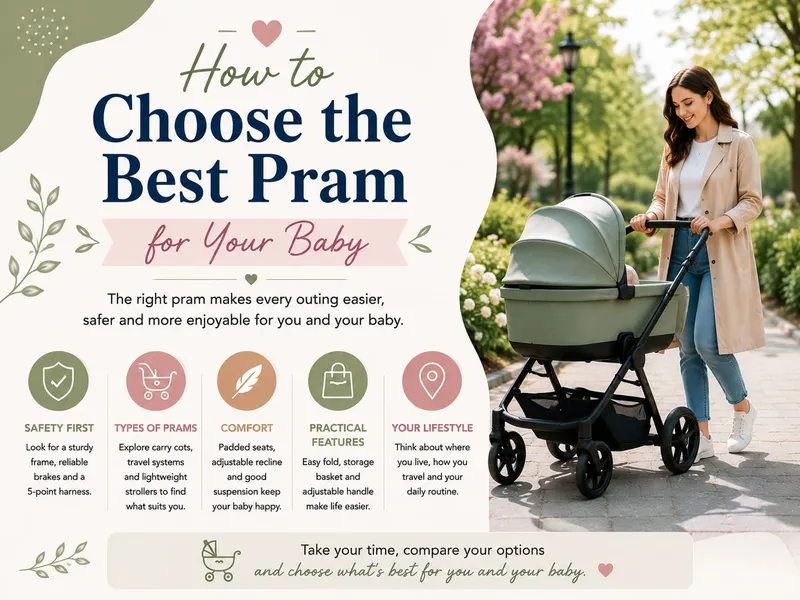
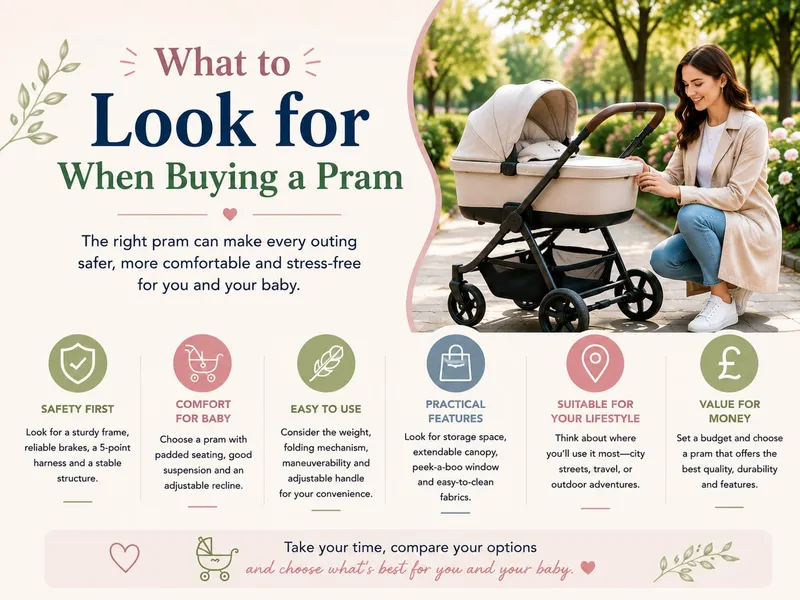
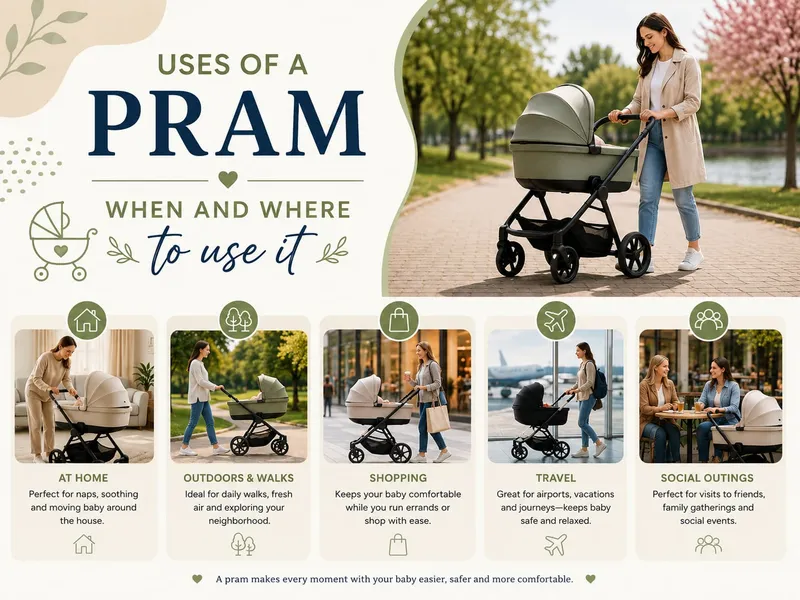
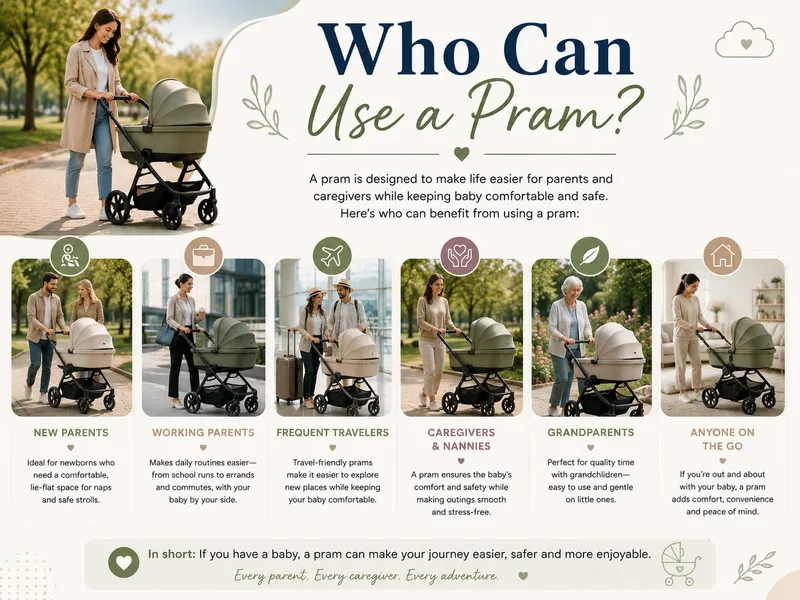
You want a pram that fits your life — whether you live in a London flat, a suburban semidetached or near muddy Cotswold paths. Choice is about more than looks: safety, baby comfort, ease of use and how well it copes with UK streets, buses, trains and rainy weather matter every day.
Think about where you shop and service it — from John Lewis or Mamas & Papas to independents. The right pram makes trips easier, keeps your baby cosy and saves you time and stress.


Bassinet vs Pramette vs Newborn Recline: Which Stroller Is Best for Your Baby?
Full-size prams: comfort and newborn-ready features
What sets full-size prams apart
Full-size prams prioritise a smooth, luxurious ride for newborns: roomy carrycots with flat lie-back mattresses, superior suspension and larger wheels that soak up bumps. Brands you’ll often see in the UK — Silver Cross, iCandy and Mamas & Papas — focus on newborn comfort and weather protection (deep hoods, raincovers and cosy liners).
How they cope with UK streets
Big wheels and good suspension make cobbled high streets, suburban pavements and muddy village paths feel less bumpy for baby. Air-filled or high-quality foam tyres perform best off kerbs; test pushability in-store or on a pavement outside the shop.
Practical buying tips: fold, boot and day-to-day use
Before you buy, try these quick checks:
If you value comfort and long-term newborn support, a full-size pram can be worth the bulk — next, we’ll look at the lighter options for busy city life.
Lightweight and umbrella prams: convenience for everyday city life
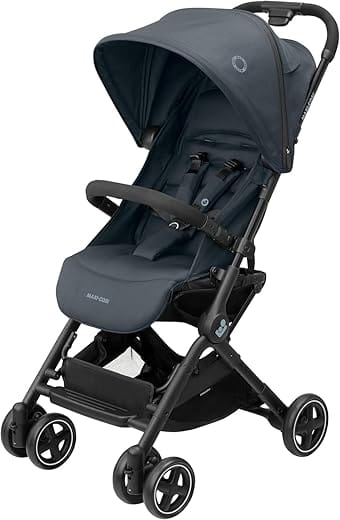
If you spend most of your time on buses, the Tube or busy High Streets, a lightweight or umbrella pram can make life noticeably easier. They’re quick to fold, simple to carry and much less of a faff when you’re darting between shops or popping into a café — but remember the trade-offs: slimmer padding, smaller wheels and fewer newborn-friendly lie-flat options unless you add a cocoon or car‑seat adapter.
What to look for on UK commutes
Models that work well
Where to try and buy in the UK
Try folding demos at John Lewis, Argos or local specialist boutiques so you can test lifts, bus steps and café spaces firsthand — it’s the best way to know what will fit your everyday routes.
Travel systems and car-seat compatibility: seamless trips with baby
What a travel system gives you
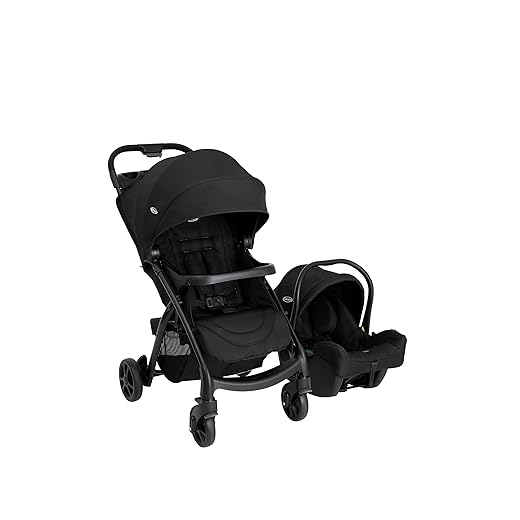
A travel system pairs a pram chassis with a matching infant car seat so you can move a sleeping baby from car to pushchair without waking them. It’s ideal for short trips, grandparents’ houses or when you want minimal handling between car and buggy.
Safety essentials to check
How to test compatibility and everyday use
Next, we’ll look at sturdier options for country walks and running with baby.
All-terrain and jogger prams: for countryside walks and active families
If you love Cotswolds walks, muddy footpaths or keeping up with Parkrun, an all‑terrain or jogging pram is built for rough ground and speed. You’ll want robust tyres, decent suspension and reliable braking so your baby rides smoothly while you stay in control.
Wheels and suspension
Air‑filled tyres give the best shock absorption on rutted bridleways and shingle promenades, but you’ll need a pump and puncture kit. Foam or puncture‑proof tyres are low‑maintenance and lighter, though firmer over roots and stones. Look for adjustable suspension so you can tune the ride for newborns or toddlers.
Brakes, harnesses and on‑trail safety
Manoeuvrability vs portability
Three‑wheel frames turn and track well off‑road; four‑wheel models feel steadier on pavements. Expect heavier weight and a bigger folded size — try folding in your boot before committing.
Where to try them
Book demos at local pram specialists, outdoor retailers like Cotswold Outdoor or test meet‑ups in parks to feel how a model handles real terrain. Next, we’ll explore options when you need two seats or a growing family setup.
Double, twin and convertible prams: solutions for siblings and growing families
Layout: side‑by‑side vs tandem
Side‑by‑side (e.g. Bugaboo Donkey) gives equal space and easy interaction, but can be wide for narrow High Street shops. Tandem (one seat behind the other) tracks better on pavements and through doorways but can be long. Convertible models like the UPPAbaby Vista let you start single and add a second seat later — great if you aren’t sure yet.

Practical measurements: doors, buses and boots
Measure three things before buying:
Weight limits, folding and storage
Where to buy and second‑hand options
Try John Lewis, Mamas & Papas or specialist pram shops for demos. If budget‑conscious, search Facebook Marketplace, Gumtree, eBay or local buy/sell groups, and favour listings with service history or a short warranty from reputable pre‑owned dealers.
How to choose: practical buying tips, shops and aftercare in the UK
Trial checklist: what to test in-store
When you try a pram, run this quick checklist:
Questions to ask retailers
Ask John Lewis, Mamas & Papas, independent shops or online sellers:
Budgeting, second‑hand and warranties
Expect new prams from ~£150 (basic) to £1,000+ (premium). A well‑maintained second‑hand pram can be smart—prefer low‑mileage, smoke‑free examples with receipts. UK brands often offer 1–3 year warranties; ask about paid servicing and authorised repairers.
Maintenance, storage & extras
Clean removable covers per labels, wipe frames, check pneumatic tyre pressure or replace foam wheels when worn, and lubricate moving parts. Consider adding pram to contents insurance for theft. Save space with wall hooks, vertical stands or compact folds. Budget for raincovers, footmuffs and car‑seat adaptors when comparing models.
Next, read the Conclusion for final tips to make the right choice for your family.
Making the choice that’s right for you
Think about newborn comfort, how often you’ll fold and carry it, whether it fits your car (and preferred car seat), and how it copes on buses, trains or narrow shop aisles. Factor in budget and aftercare — warranties and local service from John Lewis, Mamas & Papas or Argos matter.
With those questions answered you can visit stores or browse online with confidence. Try models in person, compare travel systems and measurements, pick the pram that suits your family and life in the UK.

Appreciated the ‘How to choose’ section — the part about aftercare and UK shops is underrated. So many people forget warranty registration and local repairs.
One tip: ask for a demo push at the store; feel the brakes and fold in person. Online reviews are useful, but test drive if you can.
Local shop demos sealed the deal for me. Also check how easy it is to get replacement parts in the UK.
Absolutely — demos can reveal fit issues that specs don’t show. Thanks for the reminder about warranty and repairs.
The hauck Runner 3 looked tempting in the all-terrain section — we like to get out into muddy paths at weekends. Article was spot on about the handbrake for hills; that’s a lifesaver. Also loved the jogger tips.
Quick note: if you plan to run, test the push first — some ‘joggers’ still wobble at speed.
Agreed — try before you buy for joggers. The hauck Runner 3’s handbrake and wheel suspension are its selling points for hilly terrain.
Handbrake is a must. I nearly faceplanted on a descent once without one 😂
Umbrella prams are lifesavers in the city. The Graco EZLite lightweight looks tempting — but anyone had issues with wind or tipping? I live in a flat with tiny elevators, so can’t go full-size.
I had a cheap umbrella pram once and yeah, wind = drama. The EZLite is sturdier than the £40 ones but still, avoid open coastal paths with it.
Great point — umbrella prams are fantastic for small spaces. The EZLite generally handles city use well, but very lightweight strollers can feel unstable in strong gusts; check wheel design and lock options before buying.
Lol as someone who jogs with the pram: the hauck Runner 3 is proper fun. Feels like you’re on a mission. Just don’t pretend you’re sprinting — baby will judge 😆
Preach. I *thought* I was fast… then met a hill.
Love the humour, Owen. And yes — safe jogging pace first, then build up once you know the stroller handles well.
Quick question: are the Graco car seats compatible with Maxi-Cosi bases? I’m trying to work out if a Graco Tavira travel system will work with an existing booster or base. The article made car-seat compatibility sound straightforward but I’m confused.
We checked compatibility lists and called customer service. Worth the extra 10 mins to avoid returns.
Short answer: usually not directly. Many manufacturers use their own attachment standards. The Graco Tavira’s i-Size infant seat will click into Graco strollers and some universal bases, but it often won’t be compatible with Maxi-Cosi bases without specific adapters. Always check both manufacturers’ compatibility lists or ask the retailer before purchasing.
If you’re swapping brands, expect to buy an adapter or new base. Pain, but better safe than sorry.
I liked the booster seat coverage but wish the article had been more critical of the Maxi-Cosi Tanza i-Size — we found it awkward to fit in smaller cars.
Also, high-back boosters are great for taller kids, but some models feel bulky. The Tanza is comfy, but the belt path takes practice to route correctly.
Not trying to be negative — just advising people to test in their car before buying.
Thanks — I struggled with the belt path too at first. Took a YouTube video to get it right.
Same here. The instructions weren’t clear until I watched a quick demo. Worth the time.
Good constructive feedback, Nora. We’ll add a note about testing boosters in smaller cars and mention belt-path learning curves.
Noted. Cars are like snowflakes for seat compat — one size definitely doesn’t fit all.
Really enjoyed the travel systems section — we ended up with the Graco Tavira Travel System with i-Size Infant Seat after reading about car-seat compatibility.
It made airport transfers and taxis so much easier because the i-Size seat clicks in and out.
A couple of things to watch: car compatibility (some cars need adapters) and weight when folded (not as light as umbrella strollers).
If you’re often in and out of the car, travel systems are a solid middle ground between full-size and compact.
Anyone else use the Tavira with different cars?
FYI some people find the Tavira bulky to lift, but for taxi use it’s brilliant. Also fits most boot spaces surprisingly well.
I used the Tavira with a VW Golf — needed an adapter but it worked fine. Took a couple of tries to get the click right.
Glad it helped, Ravi. Good tip about checking car adapters — we try to highlight that in the buying tips. Which car did you use it with?
We had it in a Ford Focus with no adapter needed. Definitely heavier than my MB30 though.
Good read overall. The contrast between the Graco EZLite and the My Babiie MB30 was useful — both compact but different vibes. EZLite felt more robust; MB30 is properly travel-friendly.
I wish there was a short checklist at the end for ‘if you live in X, choose Y’ — like: city flats = MB30/EZLite, lots of countryside = hauck Runner 3, two under two = Graco Stadium Duo.
Anyway, saved me a ton of time when car-shopping.
That checklist would be gold. Even a flowchart: ‘car or no car?’, ‘need jogger?’ etc.
Agree, targeted tips make choices less overwhelming.
Thanks Elliot — a short ‘choose by lifestyle’ checklist is a great suggestion. We’ll add that to the article to help quick decision-making.
If you have two kids, the Graco Stadium Duo tandem double pushchair is a game changer. The article’s double/twin section nailed the space and manoeuvrability trade-offs.
We chose tandem to fit in narrower shops and it still handles pavements ok. Downsides: heavier and needs a bigger car boot. Worth it for naps-on-the-go though.
We almost bought a side-by-side and quickly realised it wouldn’t fit through some shop aisles. Tandem ftw.
Thanks Marcus — those accessory recs help other readers decide. We’ll consider adding a essentials list for double prams.
We have rain covers and a universal footmuff. Also got a slim organiser for the handle — tiny victory for parenting 😅
Thanks for sharing, Marcus — tandem is often the smarter choice for narrow pavements. Good to note the boot-space trade-off.
Do you use any adapters or accessories for your Stadium Duo? Thinking about rain covers and footmuffs.
Great breakdown — loved the section on full-size prams. We chose a full-size for our first because newborn-ready features felt worth the bulk. The Maxi-Cosi Tanza mention popped up a lot in the article and it reminded me to check high-back boosters for older toddlers.
One small thing: it’d be handy to have a quick table of pros/cons per product (even just a few bullets). Otherwise, really useful read!
We did the same — full-size for the first 6 months then swapped to a lightweight for errands. The Tanza was a good booster choice later on.
Totally — pros/cons would save time. I nearly bought a full-size because of the newborn features, then realised I need to carry it up flights of stairs 😅
Thanks Lisa — good idea about the pros/cons table. We tried to keep the article light, but I’ll consider adding a compact comparison chart for the main models like the Maxi-Cosi Tanza and Graco EZLite.
The My Babiie MB30 compact pushchair was in the article and omg it’s dreamy for travel. Lightweight enough for flights and folding is a doddle.
Only gripe: storage basket is tiny and I once nearly left my phone behind at security 😬
But overall super impressed — and it’s cute too. typos in my last message lol
I’ve had the MB30 for a year — perfect for cafes and car boot trips. Agree on the basket though, bring a shoulder bag.
Great to hear the MB30 worked for travel! The small basket is a common trade-off — glad the fold and weight were worth it for you.
Cute matters. My partner refused anything that looked like a bulldozer.