Last updated on June 13th, 2026 at 02:02 am
Why choosing the right pram matters
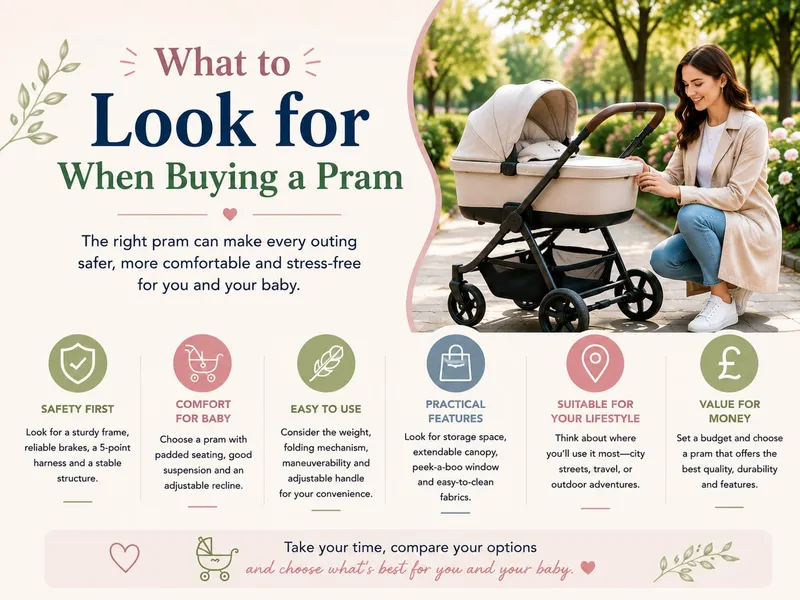
You’ll use your pram every day, so choose one that fits your life. Whether you live in a flat near narrow town pavements, commute on the Tube or take country walks, the right features make outings easier.
Think about storage, manoeuvrability and newborn comfort before you buy. Practical UK concerns — stairs, boot space, local road surfaces and weather — should guide your choice, helping you save time, stress and money in the long run. Pick what suits you best.


How to Choose the Perfect Pram or Stroller: Essential Tips for Buyers
Safety and legal standards: what to check before you buy
Standards and labels
Look for the European/UK safety standard EN 1888 on the pram’s label or in the manual — that’s your baseline. For car seats in travel systems, check for Group 0+ or i‑Size (UN R129) markings and the vehicle compatibility list. If it’s not on the label, ask the retailer or check the manufacturer website.
Visible safety features to test
Try these quick in‑store checks so you know it’s practical as well as safe:
Travel systems and car compatibility
Bring your car’s handbook or measure your boot and seat fitting points. Fit bases and seats if possible — a car seat that’s awkward to install is a safety risk.
Recalls, reviews and quick research
Before you commit, search GOV.UK product recalls, Which? and Trading Standards for model alerts, and skim Which? user tests — many UK parents flag recurring issues early.
Practicality for daily life: storage, accessories and ease of use
Storage and shopping trips
Think about your weekly routine: will you be popping into John Lewis, Sainsbury’s or a busy market stall? Check basket size and access — can you reach the shopping basket with the seat fully reclined? Measure doorways and shop aisles (standard UK shop aisles can be narrow) and try folding the pram one-handed in store if possible.
Accessories to check and where to buy
Make a list: rain cover, footmuff, changing-bag hooks, cup holders and an extendable hood with SPF. Ask whether these are included or sold separately in the UK — many retailers (Argos, Mothercare, direct from brands) offer branded packs. Confirm compatibility if you buy third‑party extras.
Fabrics and cleaning
Look for machine‑washable liners or removable covers; waterproof outer fabrics and UPF/SPF ratings (UPF 50+ is common) are useful. Darker, tougher fabrics fare better if you live rurally or have muddy dogs.
Practical quick‑checks
These quick tests save headaches on the school run, shopping trips and family days out.
Wheels, suspension and manoeuvrability: where you’ll be pushing
Choose wheels for your terrain
The type of wheels determines whether the push feels effortless or like a chore. For London pavements, tight high‑street turns and kerbs, smaller swivel wheels with a lockable swivel make life easier — think of compact city models like the iCandy Peach. For parks, gravel paths and coastal promenades, air‑filled or robust rubber all‑terrain wheels (seen on Silver Cross or Out n About minis) soak up bumps far better.
Suspension and ride comfort
Good suspension reduces jarring for a newborn and keeps older babies asleep. Look for adjustable suspension or a chassis that advertises shock absorption (Bugaboo Fox and many Silver Cross frames highlight this). Try different settings in store if available.
Practical checks and maintenance
Next, you’ll want to think about how that pram folds and fits into your car and home.
Folding, size and transport: thinking about your car and home
Measure before you buy
Before you get excited by colours and suspension, measure your car boot and doorway. Take a tape measure to your boot and note length, height and the gap with the rear seats folded — small hatchbacks and vans differ a lot. Bring those numbers into the shop or check the stroller’s folded dimensions online so you’re not surprised at the kerb.

Folding, weight and real‑world use
Try the fold in person: practice a one‑hand fold, check it locks, and see if it stands folded. Think about how often you’ll use taxis, buses or the Tube — compact travel strollers such as the Babyzen YOYO or Mountain Buggy Nano are popular in London because they fit overheads and tight buses. If you’ll lift it daily, check the folded weight and whether the carry handle or strap is comfortable.
Home and stair‑only access
If you live in a Victorian terrace or a flat with narrow landings, prioritise a slim folded footprint and easy carry. Next, you’ll want to look at how the pram adapts for your baby’s comfort and sleep needs.
Comfort and adaptability for your baby: sleep, seating and newborn needs
Newborn sleep: flat is best
For the first few months your baby needs a flat, supported surface. Look for a carrycot or a seat that reclines almost fully flat (or true lie‑flat). A firm, breathable mattress and good head‑and‑neck support reduce flat‑head risk and help naps on the move — think about daytime sleep in buggies as part of your routine.
Seating as they grow
Adjustable recline and footrest positions mean your toddler can sit up to watch the world or lie back for sleep. Check weight and height limits — some seats cap out earlier than others — and try the seat yourself in store (John Lewis and Mamas & Papas let you demo many models).

Fabrics, hygiene and safety
Choose washable, breathable covers; OEKO‑Tex certification or similar reassures on chemical safety. Removable linings and a washable mattress cover make life easier after spills or reflux. Deep hoods with UPF and peek‑a‑boo windows keep your baby sheltered and allow airflow.
Modular travel systems
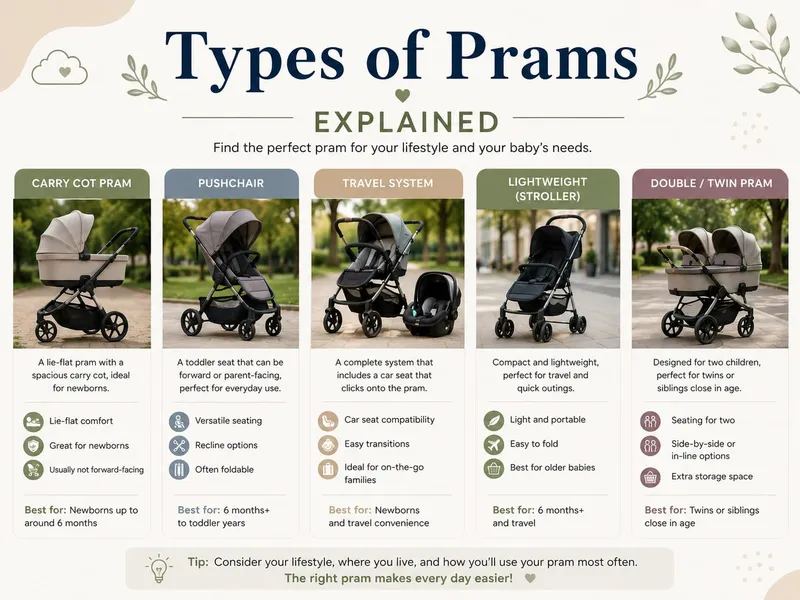
Decide if you want a convertible pushchair or a travel system that accepts car seats (popular UK-compatible brands fit Maxi‑Cosi and Britax clips). Trying the fit in person avoids compatibility headaches.
Quick checklist: flat carrycot or recline, firm breathable mattress, washable fabrics, deep hood, car‑seat compatibility. Next up: weighing these features against price, warranties and second‑hand options.
Budget, warranties and buying second‑hand: getting value in the UK market
Set a realistic budget
Work out a total cost, not just the sticker price: include raincovers, mattress, car‑seat adapters, delivery and possible servicing. As a rule, allow an extra £50–£150 for accessories and occasional maintenance — foldable travel buggies often need less upkeep than full pram systems.
Where to shop and what to expect
High‑street stores like John Lewis and Mamas & Papas sometimes bundle longer warranties or price‑match guarantees; supermarkets and chains such as Argos and Boots often have competitive, budget‑friendly models. Compare after‑sales policies as much as headline prices.

Warranties, spare parts and returns
Check the manufacturer warranty length and what it covers, whether spare parts are stocked in the UK, and the retailer’s returns policy (30 days? collection fees?). Keep receipts and register the product with the maker to activate warranty.
Buying second‑hand safely
If you look on Facebook Marketplace, Gumtree or local preloved baby groups, inspect:
Buying almost new from a reputable UK reseller can cut costs while still offering a short warranty or service check. Next, you’ll bring everything together to choose the right pram for your family.
Making the right choice for your family
There’s no one-size-fits-all pram — your choice should reflect where you live, how you travel and how long you want to use it. Use the checks above when trying models at John Lewis, Mamas & Papas or local baby specialists, and test them on pavements, public transport and in your car. Don’t rush: push a few in real-life scenarios, check folding, storage and newborn options, and be honest about daily needs.
When you’ve compared safety, comfort and value, choose the pram that makes outings easier and gives you confidence. Happy shopping — and safe walks. Look for good warranties and local support.

Really helpful article — I wish I’d read something like this before buying our first pram.
A few practical notes from experience:
– Safety checks saved us: we returned a cheap one because the harness felt flimsy (looked nothing like the safety standards section!).
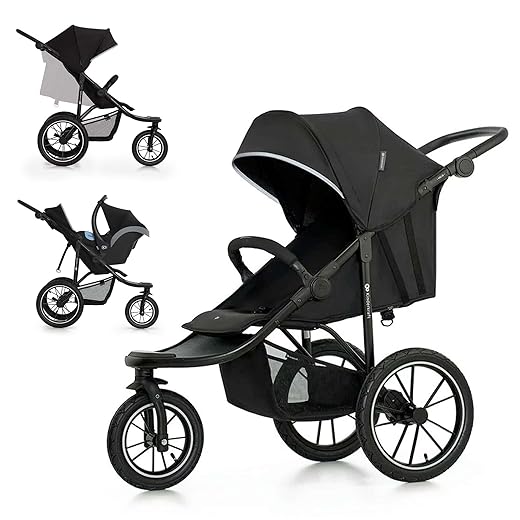
– We ended up choosing the Kinderkraft HELSI 2 for mixed terrain — the bigger wheels make city park walks way less bumpy.
– But beware of boot size: it looked fine online and barely fit in our hatchback. Folding/size section = gold.
Great coverage of warranties and second-hand tips too. Saved me a lot of hassle when comparing APINO vs HELSI.
Agreed on the boot thing — measured my car’s boot before buying and it saved me a return. Also, if you have a foldable rear seat it helps a lot for longer prams.
Totally — another tip: take a tape measure with you to stores. I measured the folded length/height of a buggy and compared to my boot. Made the choice obvious.
Thanks for sharing your experience, Oliver — very useful to know the HELSI worked well on mixed terrain. Good point about checking boot dimensions in person if possible; photos can be deceiving.
Nice rundown. Quick question: the Graco EZLite is listed as 6.6kg — how realistic is that for travel? I’m often on buses and trains in London and weight matters.
Also, any thoughts on whether a 3-in-1 system (like the Gcarebb or other travel systems) is worth the extra bulk vs a lightweight stroller?
If you’ve got a long commute on public transport, go lightweight. If you drive a lot or want longer-term use from newborn, 3-in-1 makes life easier.
Another tip: check the newborn support in the stroller specs (some lightweight models require extras or are only suitable from a certain age). Article’s section on newborn needs covers this.
I use the EZLite for quick trips and it’s great on buses — very nimble. For newborns I had a travel system (3-in-1) because I wanted to click the car seat in and go without disturbing the baby.
Good question — the Graco EZLite is genuinely light and great for public transport, but it’s more of a simple travel stroller (less suspension and recline than a full pram). A 3-in-1 system gives you car-seat compatibility and newborn support but is bulkier overall. Consider how often you use a car vs public transport.
Really appreciated the practical sections: storage, accessories and ease of use are underrated. A few things I wish the article had expanded on:
1) Cup holders vs snack trays — small comforts but make outings smoother.
2) Suspension differences — I live on cobbled streets and the ride quality is everything.
3) Which models have better recline for naps? The 3-in-1 Baby Buggy Travel System Black Silver looks comfy but online pics are never telling the full story.
Still, solid guide for comparing features rather than getting swayed by branding.
I added a thin memory-foam liner to our buggy for extra comfort — small tweak but baby sleeps longer on walks. Just check it’s breathable and fits safety standards.
Thanks, Hannah — good points. We could add a separate mini-section on small accessories and how they impact daily use. Suspension notes: look for air/foam-filled tyres or dedicated suspension arms for better ride on cobbles.
About recline: we tested a few in-store and the Graco EZLite surprised me with how flat it went. Worth trying in person because specs don’t always equate to actual comfort.
Noted — we’ll consider expanding the nap/recline part with specific model examples (Graco and some Kinderkraft models tend to have good recline ranges).
Love that there’s a section on handbrakes. I once rode downhill with a pram that had the braking power of a wet sponge. 🤦♂️
The hauck Runner 3 with a handbrake caught my eye — anyone actually used that one for hilly areas? Is it more of a ‘gym’ stroller or can it be a proper daily runner in the UK hills?
The hauck Runner 3 is designed with a handbrake for more control, suited for jogging and steeper surfaces. If you plan to run often or live in hillier parts, it’s a good choice, but check tyre type and suspension for comfort.
I live near some steep streets and the Runner handled them fine. Just make sure the tyre pressure is right and the brake is well-adjusted. Not magic, but better than average.
Helpful article but a bit light on long-term maintenance costs. New tyres, wheel bearings, replacement liners — these add up. If you’re on a budget (like me), the Kinderkraft HELSI seems robust, but how easy are spare parts to get in the UK for these brands?
Also: anyone had experience with the cheaper ‘3-in-1 Baby Buggy Travel System Black Silver’ — is it false economy?
Final tip: when comparing prices, factor in likely consumables (tyres, brake pads, raincovers). Our article’s budget section encourages checking long-term value, not just sticker price.
Good point about maintenance. Spare parts availability varies: bigger brands like Graco often have parts or UK retailers; some Kinderkraft parts are available but can take longer. For budget systems, check retailer spare-part policies and local repair options before buying.
I had a cheap travel system once — saved money upfront but spent more on new wheels and a replacement hood after two years. If you plan on using the same pram for siblings, invest a bit more now.
Just got the Kinderkraft APINO Auto-Folding Lightweight Stroller Black — folds in a sec lol, perfect for my tiny car boot 🙂
Nice — the APINO models are popular for compact folding. How’s the manoeuvrability in crowded places like shops?
I have the grey APINO and it’s a dream in cafés and narrow shop aisles. Not great for rough trails though, obviously.
Second-hand buying tip: always ask for the original manual and proof of purchase if possible. Some warranties are transferrable or at least you can check the model history.
I bought a Gcarebb 3-in-1 used and it was fine because the seller still had service records and the car seat wasn’t expired. Also inspect the harness stitching, wheel wear and suspension — these are the things that hide the most problems.
Article’s section on warranties and buying second-hand was spot on.
Great checklist, Lily. Car seat expiry is a critical point many miss — thanks for highlighting it.
If you’re unsure, take the pram to a local baby store — a quick 5-minute inspection can reveal a lot (bearing wear, loose bolts). Worth the time.
I asked sellers for photos of the manufacture label under the car seat base — that often shows the date. Also check recalls online for the model.
Good suggestion, Ben — many stores will help with a quick check even if you didn’t buy from them. Also record serial numbers for future warranty claims.
Yep — and don’t be shy to haggle on price if there are visible scuffs. You’re buying used, not a museum piece 😄