Last updated on June 11th, 2026 at 12:03 pm
How to Pick the Right Pram Without Regrets
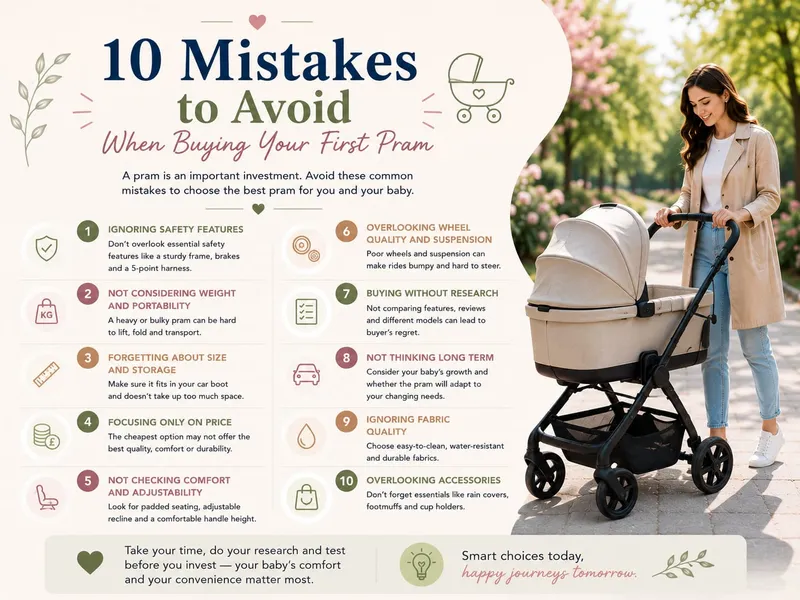
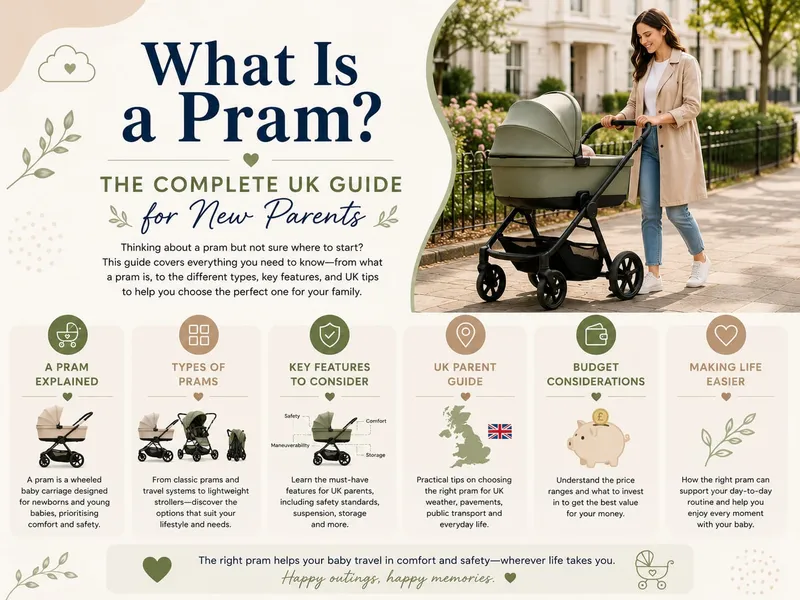
Buying your first pram in the UK can feel overwhelming — there are so many models, features and shops from John Lewis or Mamas & Papas to online bargains on Amazon and eBay. What looks stylish may not suit your daily routine. You need to think about pavements, car boots, trains and the school run, not just colour or brand.
This guide points out the 10 mistakes new parents make so you can avoid them. From newborn compatibility and wheel types to foldability, safety standards and resale value, each mistake links to practical UK scenarios and stores. Read on to make a confident, sensible choice that fits your life — and prevents costly regrets.



Avoid These 5 Common Stroller Shopping Mistakes – Expert Buying Tips
Mistake 1: Choosing Size and Weight Without Considering Your Lifestyle
Assess your typical journeys
You might love the look of a luxe full-size pram, but if you live in a Victorian terrace, use the London Tube or have a small hatchback, style won’t help when you can’t get it past a narrow hallway or into the boot. Think about daily routes: cobbled high streets, steep stairs, pushchair-access barriers and the frequency you’ll carry it.
Practical size and weight limits to aim for
How to measure before you buy
Measure your front door/hallway width and boot aperture (width between wheel arches and floor-to-parcel-shelf height). Compare those numbers with the pram’s folded dimensions in-store or on the spec sheet. Next up: make sure the pram actually suits newborns — read on.
Mistake 2: Overlooking Newborn Needs — Choosing a Pram Not Suitable for Newborns
Why newborns need a lie-flat or carrycot
Newborns must lie flat for safe breathing and spinal development. Many lightweight or umbrella-style prams assume your baby can sit up — so if you want one pram from birth, check for a true lie-flat seat (close to 180°) or a compatible carrycot that provides a flat, firm surface.
Carrycot vs recline seat — a quick difference
A carrycot is a standalone bassinet-style unit that gives full flat support and often detaches (great for naps). A recline seat may look flat but can still leave the head angled; some are suitable from birth, most are not.
Quick newborn checks to do in-store
Visit John Lewis or an independent baby shop to try popular UK models (Silver Cross Wave, iCandy, Bugaboo) and ask staff to fit a carrycot — next, make sure the wheels suit where you’ll be walking.
Mistake 3: Ignoring Wheel Type and Terrain Compatibility
Which wheel suits your routes?
Choose wheels to match the surfaces you use daily. Air-filled tyres (like larger 12–16-inch wheels) soak up bumps on parks, towpaths and cobbles in York or Edinburgh — great if you push on grass or gravel. Foam-filled or puncture‑guard tyres give low maintenance for city pavements and frequent bus journeys. Small plastic wheels are fine for smooth town centres and travel, but they’ll make pushing on grass or kerbs a chore.
Maintenance basics
A few habits keep wheels working:
Manoeuvrability on kerbs and narrow streets
Wider, larger wheels roll over kerbs and uneven paving more easily; swivel front wheels help with tight shop-filled high streets. Lockable front wheels stabilise on cobbles but can reduce agile turning — test both.
Next, you’ll want to practise folding and one‑hand operation to see how your chosen wheels affect real-world handling.
Mistake 4: Not Testing Fold, Unfold and One-Hand Operation
Why it matters
You’ll be folding and unfolding your pram hundreds of times while holding a baby, a nappy bag or a pushchair — so don’t assume it’ll be easy at home. Make sure the mechanism is smooth, snap-shuts reliably and, crucially, can be done one-handed when you’ve got a wriggling little passenger.

How to test in-store
Lift, lock and compactness checks
Measure the folded size against your car boot and try lifting it as you realistically would (no hero lifts). Check that the latch locks securely and that the pram stays upright when folded — a wobbly, unlocked fold is a daily irritation.
Mistake 5: Forgetting to Check Car Boot and Travel-System Compatibility
Check the car-seat fit before you buy
Not every car seat clicks into every chassis. Before you commit, look up compatibility lists on manufacturer sites (Silver Cross, iCandy, Mamas & Papas) and ask shops or John Lewis which seats are recommended with the chassis you like. If you already have a car seat, bring it to the shop.

Trial the folded travel system in your boot
Do this in-store or at home: attach the seat to the chassis, fold it as you would for travel, then load it into your boot. Check with the base fitted too — some bases reduce space massively. Also test closing the boot with the system inside and the pram standing upright.
Quick practical checklist
Think about taxis and trains
A bulky travel system can make cabs awkward — consider a lightweight alternative or a quick-release seat if you’ll use rideshares often. Next up: make sure it’s actually safe for daily use.
Mistake 6: Skipping Safety Checks and Certification
What to check on the pram
Safety is non‑negotiable. Before you buy, run through this quick checklist in person:
How to read labels and what to ask
Find the manufacturer label (under the seat or chassis): note model, serial number, manufacture date and weight limits. Ask the retailer (John Lewis, Silver Cross stockists, Mamas & Papas) about known recalls, the length of warranty, spare‑parts availability and where to get repairs. Check GOV.UK recalls and Which? tests if you want extra assurance. A quick in‑store demo of the harness and brake will show if the pram truly feels safe — then move on to practical features to see if it fits your daily life.
Mistake 7: Prioritising Looks Over Practical Features
Why style alone can fail you
A gorgeous pram that turns heads on the high street can quickly annoy you on muddy Hampstead Heath walks or supermarket runs. If you buy for aesthetics, everyday chores reveal the gaps.
Must-have practical features (look for these, not just the colour)
How to compare models side‑by‑side
Try John Lewis, Mamas & Papas or an independent pram showroom and bring a reusable shopping bag to test baskets. Note: Babyzen YOYO looks sleek but has a small under‑seat basket; Bugaboo and Silver Cross models often offer deeper storage. Handle the fabrics—snag, smell, and ease of removal matter more than the photos.
Mistake 8: Underestimating Weather and Season Needs
Why UK weather matters
One minute it’s glorious, the next you’re hurrying a wet newborn under a bus shelter. If you assume the standard hood does the job, you’ll be caught out on soggy autumn walks or unexpected heatwaves.
Must‑budget accessories
Plan for extras — some come in the box, many don’t. Typical items to budget for:
Breathable vs insulated fabrics — simple rules
Breathable = mesh/linen blends that wick sweat and stop overheating on hot days (great for London heatwaves). Insulated = fleece or down‑style layers that trap warmth and block wind on blustery November walks. For newborns, breathable layers with a thin hat plus an insulated footmuff for outings hit the sweet spot.
Where to check and buy
Always read product pages on John Lewis, Mamas & Papas or Babycare listings and ask retailers if raincovers/footmuffs are included. For unique liners, try JoJo Maman Bébé, independent makers on Etsy, or pram accessory specialists — measure your bassinet first.
Mistake 9: Buying Without Testing Real-World Manoeuvres
Why a quiet shop isn’t enough
A polished showroom floor won’t show how a pram copes with a busy London high street, a narrow Bath pavement or a Tesco Express aisle. You need to see how it behaves under everyday strain.
Quick real‑world checklist
Before you commit, take the pram for a short walk outside (ask permission). Try these moves:
Red flags to watch for
Try before you buy
Consider a weekend hire or borrowing from local NCT groups or independent hire firms to trial on real errands — it’s the best way to avoid regrets and prepares you for thinking long‑term storage and resale options next.
Mistake 10: Not Thinking Long-Term — Storage, Resale and Growth
Plan for growth
Think ahead: can the pram take a second seat or convert from bassinet to toddler mode? Models like the Bugaboo Donkey, Silver Cross Wave and many iCandy strollers offer double‑seat or sibling kits — handy if you plan more children or twins.
Protect resale value
Small habits pay off. Store the pram dry (UK rain is relentless), wipe muddy wheels after walks, keep the instruction manual and original receipt, and use the manufacturer cleaning products. A well‑kept Silver Cross or Bugaboo fetches far more on resale than a grubby alternative.
Warranty, spares and UK support
Ask your retailer (John Lewis, independent boutique or the brand’s UK support) about warranty length and spare‑parts availability. Some brands keep parts for years; others don’t — check before you buy.
Consider second‑hand
Nearly‑new prams on Gumtree, Facebook Marketplace or eBay can be cost‑effective. When buying used, check for recalls, test folding, and inspect fabric, chassis and brakes.
Quick action points:
With long‑term needs covered, you’re ready for the final checklist.
Final Checklist Before You Buy
Before you commit, run through this quick checklist: is it newborn‑safe (lie‑flat or compatible with a carrycot), light enough for your lifestyle, and will it fit your car boot? Check wheel type for UK pavements and parks, one‑hand fold, raincover and winter footmuff, and safety standards.
Test it in real UK conditions, try manoeuvres on local high streets or in John Lewis, check car‑seat compatibility, storage and resale — then pick what suits your life today.

One-hand fold is not just a luxury — it’s survival. Tried folding with a screaming toddler on hip once and nearly threw the stroller into a bin.
If a pram claims one-hand operation, test it yourself. Also check how it sits in the boot afterwards; some one-hand folds end up bulky.
Totally agree. We recommended doing a timed fold test: how long and how many steps does it take? Try it with a bag on the handle to simulate real use.
True! We practiced at home a few times before leaving the house — made outings less stressful.
Car boot compatibility is a hidden nightmare. We almost bought a Graco EZLite Ultra-Light Compact Travel Stroller — love how light it is — but it barely fit in our hatchback with the boot cover down.
If you’re tight on space, measure the folded dimensions and test in your car if possible. Also check if your car needs Car Seat Adapters for Stomp V4 and Luxe for travel systems.
If anyone’s got a compact car and wants a recommendation: the Graco EZLite worked for me in a Mazda 3, but double-check your version (older vs newer models change dimensions).
Great tip, Nora. The article recommends bringing measuring tape to the shop and trying the fold in the store trunk demo area when possible. Graco models often have good folding specs but it’s not universal.
We kept the box in the boot until the baby was a few months old — yea, a bit paranoid but saved from surprise fits.
Also worth noting: some stores will let you test the car seat + adapter in your car if you bring it along — ask before you buy.
Thinking long-term: storage and resale. We planned for a pram that would fold small enough to live in our closet and still be useful for a toddler.
Some prams look nice but add years of awkward storage; others are heavy now but resell well for upgrades. Consider what you’ll do at 6 months, 12 months, and for sibling #2.
Good point. ‘Not Thinking Long-Term’ advises a growth plan: infant seat compatibility, adjustable harness, and estimated resale value.
We sold ours for nearly half price within a year — good brands hold value better.
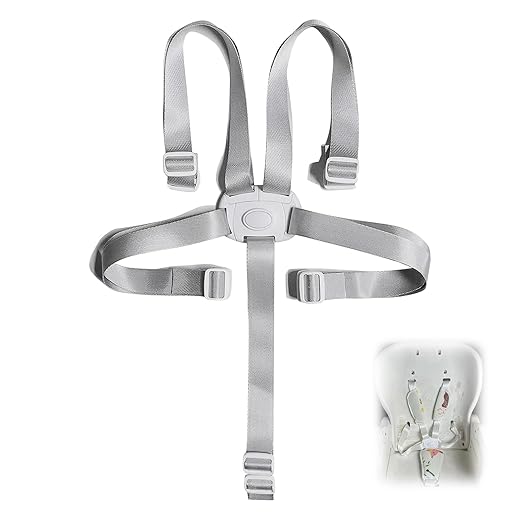
A quick PSA on safety: always check for certification and ensure the harness is an actual 5-point and adjustable. We upgraded to an Adjustable 5-Point High Chair Safety Harness for our older one and noticed the difference in stability.
Also, small things like secure brakes and no sharp edges matter. Don’t skip that Safety Checks section in the article.
Exactly — we included a short list in the article’s Safety Checks section by region. If you tell me your country, I can point to the specific standard.
What certification codes should I look for? I’m not sure what the different letters mean where I live.
Depends on country. In the US look for JPMA and CPSC compliance; in Europe check EN 1888 for prams/strollers. If you’re elsewhere, check your local safety standard body.
Brakes: test them with weight in the seat. Many cheap models stop moving with no load but slide when baby is in — scary!
Thanks Daniel — the guide lists common certifications to look for and basic brake tests you can do in-store. Good to hear you upgraded your harness.
Weather proofing is underrated. We bought a cute stroller without checking canopy depth and ended up buying a separate rain cover and a footmuff.
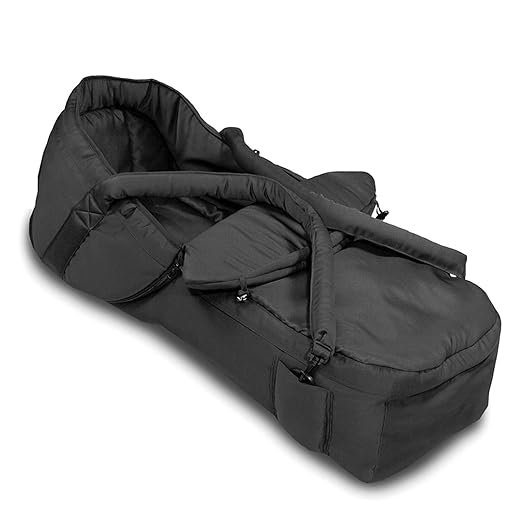
Pro tip: 2-in-1 Carrycot and Footmuff combos can be used for longer than you think in colder months.
Also, sarcasm: if you love poring over UV ratings for a pram canopy, you’re officially a parent now 😂
I bought an aftermarket rain cover that fogged up — check ventilation or get a clear one with vents.
Can confirm. A decent canopy and ventilation made summer naps possible in my town — don’t skimp on that.
Love the humor — and yes, ‘Underestimating Weather and Season Needs’ is so common. We cover sun protection, rain covers, and suitable fabrics in that section.
Also look for removable liners if you live somewhere with big temp swings.
Quick question for anyone who’s tried Schwalbe Kid Plus 12-inch Puncture Guard Tyre: do they make a noticeable difference on gravel paths vs standard foam wheels? Considering swapping but don’t want to waste money.
I swapped to Schwalbe and it was night and day on park trails. Slightly heavier but worth it IMO.
They generally offer better puncture resistance and a bit more cushioning than solid foam wheels, so on gravel you’ll notice fewer jolts and far fewer flats. Worth it if you do mixed terrain often.
Nice roundup. The Final Checklist really ties everything together — weight, fold, newborn support, wheel type, boot fit, safety certs, accessories (car seat adapters, footmuff), and resale.
Would’ve liked a small comparison table of the mentioned products (Graco EZLite, Babylo Nuvo, 3-in-1 Travel System) but still super useful. Thanks!
Agree. Even a simple pros/cons for each model mentioned would help new parents decide faster.
Thanks Noah — a comparison table is a great suggestion. We’ll consider adding a quick spec table for the products in a future update.
If the author needs volunteers to test models for a real-world table, I’m happy to share my Graco experience 😄
Long rant incoming (sorry) — I ignored ‘Overlooking Newborn Needs’ and bought a stroller that “was ok for newborns” according to the shop assistant. My newborn hated the upright seat and I had to buy a separate 2-in-1 Carrycot and Footmuff for Pushchairs.
Lessons:
1) Lie the seat flat for proper newborn sleep.
2) Check if the stroller has a proper carrycot or compatible bassinet.
3) Footmuffs are not just cosy accessories, they actually help in colder months.
If you’re on a budget, make sure the 3-in-1 Travel System Pram with Car Seat actually includes proper newborn support — not all do.
Sigh. Learned the hard way 😂
This is exactly why I bought a pram with a full-flat carrycot option. Saved my sanity. Also the 2-in-1 Carrycot and Footmuff combo is great value if you can find matching ones.
No shame — I did the same and ended up returning mine within two weeks. The shops can be convincing but test with a rolled-up towel as head support to mimic newborn positioning.
Thanks for the honest share, Owen. The ‘Overlooking Newborn Needs’ section emphasizes checking recline angles and compatible carrycots. Many parents underestimate newborn neck support requirements.
Wanted something ultra-light for travel so I eyeballed the Graco EZLite Ultra-Light Compact Travel Stroller.
Pro: super light, easy to lift into taxis.
Con: smaller wheels, not great on gravel. If you travel a lot by plane, it’s brilliant. If you live somewhere rural, maybe not.
Test the fold in the shop and try pushing it down an incline if you can — real-world testing matters.
Good breakdown, Maya. The article’s ‘Not Testing Real-World Manoeuvres’ section suggests exactly that — bring a few steps or ramps into your test routine if the store allows.
Also check if there are compatible accessories like Car Seat Adapters — makes travel systems more flexible.
Yep — plane travel vs weekend countryside trips are very different use cases. Pick based on your main use.
Fashion vs function: I get wanting a stylish pram, but don’t sacrifice a good canopy, decent suspension, and safety harness for a cute print.
We had our hearts set on a designer-looking pushchair but it barely had storage or a sunhood. Ended up exchanging it for something less flashy and way more practical.
Also think resale: flashy limited prints might not resell well. Neutral practical models often have better secondhand value.
Spot on. ‘Prioritising Looks Over Practical Features’ is a trap — the checklist recommends ranking your must-haves before shopping so you don’t fall for style-first marketing.
Great piece — this is exactly what I wish I’d read before buying my first pram.
I made the mistake of picking something lightweight but with tiny wheels; city parks were a nightmare. The tip about testing one-hand fold and boot fit saved me once I went pram shopping for my sister.
Also, if you’re getting a baby carrier + pram combo, check if the 3-in-1 Travel System Pram with Car Seat actually clicks into your car properly. Not all adapters are universal.
Love the Final Checklist at the end — concise and practical.
Agree on the adaptor thing. We bought Car Seat Adapters for Stomp V4 and Luxe and had to return one because it wasn’t stable with our infant seat.
Thanks Emma — glad it helped. If you don’t mind sharing, which pram did you end up choosing and how’s the fold working out in daily use?
I have the Babylo Nuvo One-Hand Fold and honestly it’s a lifesaver for grocery runs — folds with one hand while I hold a screaming toddler 😅
Wheel type matters more than looks. Bought a sleek pram for city life and the wheels clattered on every cobble — instant regret.
Schwalbe Kid Plus 12-inch Puncture Guard Tyre recommendation should be shouted from the rooftops for anyone doing mixed terrain.
Good point, Liam. The article’s section ‘Ignoring Wheel Type and Terrain Compatibility’ covers tyre materials and when to prefer air-filled vs puncture-guard — cheers for flagging Schwalbe as useful.
Totally. If you live somewhere with uneven pavements, get pneumatic tyres or at least puncture guard ones. My stroller handles so much better now.