Last updated on June 13th, 2026 at 02:03 am
Keep Your Pram Fresh and Safe
Keep your pram fresh, safe and lasting with simple, UK-focused care routines. You’ll learn practical steps to clean, maintain and store your pushchair for hassle-free trips across towns and parks.
What You’ll Need

How I Clean and Maintain a Baby Stroller for Everyday Use
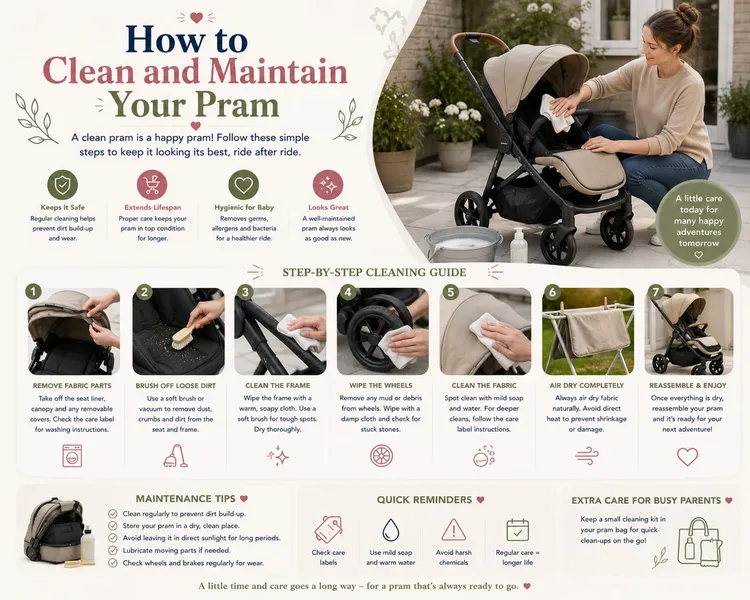
Prepare and Disassemble Safely
Want to avoid damaging clips or voiding warranties? A careful teardown is your best friend.Read your pram’s manual first — brands like Silver Cross, Bugaboo and Mamas & Papas include model-specific disassembly notes and warranty advice.
Park the pram on a flat surface and engage the brakes.
Remove the mattress, liners and any inserts.
Unclip or unfasten the harness and take panels off in the order the manufacturer recommends.
Keep small parts safe:
Detach a travel-system car seat following the manufacturer’s guidance and check for reminder labels on the base.
Avoid forcing stiff parts — tap gently with a soft mallet or wrap a cloth around tools.
If unsure, book a demo at John Lewis, Argos or your local baby shop, or watch official tutorial videos on manufacturer websites or YouTube.
Proper preparation makes cleaning quicker and prevents accidental damage to brakes, suspension and fabric.

Clean Frames, Wheels and Brakes
Don't let grime ruin manoeuvres — clean wheels like a pro.Focus on the chassis. Use a stiff brush or old toothbrush to remove grit and dried mud from wheels and axles; use a handheld vacuum to shift sand from nooks and bearings.
Wipe metal and plastic parts with a cloth dampened in warm water and a few drops of mild washing-up liquid or baby-safe cleaner. Avoid bleach or harsh solvents which can corrode finishes and void warranties.
Check the brake mechanisms: clear debris by hand or with a brush, then test them repeatedly while the pram is supported on a workbench or knee-high table.
Lubricate moving joints and wheel bearings sparingly with a silicone or PTFE spray — buy suitable products at Halfords or B&Q.
Soak detachable wheels briefly in soapy water, rinse and air dry fully before refitting.
Maintain regular wheel upkeep to improve ride quality and prevent costly repairs on muddy UK pavements and park paths.

Wash Fabrics and Liners Correctly
Machine wash or handwash? Choose the method that keeps padding plump and colourfast.Remove fabric parts — seat covers, hoods, harness pads and liners — and check the care labels first (brands like Mamas & Papas and Silver Cross often include wash instructions).
Check labels and machine-wash removable items on a 30°C gentle cycle with a baby-friendly detergent and a short spin.
Hand-wash delicate or non-removable pieces in warm soapy water and blot stains — avoid rubbing to prevent pilling and colour loss.
Detach and spot-treat stains promptly with a diluted vinegar solution or an oxygen-based remover (Vanish); always patch-test first on an inconspicuous area.
Buy detergents and stain removers from Boots, Tesco or John Lewis, and avoid tumble drying unless the label permits.
Air-dry fabrics flat or on a line in a ventilated room; use a dehumidifier or place near (but not on) a radiator in damp UK weather.

Deep Clean Accessories and Small Parts
Those tiny trays and cupholders? They harbour more gunk than you think.Check accessories — baskets, cup holders, raincovers, sunshades and mosquito nets, so nothing gets missed on days out.
Empty and vacuum the under-seat basket, then wipe it with a damp cloth; use a soft brush for stubborn crumbs.
Remove the raincover and wash it by hand in warm soapy water; rinse thoroughly and air dry before folding away to avoid mildew.
Clean cupholders and trays with a bottle brush; place dishwasher-safe items on the top rack — check the label first (many items from Mamas & Papas or Inglesina are top-rack safe).
Inspect and wash harness buckles by rinsing under running water while operating the clip to expel grit; never soak buckles in detergents that might impair function.
Replace any cracked plastic or frayed straps.
Order spare parts from John Lewis, Argos, Silver Cross or directly from the manufacturer to keep your pram working reliably.

Tackle Odours, Mould and Mildew
Smells like damp? Get rid of mould fast — your baby will thank you.Act fast — UK weather makes damp problems common, so tackle smells and spots as soon as you notice them.
Reassemble, Inspect and Store Properly
Fail to reassemble properly and your next walk could turn into a safety hazard — check everything.Reassemble using the photos and spare parts you kept; fit clips, screws and fabrics back in the order you removed them.
Check harness straps for fraying, ensure buckles click firmly and position padding so baby cannot slip; replace any worn webbing.
Inspect the frame for cracks, paying close attention to welds and suspension mounts in good daylight.
Test brakes several times on different surfaces — try a pavement, a driveway and a patch of cobbles — and confirm wheels are aligned and secure.
Tighten screws and bolts following the manufacturer’s torque guidance; don’t over-tighten plastics.
Store the pram folded or upright as the manual recommends, in a dry porch or hall cupboard away from direct sunlight. Remove batteries from electronics and cover with a breathable cover (eg from John Lewis) to prevent condensation. Book an annual service after heavy use.

Keep It Simple and Safe
Regular cleaning and prompt DIY repairs using UK supplies (e.g. John Lewis wipes, Argos spares) keep your pram hygienic and reliable for walks — will you schedule a quick monthly check?


Heads-up: if your pram has a memory foam insert, DO NOT put it in the washing machine — it ruined mine. The guide’s reminder to check manufacturer labels saved me on the next round.
Also, pro tip: take photos while disassembling so you remember where clips go. I wish someone told me that sooner.
Yesss to the photos. I have a whole folder of ‘pram repairs’ on my phone now 😂
Also label small screws with tape and put them in a zip bag. Saved me from hunting for a missing bolt for hours.
If anyone wants, I can add a quick checklist for disassembly/photographing in an update to the guide.
Great point about memory foam — always check care labels. Photos are a lifesaver for reassembly, especially with tricky harness clips.
Good call Ben — tape + zip bag = household hero move.
I appreciate the safety notes about testing a small area and supervising drying. Once I left a rain cover to dry indoors and forgot — smell city. Lesson learned: schedule cleaning with drying time in mind!
Yeppp, I set timers on my phone now when I wash pram liners so I remember to take them out to dry.
Drying time planning is underrated — especially in damp climates. Leaving items in sunlight (if safe for the fabric) or using a fan speeds things up and helps avoid mould.
Putting a small note on the laundry basket helped me remember too. Lol simple life hacks.
This guide is practical but maybe add more on stain removal for milk/formula? Mine gets grimy FAST and some stains seem permanent 😩
Enzyme sprays work wonders. I spray right after spills and toss liners in the wash that evening.
Thanks — good idea. For milk/formula stains: pre-soak in cold water, then treat with enzyme-based detergent. Avoid hot water at first; it can set protein stains. I’ll add a few stain-specific tips.
Question: For mould that’s been there a while, the guide mentions diluted bleach for frames — is that safe for coloured paint or aluminium? Don’t want to strip finishes.
I avoided bleach entirely on my pram frame — used a paste of baking soda and water and it lifted mould without any paint damage.
Hydrogen peroxide worked for me on black scuffs and mild mould — gentler than bleach and no paint worry.
Good question. Test a hidden area first. For painted surfaces, use a mild detergent and a soft brush; bleach can fade paint. For aluminium, diluted bleach is usually ok if rinsed thoroughly, but consider less abrasive options like hydrogen peroxide or vinegar for stubborn mould.
Small complaint: would love brand-specific tips. My pram has weird clips that the general guide doesn’t cover. Still very useful overall though.
If anyone shares brand/model, I’ll try to collect common quirks and safe cleaning notes for an update.
Thanks for the feedback — we kept it generic to cover most models, but I can add a note encouraging readers to check their manual and include a few popular-brand examples in a follow-up.
Yea brand tips would help. Maybe people can post their brand below and others can share experience?
Good idea Sophia — I’m using a (brand name omitted) and would love tips from fellow owners.
Had a laugh at the “Keep It Simple” header—because nothing is simple at 2am with a leaky travel cup and a screaming toddler 😂
Jokes aside, the step to check harness stitching saved me. Found fraying and got it repaired before it became a hazard.
Same — check those stitches regularly. My local cobbler fixed a strap for cheap; saved me buying a whole new part.
Totally relate to midnight chaos. Harness checks are easy but often skipped — glad it helped!
Nice step-by-step — liked the part about checking brakes and wheel bearings.
I lubed my wheel axles after reading this, but now the wheels squeak slightly. Did I overdo it?
Also check if any grit is trapped in the wheel hub. That makes noise even with proper lube.
Same happened to me. I cleaned off the excess with a paper towel and used a cotton swab to apply less — stopped squeaking.
Squeak can come from too much lubricant attracting dust. Wipe excess oil/grease off and use a small drop where moving parts meet. Silicone spray is often better for pram wheels than heavy grease.
And remember to test brakes after any maintenance (see section 6). Safety first.
Minor nitpick: the guide says “inspect and store properly” but doesn’t mention using silica packets or breathable covers during long storage. Mold found my pram last winter 😕
Excellent point. Adding silica gel packets or moisture absorbers to long-term storage is smart. Also store in a breathable bag, not plastic, and keep in a cool, dry place.
If anyone wants a short printable storage checklist, say the word and I’ll post one.
Agree on breathable covers — plastic traps moisture and creates a perfect environment for mould.
I put a small dehumidifier in my garage and it stopped the mildew issue. Not glamorous but it works.
Thanks — I’ll try silica packets this year, fingers crossed 🤞
Super helpful guide — thanks! I always panic when the pram gets that weird sour smell after rainy days. The section on tackling odours and mould was great.
Quick Q: has anyone tried using vinegar in the washing machine for liners? Worried it might leave a smell. 🤔
If you’re still worried, try baking soda soak before washing. Works like a charm on smell.
I use vinegar sometimes, but I rinse an extra cycle afterwards. No nasty smell left for me. Also: sunlight helps kill mildew, so hang it outside when you can ☀️
Vinegar is a common trick — use white distilled vinegar and a small amount (half cup) in the rinse cycle. It usually neutralises odors and rinses out; let fabrics air-dry fully to avoid any residual scent.
Appreciate the wheel-cleaning step. I used to just hose the whole thing down and regret it — ruined bearings once. The step about drying and checking seals is clutch.
If your pram never had grease changed, consider a light service once a year. Bearings like a bit of attention.
Same here — took the wheels off, dried, and re-greased the bearings. Fixed a wobble that bothered me for months.
Great addition — annual checkups are a good rule of thumb.
Yeah, avoiding pressure washing or prolonged water exposure to hubs is important. Remove wheels when possible and let everything dry fully before reassembly.
Love the accessory deep-clean section — my cup holder was a dust/sippy-cup graveyard. Scrubbing those tiny bits felt so satisfying 😂
Pro tip: keep an old toothbrush specifically for pram parts so you don’t mix it with kitchen brushes.
Toothbrushes and cotton buds are lifesavers for nooks. Glad that section was useful!
Hah same. I soak cup holders in soapy water and use a toothbrush for the grooves.
Loved the reassuring tone — “Keep It Simple and Safe” is exactly my vibe. Short and practical tips that actually work.
Agreed. Simple steps make it possible to do routine cleaning without turning it into a full weekend project.
Thanks! The guide aims to make maintenance doable between naps and errands 😂
One more tip: keep a small repair kit (spare screws, zip ties, small sewing kit) with the pram. It’s saved me multiple times on walks.
Also, anyone tried eco-friendly cleaners that actually work? I’m trying to avoid harsh chemicals.
I use a mild castile soap solution for frame & fabrics and an enzyme spray for stains. So far so good!
Thanks — I’ll try the enzyme route. Appreciate the eco options 🙌
If there’s demand, I can compile a short list of recommended eco-friendly products that readers have tried.
Vinegar + baking soda for drains, but for prams I stick to enzyme detergents. Vinegar can be harsh on some finishes.
Great additions. For eco-cleaners, look for plant-based enzyme detergents and castile soap mixes; they work well on fabrics and are gentle on finishes. Test first on a hidden area.