Last updated on June 13th, 2026 at 02:03 am
Why a pram still matters for modern parenting
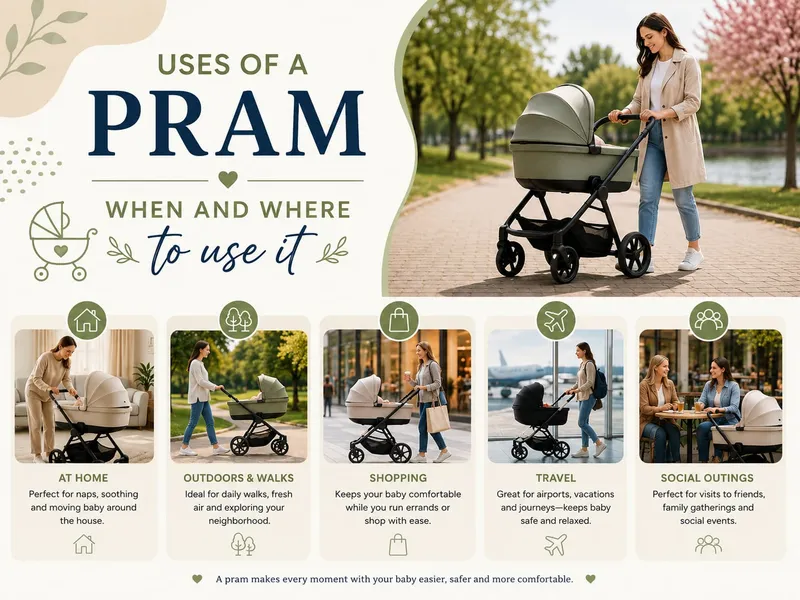
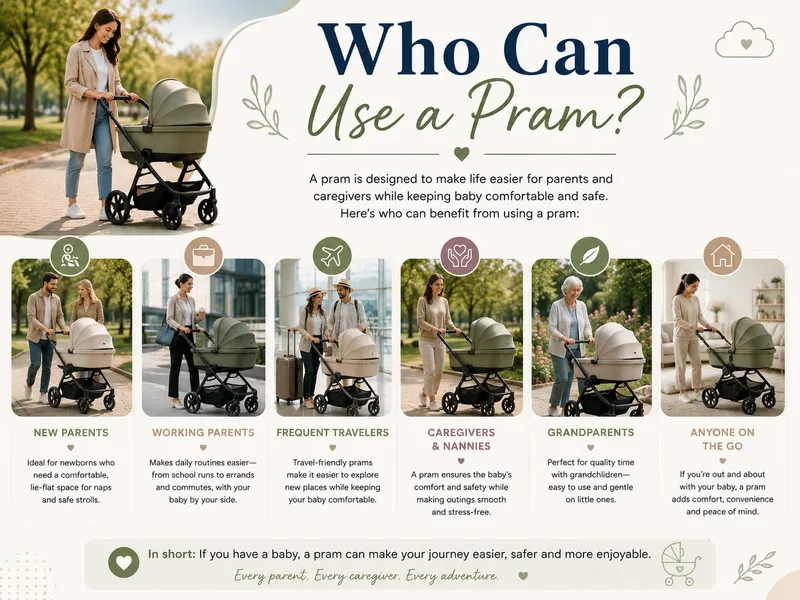
A pram is more than a bulky purchase — it’s a practical tool for daily life in the UK. If you’re a new parent, carer or grandparent, it helps with comfort, storage and school runs.
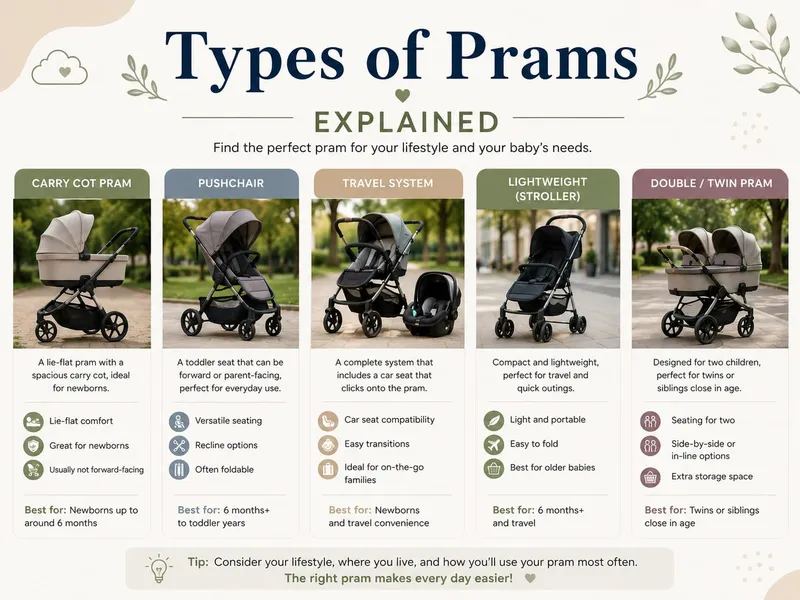
This guide clears up differences between prams, buggies and pushchairs, and shows when to use each. You’ll get tips on town use, public transport, parks, naps, switching types and special situations like shopping centres and holidays and safety.


When to Move Baby from Bassinet to a Seat Attachment on a Pushchair: Quick Tips for New Parents
Around town: using a pram for daily errands and the school run
Making everyday trips easier
A good pram turns errands into manageable outings. You can park a sleeping baby safely while you pop into John Lewis for a quick return, or wheel a napping toddler through Tesco for essentials without wrestling a basket. Look for easy-fold frames if you live in a small flat — they save time and make storing in hall cupboards or car boots far simpler.
Navigating pavements, kerbs and crossings
Storage, folding and shop access
Compact models like the Babyzen Yoyo2, Bugaboo Bee or Silver Cross Jet fit most British shop entrances and lifts; wider three-wheel models may struggle in narrow aisles. A generous basket will carry a Tesco bag or Sainsbury’s essentials, and cup holders for your flask or baby bottle make stops quicker.
Quick comfort & safety tips for short outings
Next, we’ll look at taking that pram onto buses, trains and the Tube.
Public transport and travel: buses, trains, and the Tube
Buses: quick and straightforward
On UK buses you usually board at the front; drivers will often signal you where to park. Keep brakes on, fold the hood back for visibility, and use the priority space rather than blocking the aisle. Be ready to fold if the bus is full.
Trains and longer rail trips
For local and National Rail services, check National Rail Enquiries’ accessibility pages before you travel. On long-distance trains you can:
The Tube and step-free planning
Many London Underground stations lack step-free access. Use the TfL Step-Free Access map or Citymapper’s accessibility options to plan routes with lifts and ramps. If you need staff assistance, contact the station team in advance or ask at the ticket hall.
Etiquette & practical tips
Travel-friendly prams to consider
Lightweight models such as the Babyzen Yoyo2, Silver Cross Jet or Mountain Buggy Nano make UK travel far less stressful — they fold small and fit overhead racks or car boots easily.
Parks, countryside walks and going off the beaten path
Wheel types and suspension
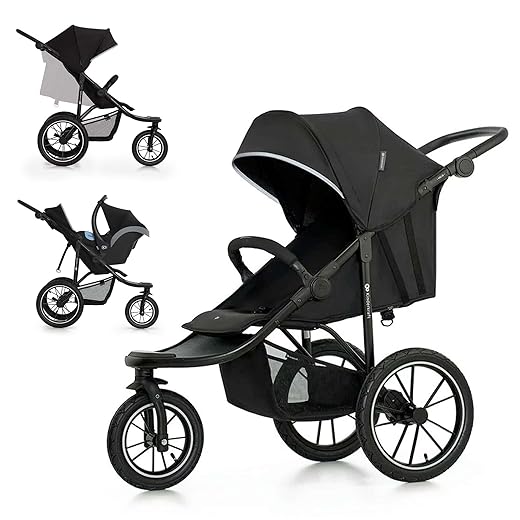
Decide between large air-filled wheels (better shock absorption and rolling over roots, gravel or sand) and small swivel castors (nimble on paved paths). Look for good suspension and a taller chassis—this keeps mud off the fabric and gives extra ground clearance on rutted National Trust tracks like the New Forest or coastal promenades at Jurassic Coast.
Practical route planning
Use OS Maps, the National Trust website or your local council’s Rights of Way maps to pick surfaced routes (Hyde Park to Richmond Park paths are smooth; Peak District boardwalks and the South West Coast Path get rough). Apps like Komoot or OpenStreetMap highlight stiles and unsurfaced tracks so you can avoid narrow, muddy stretches.
When to swap to a carrier or sling
If the trail narrows, gets muddy, or involves stiles, switch to a carrier. For example, take a sling for Bempton cliffs or a carrier for steep Lake District footpaths—your back will thank you and baby stays closer.
Weather-proofing and emergency kit
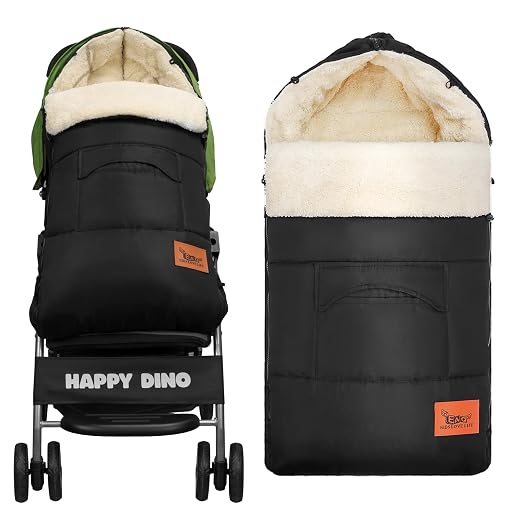
Pack a rain cover, insulated footmuff, sunscreen and a small repair kit: mini pump, tyre patch/inner tube, multi-tool and cable ties. These keep short walks from turning into long rescues.
Next, you’ll look at how to keep your child comfortable and sleeping on the go.
Naps, comfort and getting sleep on the go
Choose the right kit
For newborns pick a fully reclining carrycot or flat bassinet-style option (brands you’ll see in John Lewis or Silver Cross ranges) so your baby sleeps flat, not curled. In summer use breathable cotton liners or muslin pram sheets to avoid overheating; in chilly UK months a fleece-lined footmuff keeps feet cosy without extra loose blankets.
Create a sleep-friendly pram
Dim the sun canopy, shield from wind and position the pram so your child isn’t in direct street glare. Use a low-volume white-noise app or wind-down playlist — keep it soft and on a timer. Try to mimic home routines: a brief feed, familiar blanket or toy, and a short settling routine so naps out don’t become unpredictable.
Safety and timing
Follow NHS safe sleep advice: baby on their back on a flat, firm surface; avoid loose bedding. Newborns should use a carrycot rather than a car seat for naps; always supervise. Pram naps are great for short, restorative sleeps (20–60 minutes) but if daytime pram sleeping regularly pushes bedtime later, adapt the routine.
Quick tips:
From newborn to toddler: when to switch pram types and accessories
Newborn: carrycot and car-seat use
For the first months you’ll want a flat carrycot or a newborn-ready car seat for short trips. Most UK carrycots are used until around 4–6 months or until baby can roll/raise their head (roughly up to 9kg). Infant car seats (Group 0+/i‑Size) typically work until ~13kg or when your child reaches the seat’s height limit — check the label.
Convertible travel systems
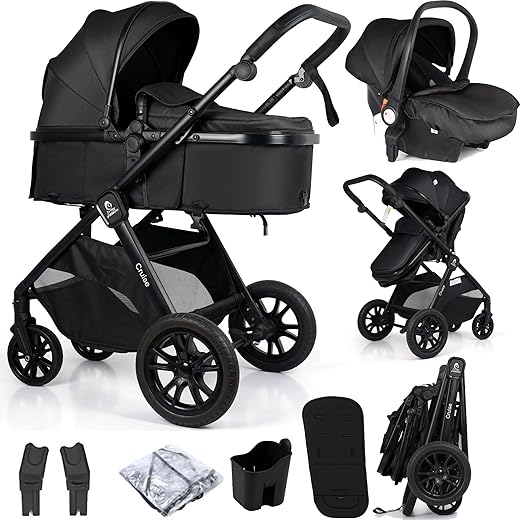
If you prefer one long-lasting setup, choose a convertible travel system that swaps between carrycot, car seat and toddler seat. Models like Bugaboo, Silver Cross and the practical Cruise 3‑in‑1 i-Size Travel System with Car Seat give flexibility for newborn-to-toddler life.
Transition: upright pushchair seat
You’ll switch when your child has good head control and can sit upright comfortably — often around 6 months. Look for seats that recline near-flat for naps and have adjustable harness heights. Many seats are rated to 15kg; some extend to 22kg if you want a long-lasting option.
Toddler: lightweight buggy and limits
From about 2–3 years you might opt for a lightweight buggy or umbrella-fold stroller for trips and holidays. These are usually for children up to 15–22kg and prioritise compactness over full suspension.
Accessories and shopping tips
Useful extras:
Buy new from John Lewis or Argos for warranties; visit specialist pram shops to test manoeuvrability. For savings check Gumtree or Facebook Marketplace — always inspect harnesses, frame integrity and recall history before buying.
Next, we’ll look at using your pram in busy environments like shopping centres, holidays and keeping things safe.
Special situations: shopping centres, holidays and safety considerations
Shopping centres: manoeuvre and park smart
In busy malls you’ll want a slim, agile pram (Babyzen YOYO2 or Uppababy Minu). Keep the basket low and use a parking spot near benches or lifts — avoid leaving valuables in the under-seat basket. If you must step away, fold and bring the pram with you or use a wrist strap; many centres have customer-service buggy bays.
Plane travel: gate‑check vs cabin
Check airline rules (BA, easyJet, Ryanair vary). Lightweight cabin-friendly models like the YOYO2 or Silver Cross Jet often go in the cabin; otherwise gate‑check at the aircraft door. Use a proper travel bag to protect wheels and fabrics, and practise quick folds before you fly.
Festivals and crowded events
For packed spaces consider a soft carrier (baby sling) or a compact buggy you can fold and carry. Keep valuables on you in a zipped cross‑body; don’t hang heavy bags on handles (tipping risk).
UK safety & communal storage
In coastal, windy or rainy conditions lock wheels, keep rain covers handy and store prams inside flats or NHS waiting rooms when possible — corridors may be fire hazards and unsecured prams are targets. Be extra vigilant for pickpockets in tourist spots.
Practical maintenance & repairs
For spares and repairs try John Lewis & Partners, authorised brand service centres (Bugaboo, Silver Cross), Pram Centre or specialist independents found via local parenting groups or Trustpilot.
Next, the Conclusion will pull these tips together.
Making the pram work for your life
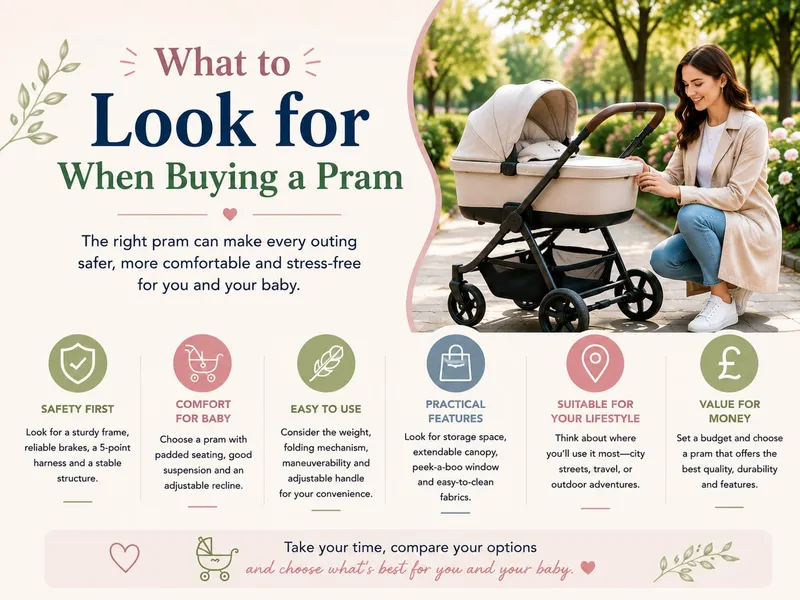
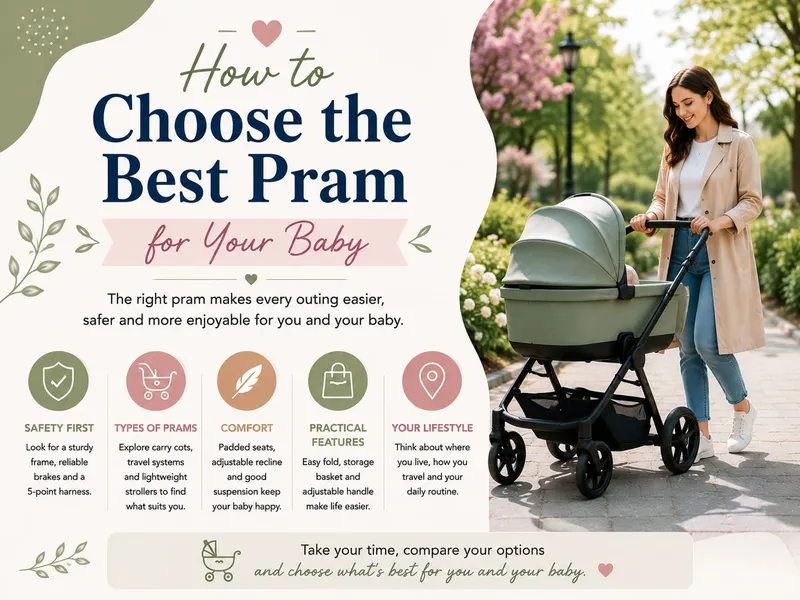
Choose a pram that suits where you often spend time—everyday city streets, countryside, holidays or frequent travel—and your child’s stage. Try models in-store at John Lewis or local pram specialists; consider quality second‑hand options if budget‑conscious.
Prioritise safety and comfort: secure harness, reliable brakes, recline and mattress, weather protection and folding. With the right fit, your pram becomes a flexible tool so you can get out, relax and enjoy time with your child.

Great article — loved the practical tips on using a pram around town.
I ended up buying the Graco EZLite after reading similar recs and it’s been a lifesaver for buses and tight café spaces. Lightweight but feels sturdy.
Also appreciated the bit about naps — my baby actually sleeps better in motion so the recline tips were spot on.
Only thing I’d add: carry a small blanket and the EAQ Cosytoes footmuff for colder days, they make a huge difference.
Thanks for the clear breakdown!
Totally agree with the Graco rec — good on buses. Does yours fold with one hand? mine’s a bit fiddly.
Peter — yes, the EZLite folds pretty neatly with one hand once you get the trick. Took a few tries but now it’s straightforward.
So glad it helped, Emily — sounds like the Graco fitted your needs perfectly. Love the practical tip about the footmuff, too.
Quick safety note: on the Tube (or narrow buses) always lock the wheels and face the pram away from the door opening where possible. I saw a near-miss with a stroller inching into closing doors — scary.
Also, check local transport rules for folding during busy times. Better to have an ultra-compact backup (like UBRAVOO) than be the cause of a delayed morning commute.
Good PSA. I always fold if it’s busy, even if the driver doesn’t ask. Less hassle for everyone.
Totally agree — wheel locks and being mindful of doors is crucial. Thanks for highlighting transport etiquette.
Question for parents here: when did you switch from a full pram to a toddler buggy? My little one is 10 months and still naps in the pram, but we’re nearing the point where we probably need something more compact for travel.
I’m eyeing the Cruise 3‑in‑1 i-Size Travel System since it combines car seat + stroller, but not sure if it’s overkill.
Would love pros/cons from folks who’ve gone from newborn setups to toddler-friendly prams.
We switched at 14 months. Kept using the carrycot for naps until then. The Cruise was good for car/travel days but bulky for everyday errands.
No hard rule — many switch between 9–18 months depending on sleep, neck/head control and how much you need compactness. If you still need the car seat-to-stroller convenience, the Cruise 3‑in‑1 can simplify transitions.
Thanks everyone — useful points. Might keep the pram for weekdays and use a compact stroller for weekends/trips.
If naps are priority, keep the pram longer. You’ll save on disrupted sleep. The i‑Size systems are great safety-wise but check boot space!
Confession: I bought the Graco because it looked cool in the ad, then my partner bought the UBRAVOO for ’emergency foldability’ and now we own both 😂
Anyone regret owning two different strollers? Or is this just par for the course with tiny humans?
Also — admin, any quick buying checklist you recommend so we don’t double-buy more accessories?
Totally normal to end up with more than one — many parents find different strollers serve different needs (travel, errands, trails). Quick checklist: 1) primary use (city/travel/off-road), 2) weight and foldability, 3) sleep/recline options, 4) compatibility with car seat (if needed), 5) basket/storage, 6) accessories you actually need (footmuff, raincover). That should reduce duplicate buys.
I spend weekends hiking with my toddler and the Kinderkraft HELSI 2 has been brilliant in muddy fields and uneven paths. The suspension soaks up bumps and my kiddo actually enjoys the ride.
BUT: it is not great for city errands — too bulky. We keep a lighter stroller for town.
Also found that the EAQ footmuff kept my child toasty during late autumn walks. Biggest tip: check what accessories fit your frame (cup holders, snack trays) before buying.
Thanks for the comparison, Hannah — that split-use strategy (trail vs city) is what many parents end up doing.
Noelle — rinse off dried mud, lightly oil joints if manufacturer allows, and tighten screws periodically. Avoid pressure washers on fabrics!
Curious — any specific suspension maintenance tips? Ours squeaks after a season of mud.
I tested the Kinderkraft HELSI 2 on some muddy trails last weekend. It’s chunky (in a good way) and handles bumps well, but man, it’s heavy to lug in and out of the trunk.
If you’re doing real countryside walks often, it’s worth it — otherwise maybe stick to a lighter travel stroller for city life.
Nice field report, Marcus. Weight vs performance is a common trade-off — thanks for sharing that firsthand experience.
Was about to ask the same — is there a recommended compromise? Something more all-terrain but not a gym session to lift?
Fun read. Footmuff love!! 🥰
Bought the EAQ Cosytoes and my toddler refuses to leave it. Totally worth the cosiness.
Also, UBRAVOO looks cute for short trips — tiny car, tiny stroller, perfect. lol
Typo: ‘off the beaten path’ secion made me giggle 😅
Loved the section about shopping centres — whoever wrote that knows the struggle 😂
I have the UBRAVOO Ultra-Compact and it’s a blessing in tight shops. Fits in lifts, zips around displays, and doesn’t make me break a sweat.
But small warning: basket space is tiny, so plan your supermarket Tetris.
Also, pro tip: bring a small clip-on bag for nappies and receipts — makes checkout life easier.
Good to see varied experiences — compact strollers are convenience-first, but accessories and clever packing bridge many gaps.
Does the UBRAVOO recline enough for naps? I hate waking a sleeping baby in shops…
UBRAVOO owner here too — agree on basket. I stash a foldable shopping bag in the seat for extra space when needed.
I did the receipts-in-the-pocket trick and lost them all. 😂 Pro tip: phone pocket is sacred.
Ha, ‘supermarket Tetris’ — love that. Thanks for the practical hack about the clip-on bag, Grace.
Tina — it reclines decently for short naps but not flat. If long naps are a must, you’d want something with a full lie-flat option.