Last updated on June 13th, 2026 at 01:47 am
Why this guide matters: getting the right wheels for your family
Choosing between a pram, pushchair and stroller can feel baffling — but the choice shapes your daily life. You want safety and comfort for your baby, ease on London pavements or in a car boot, and good value whether you buy new from John Lewis or Mamas & Papas or secondhand on Facebook Marketplace.
This guide breaks down what those words actually mean, which option suits different ages and routines, and the practical trade‑offs in size, weight and wheels. You’ll also get tips for different lifestyles — city streets, countryside walks or frequent travel, plus safety standards, useful UK accessories and where to shop smart.
Quick, practical advice for you.

Pram vs Stroller: What’s the Difference and How a Travel System Works
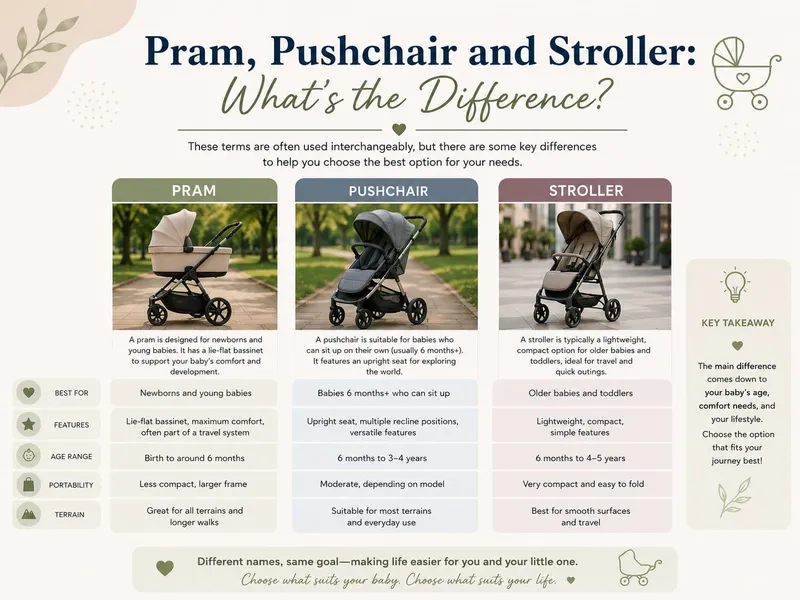
Pram, pushchair, stroller: clear definitions so you know what people mean
What a pram is
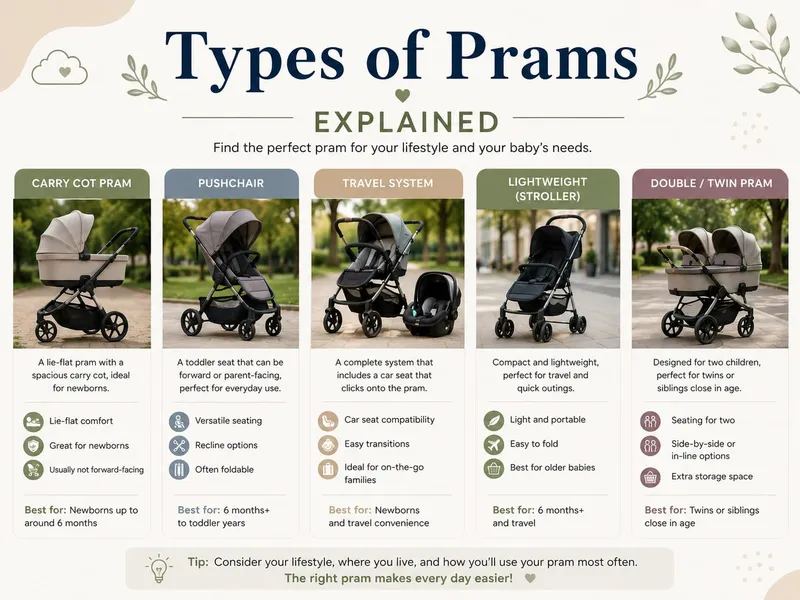
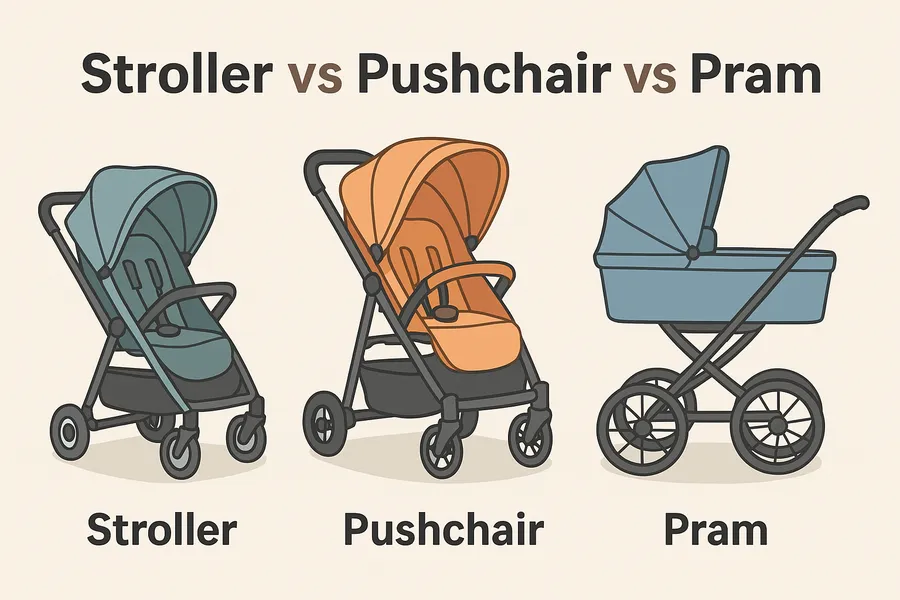
A pram (often called a carrycot in shops) is the classic, lie‑flat baby vehicle you use from birth. Think of Silver Cross-style models with a roomy bassinet where your newborn sleeps flat — ideal for the first few months. If you want your baby to nap comfortably and you push long distances on smooth pavements, a pram is the safe, sleep-friendly choice.
What a pushchair is
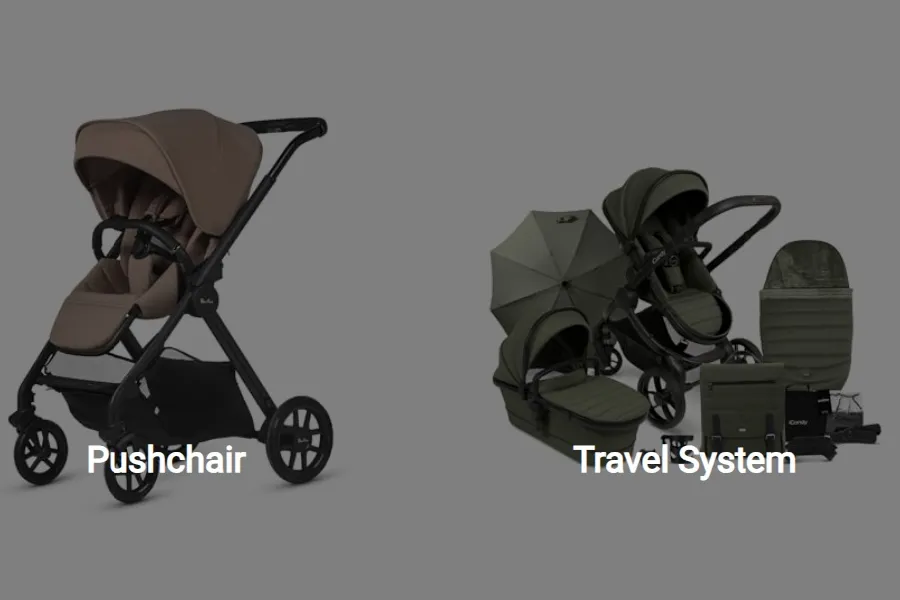
A pushchair usually means an upright seat that can be used from infancy (rear‑facing or with a newborn carrycot) through toddlerhood. Many pushchairs from brands like iCandy or Silver Cross let you switch to a forward or parent‑facing position, recline for naps, and handle everyday errands — they’re the go‑to in the UK for flexible, all‑round use.
What a stroller is
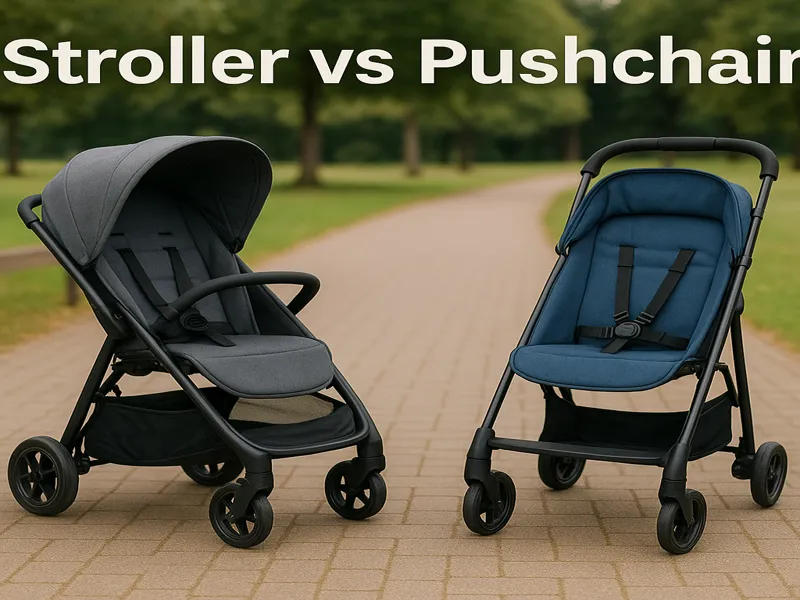
A stroller generally refers to a lightweight, collapsible chair for older babies and toddlers — the umbrella‑fold Maclaren style many parents recognise. Strollers are brilliant for travel, buses and quick trips because they fold small and weigh less, but they’re not the best for newborn lie‑flat sleep unless paired with a separate carrycot.
Hybrid terms you’ll hear (and what to ask)
Quick tips you can use right away: always check whether the seat reclines fully, how compact the fold is for your car boot or narrow hallway, and whether the wheels suit pavements or parks. Next, you’ll match these types to your baby’s age and stage so you buy exactly what you need.
Age and stage: which option fits your baby’s needs
Newborn (birth–0 months)
From day one your baby needs a flat, supportive surface for breathing and spinal alignment. That means a pram bassinet or a pushchair with a true lie‑flat carrycot. If you plan long walks, overnight naps out or have a baby who sleeps a lot, prioritise a roomy carrycot—think Silver Cross–style comfort rather than an upright buggy seat.
0–6 months
Many pushchairs work for this stage only if they offer a full recline or a compatible carrycot. Look for a padded, firm mattress in the cot and a five‑point harness when using a reclining seat. If you drive frequently, a travel system with an infant carrier (Group 0+/i‑Size) can be a lifesaver for transferring a sleeping baby without disturbance.
6–12 months
At around 4–6 months your baby will show stronger head control and may sit with support. This is the typical window to move from lie‑flat to a more upright pushchair or lightweight stroller. Signs you’re ready:
If your baby still catnaps on walks, keep using the full‑recline option until naps consolidate.
Toddler (12 months+)
From about a year, most children can use upright pushchairs or strollers designed for higher weights (many UK pushchairs support 15–22kg). Prioritise a roomy seat, a robust harness and a larger canopy for unpredictable British weather.
Travel systems: when they make sense
Choose a car‑seat‑compatible pushchair if you transfer between car and pushchair several times a day. Look for i‑Size (R129) or Group 0+ compatibility, and check whether adapters are sold by retailers like John Lewis or Argos before you buy.
Next up: how size, weight and wheel choices change the day‑to‑day usability of each option.
Design and practical differences: size, weight, wheels and folding
Size and weight: what you’ll actually carry
Prams (bassinet style) are the bulkiest — think Silver Cross Wave–style presence: roomy, heavy and often 10–14kg assembled. Pushchairs sit in the middle (around 8–12kg for robust models like the Bugaboo Fox), while umbrella strollers and travel strollers such as the Babyzen YOYO2 are the featherweights (around 5–7kg). That difference matters when you haul a buggy up a flight of stairs in a Victorian terrace or load it into the boot of a typical hatchback or estate.
Wheels and suspension: where you’ll notice the ride
Use front‑wheel locks for kerb hopping and switch to swivel for tight manoeuvres on narrow London pavements. Bigger wheels = easier kerb‑to‑kerb work; small swivel wheels = better in cafés and Tube gates.
Folding and portability: quick fold versus two‑part systems
You’ll see:
Try the fold in a shop: does it fit in your hallway? Can you lift and carry it single‑handed? Does it stand folded?
Seats, handles and storage — small details, big difference
Reversible seats let you keep baby facing you for reassurance; adjustable handles matter if you and your partner are different heights (look for 95–110cm range). A roomy basket under the chassis is essential when you’re juggling a nappy bag and the weekly shop.
Quick checklist before you buy:
Next, you’ll match these design trade‑offs to your daily lifestyle — city commutes, countryside weekends or frequent travel.
Lifestyle match: urban living, countryside days or frequent travel
City commutes and tight spaces
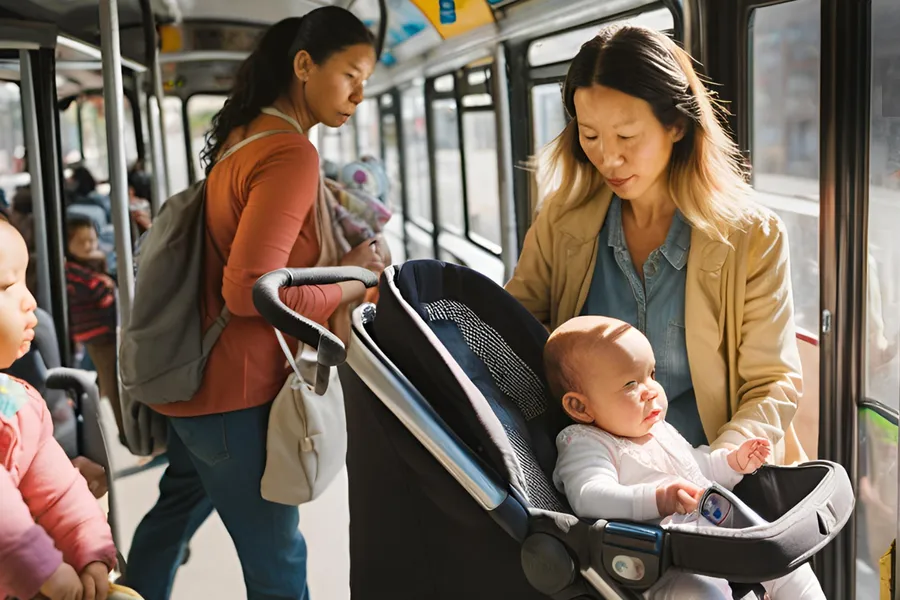
If you live in a flat and use the Tube, buses or squeeze through Tesco at rush hour, a compact, lightweight stroller is your friend. Look for a one‑hand fold that becomes a freestanding bundle you can lift onto a carriage shelf or into a taxi. Test the fold in store and try carrying it single‑handed — if you can’t manage the stairs at your nearest station, it will become a headache fast.
Countryside and rough paths
For regular walks on uneven tracks, muddy bridleways or grassy parks, choose robust wheels, good suspension and a deep, protective carrycot or seat. All‑terrain pushchairs (think models with pneumatic tyres and strong chassis) keep baby comfortable and you moving steadily over roots, stones and farm gates.

Travel and holidays: travel system vs travel stroller
Decide whether you want a travel system (chassis + car seat) or a dedicated travel stroller. Travel systems give seamless car‑to‑pushchair transfers and are brilliant for road trips; they’re bulkier. Dedicated travel strollers (Babyzen YOYO2 style) are featherweight, often cabin‑friendly on planes, but may need newborn inserts or lie‑flat options for babies under a few months.
Practical checks before you buy:
These lifestyle choices shape safety kit and useful extras — next you’ll look at what UK safety standards, straps and accessories you should prioritise.
Safety, standards and useful accessories on the UK market
Standards you should know
Look for BS/EN marks on the label — the key standard for prams, pushchairs and strollers is EN 1888 (often shown as BS EN 1888). That means the frame, brakes and restraints have been tested to European/UK safety rules. For car seats, you’ll see separate markings (i‑size/UN R129 or ECE R44/04). If a product lacks a clear standard number, walk away or ask the retailer for documentation.
Essential safety features to check
When you test a buggy, focus on these practical checks:
Accessories that make UK life easier
Raincovers, footmuffs and thermal liners are lifelines in British weather; look for waterproof fabrics and taped seams. Reflective panels or a clip‑on LED light are invaluable during darker commutes. Many hoods now include UPF protection for sunnier days.

Compatibility — car seats and carrycots
If you want a travel system, confirm adaptor compatibility with popular seats like Maxi‑Cosi or Joie — most manufacturers list compatible models. Some prams include a carrycot; if not, check whether a brand’s separate cot fits your frame.
Buying second‑hand: a quick checklist
With these checks you’re better placed to balance convenience with safety as you choose the right set of wheels.
Budget, brands and where to buy: smart shopping for British parents
Set a realistic budget (and what you get for it)
Decide what you’ll actually use — short walks, travel, or long days out — then match the price band.
Where to buy in person (why it matters)
Try before you buy. John Lewis and independent baby stores let you test folding, brakes and how a pushchair fits through your front door or trunk. Book a demo — many shops will bring models to your car so you can check boot space and assembly.
Online and high‑street retailers
Amazon UK, Smyths Toys and specialist sites often have competitive prices and click‑and‑collect. Check return policies and warranty registration — John Lewis is famous for good aftercare, which can be worth the premium.
Pre‑owned options and seasonal deals
For great value consider NCT Nearly New Sales, Gumtree, Facebook Marketplace, eBay or Preloved. Always check for recalls, full functionality and that essential parts (harness, brakes) are original.
Extra shopping tips
With a realistic budget and a shortlist of shops and models, you’ll be set to make a confident final pick — read on to wrap up how to choose the best fit for your routine.
Make a choice that fits your routine — not the other way round
Use this checklist: your baby’s age, typical outings (city or countryside), car boot and storage, and budget. Size, weight and folding matter.
Try before you buy at John Lewis, Mothercare or baby shows, and consider good-condition second‑hand buys from Gumtree or Facebook Marketplace. Pick the option that keeps your baby comfortable and makes life manageable — you decide.

Love the product mentions. Quick note: the hauck Runner 3’s handbrake is brilliant, but the seat can be a bit narrow if you have a chunkier winter coat on the baby. Measure before you buy, folks!
I added a slim fleece layer instead of a bulky coat for outings. Works well for harnessed strollers.
Good practical tip, Samantha. Seat width and harness adjustments are easy to overlook when testing in summer. Thanks for flagging the winter-coat issue.
Great guide — finally something that explains pram vs pushchair without the baby jargon. I’m torn between the Graco EZLite (6.6kg) for travel and a proper pram for newborn naps. How do people manage naps on the go? Is the EZLite okay from day one or is that asking for trouble?
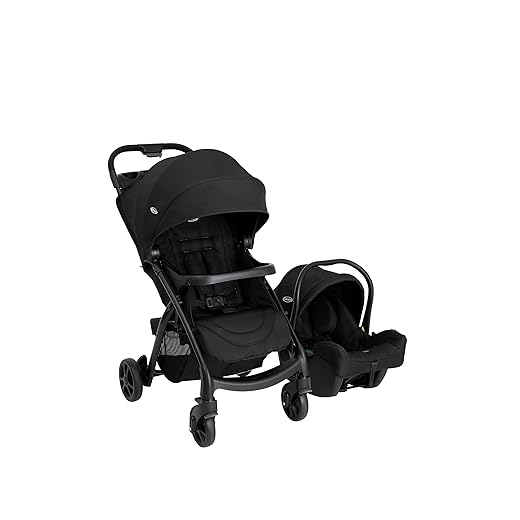
I used the Graco Tavira travel system for my first — the carrycot/car-seat combo was life-saving for naps. The stroller bit is fine for quick naps if it’s fully reclined, but for long sleeps I preferred the carrycot.
Thanks Emma — good question. The Graco EZLite is excellent for travel because it’s lightweight, but most parents prefer a fully flat pram or a travel system with a newborn car seat for the first weeks. If you want a travel stroller from day one, look for models that recline fully and have good head support (or use with an i-Size carrier like the Graco Tavira + SnugLite).
Agree with Mark. Also practice at home first — if your baby can sleep in the stroller reclined at home, you’ll have a better chance outdoors. Sun shades + good suspension make a difference.
Love the safety section — can we get a follow-up post that lists which models meet specific UK standards? I worry about i-Size vs older regs and which car seat adapters actually fit popular strollers.
Yes please. I returned a stroller once because the adapter ‘should’ fit my car seat but didn’t click properly. Such a faff.
Also remember many retailers offer in-store fitting services. Save yourself the hassle and try before you buy.
Good idea, Chris. I’ll put that on the list — a standards comparison + adapter compatibility chart would be helpful. Meanwhile, check manufacturer pages for Certified i-Size compatibility and always test-fit before buying if possible.
Genuinely helpful article. I went from assuming ‘stroller’ = everything to now knowing when a pram is actually worth it. One nit: could you add images of seat recline positions? Visuals would help tonnes.
Thanks Zoe — noted. Visuals of recline positions and fold states are on the roadmap for a revision. Glad it helped!
Yes! Screenshots or simple sketches would clear up so much. Even a photo series of a pram vs a stroller nap would be ace.
Constructive feedback: the brand section could use a quick pro/con bullet for each model mentioned. Even a one-liner (e.g., Graco EZLite: ultra-light but less suspension) would help buyers skim. Otherwise, lovely job.
Great suggestion, Grace — a pros/cons table for each model is a smart idea for busy readers. We’ll add that to the next update.
Note taken — TL;DR version incoming in a future edit.
I like quick summaries too. Long reads are great, but when you’re sleep-deprived you need the TL;DR stats!
Does anyone have tips for folding with a toddler on one arm? My current stroller needs two hands and a small crane. I’m eyeing lighter models but worried about durability.
I learned to fold it, then leave it folded in the boot ready for outings — saves the on-the-spot struggle. Also a sling helps when baby is tiny!
If you’re lifting the folded stroller often, check the carry handle placement — cheaper models hide them or make them awkward. Try in-store before buying.
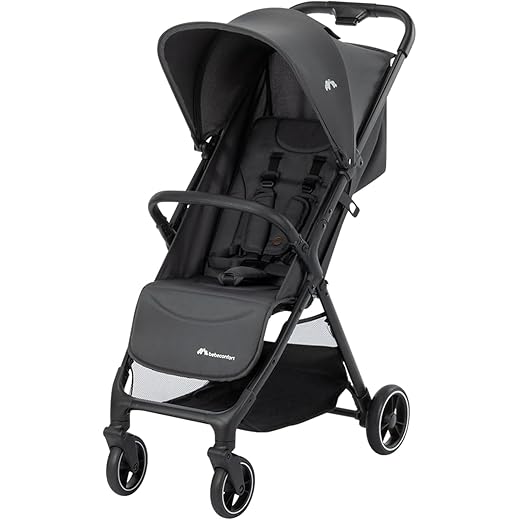
Look for one-hand fold strollers — many city strollers have that feature. Practice the fold at home a few times until it becomes muscle memory. The Graco EZLite and Bébé Confort Azur often come up as easy single-hand folds.
I’m a second-time parent and got lazy — bought a lightweight stroller online. Lesson learned: check the rain cover size. The Universal Pushchair Rain Cover I ordered looked great in pics but the hood didn’t fit my wide seat. 😒
Same happened to me. I ended up cutting and resewing bits — not ideal 😂 Worth paying a bit more for a brand-specific cover if you can.
FYI, some mums use cheap blackout fabric + velcro to rig a temporary cover for long naps outdoors. Not elegant, but works in a pinch!
Ouch, that’s annoying. Universal covers can be hit-and-miss — measure your stroller and compare dimensions where provided. Some covers are more flexible, others are very form-fitting.
Funny how every family has different needs. We swapped our pram for an umbrella stroller after 6 months and never looked back. The Bébé Confort Azur is compact enough for our flat elevator and still comfy for naps. YMMV.
Exactly — YMMV indeed. It’s all about matching to your living space, travel habits, and baby’s stage. Glad the Azur worked for you!
Same here, but I kept a backup bassinet for long walks. Compromise works.
The lifestyle section nailed it for me. We live on muddy countryside lanes so that hauck Runner 3 with all-terrain wheels and a handbrake looks tempting. Anyone found pushchairs with handbrakes actually useful, or is it just marketing?
Handbrakes can be genuinely useful on steep paths or when jogging — they offer more control than a simple parking brake. For countryside use, look for all-terrain suspension + big wheels like on the hauck Runner 3.
Totally worth it if you go off-road. I live on a hill and the handbrake saved me multiple times — plus you feel less nervous when crossing uneven ground.
If you mostly walk slowly, it’s not essential, but as soon as you add a pram with a newborn and bumpy tracks = 100% recommend.
Question: If you travel a lot, is it better to have the Graco EZLite lightweight plus a car seat adapter, or invest in a full travel system like the Graco Tavira? Looking for airlines and trains that don’t charge me extra for ‘baby gear’.
For frequent travel, a lightweight stroller that fits cabin-size rules plus an i-Size car seat (or travel system with good airline-friendly features) is usually best. The EZLite is great for flights; a travel system like the Tavira adds convenience but more bulk. Check airline policies — many allow a stroller + car seat free of charge.
We flew a lot with a lightweight umbrella stroller and a separate car seat. Airports were easier without a bulky travel system, but for long transfers the travel system was comfier for the baby.
Also tip: get a compact stroller bag for the plane — it protects the wheels and can prevent gate-check damage.
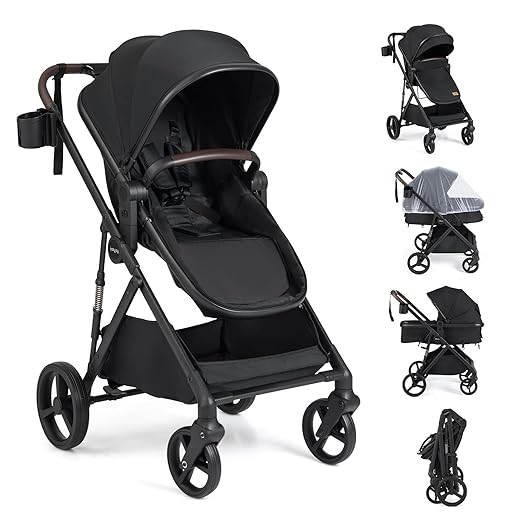
Budget-wise, the COSTWAY 3-in-1 reversible travel system seems like a bargain. But sometimes cheap equals flimsy — anyone had a meh experience vs something like Graco?
You’re right to be cautious. 3-in-1 systems can offer good value, but check weight, build materials, and UK safety certifications before buying. Graco and established brands usually have better after-sales support.
We bought a budget travel system for grandparents and it’s okay for occasional use. Not robust for daily rough use though — parts feel lighter and the wheels weren’t great on gravel.
Short and useful. I live in a city and needed something compact for public transport. The Bébé Confort Azur looked promising in the write-up — anyone used it on buses/Tube? Does it fold small enough for overhead racks?
The Bébé Confort Azur is designed as a compact city stroller, so it folds small and lightweight. It’s usually fine for buses and fits on many trains — overhead racks on the Tube can be tight at peak times, though. Consider the EZLite if absolute minimal weight matters.
I take my Azur on the bus daily — folds quick and I can carry it on my shoulder. Not perfect for the busiest Tube stations, but manageable if you’re not juggling a million bags.
Honestly appreciated the ‘Make a choice that fits your routine’ closing. Took the pressure off ‘perfect pram’ obsession. Still lol at the mum who bought a huge pram ‘for style’ and then lived on 3 flights a month 😂
I was that mum. Style won. Regrets: pushing a big pram up cobbles in Chelsea. Lessons learned.
Haha, guilty pleasures happen — style vs practicality is a real debate. Glad the article helped you put routine first!
Small rant: product photos make everything look tiny and lightweight. The Graco EZLite is 6.6kg which is light, but when your partner has 2 toddlers + bags it’s still a workout. Can we get a weight-with-bags chart next time? 😅
I weigh my stroller with the full changing bag and a few groceries — some people put a large shopping bag on the handle and forget it; that kills manoeuvrability fast.
Fair point, Neil. We’ll try to include real-world load examples in the next piece — including typical shopping + changing bag weights. Thanks for the idea!
Random tip: keep a detachable shopping net under the stroller so you aren’t tempted to hang heavy bags on the handle (bad for tipping). Also got the Universal Pushchair Rain Cover and it fits surprisingly well on my pram.
Great tips, Nora. Under-seat storage and not hanging bags on the handle are both top safety tips. Good to hear the universal cover worked for you.
Yep, I use a little bungee strap to keep a grocery bag low and centered. Works wonders.
And remember: never overload the under-seat basket beyond the manufacturer’s recommended weight — can still affect handling.