Last updated on August 19th, 2026 at 02:40 pm
Introduction
A 3-in-1 travel system that covers newborn to age four for well under £200 sounds almost too good to be true — so we put the Gcarebb 3 in 1 Prams Travel System under the same scrutiny we'd give a pushchair three times the price.
Gcarebb sells this system in six near-identical configurations across Amazon, and this review covers the 1-SK20 height-adjustable-handle version specifically – the best-selling and most representative of the range.
We’ve worked through the manufacturer’s own claims, cross-checked them against the EN1888-2 test standard it cites, and weighed up where a budget travel system like this genuinely earns its price and where it asks you to compromise. If you’re choosing between this and a recognised big-name brand at two or three times the cost, this review is built to answer exactly that question.

Gcarebb 3 in 1 Prams Travel System, Pushchair with Height Adjustable Handle, Travel Pram with Mosquito Net, Baby Stroller with...
 Amazon.co.uk Last update was on: 19 August 2026 00:36
My Babiie Footmuff - Fleece Lined Cosytoes, Universal Fitting for Pushchair, Stroller, Buggy & Pram, Dual Layer, Showerproof, Accessory for...
Amazon.co.uk Last update was on: 19 August 2026 00:36- WARM & COSY: Keep your little one snug on chilly days with the My Babiie Footmuff. Featuring a soft fleece lining and padded design, it offers the perfect blend of warmth and comfort for colder weather strolls. Also features showerproof front.
- STYLISH & PRACTICAL DESIGN: Designed to match My Babiie strollers, this footmuff adds a touch of style to your pram setup. Choose from a range of designs that look as good as they feel.
- UNIVERSAL FIT: Easy to attach and remove for most pushchairs and strollers with a 5-point harness system, the footmuff securely attaches in seconds and can be easily removed when not needed.
- CONVENIENT 2-IN-1 FUNCTIONALITY: Use it as a full footmuff in the winter or unzip the front to transform it into a soft liner during warmer months—perfect for year-round use.
- DIMENSIONS: Spacious footmuff with a Length of 96cm and Width of 45cm. Designed to easily fit in strollers, prams, buggies, and pushchairs. Hand wash only.
Lamicall Motorcycle Phone Holder Bike - Motorbike Phone Mount, Bike Phone Holder with Quick Release Handlebar Clamp for iPhone 17...
Amazon.co.uk Last update was on: 19 August 2026 00:36- 【Internal Metal】 Unlike the fragile plastic structures of ordinary alternatives, the interior and extension arms of our bike phone holder are constructed with high-quality metal—greatly boosting its stability and service life. Even under daily exposure to sun and rain, it operates smoothly, with no need to worry about breakage or deformation.
- 【Quick Release Fixed Clamp】 The BP07 motorcycle phone mount is distinguished for the upgraded quick release fixed clamp. Not only no tools requires, but also installs much faster than traditional types. You can press the button to open the fixed clamp and easily mount it on the handlebar. Finally, tighten the hand screw and go to enjoy your motor journey! The 15-40mm handlebar adapting range is widely used on motorcycle, motorbike, bicycle, stroller, treadmill, scooter, wheelchair.
- 【Shockproof Protection】 The four corners and the surface of the motorbike phone holder are matched with thick EVA resin silicone, which can bring all-round protection to your mobile phone to prevent any scratches or sliding. Even in an emergency braking, bumpy road or sharp turn, the motorcycle phone mount and the handlebars are firmly connected to each other and will not come off while cycling.
- 【Ergonomic Security Design】 The bicycle phone holder also features upgrade the easy-to-adjust lock structure, a simple flip to lock your phone firmly inside. No tools required and the ergonomic flat nut make it easy to screw in and tighten the joint ball. What’s more, 360-degree rotatable joint ball provides you endless viewing angles.
- 【One-Hand Operation】 The mountain bike phone mount adopts the auto-retract design, simple operation. Push the top of the holder with your smartphone to insert the smartphone, and when you release your hand, the arm will automatically contract and clamp the terminal firmly. Never miss the beautiful scenery along the road as it can be removed immediately.
- 【Wide Compatibility】 Universal bicycle phone holder is compatible with 4.7-6.8 inches GPS devices, such as Apple iPhone 17 16 15 14 Air, Plus, Pro, Pro Max, iPhone 13 12 Min/Pro/Max, iPhone 11 Pro, Max, Xs, Xs Max, XR, X, 8, 7, 7 Plus, Huawei P30 Pro 10 Pro P20 P10, Samsung Galaxy S10 + S10 S9 + S9 S8 S8 + S7 S6, Note 9 8 7 6, LG, HTC, Sony, Nokia, Nexus, other smart phones. Note: Please make sure that the thickness of your device is less than 15 mm.

 Amazon.co.uk

Product Overview
About the Gcarebb 3 in 1 Prams Travel System
Gcarebb is a marketplace-native brand selling six near-identical 3-in-1 travel systems through Amazon UK, and the 1-SK20 height-adjustable-handle configuration reviewed here is the version most buyers land on first.
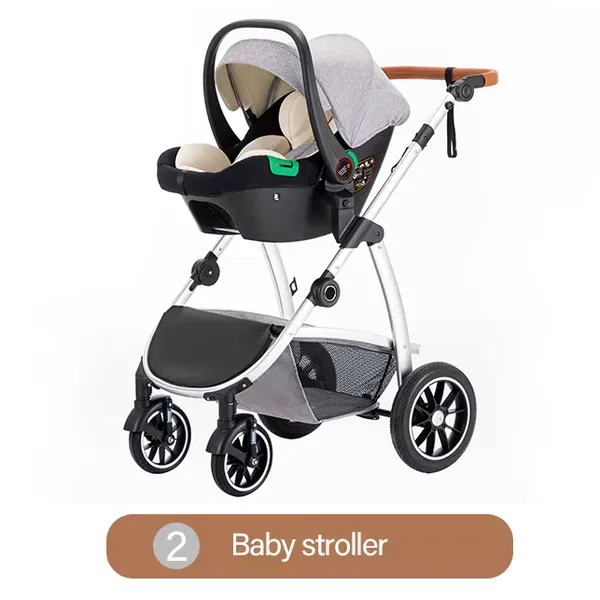
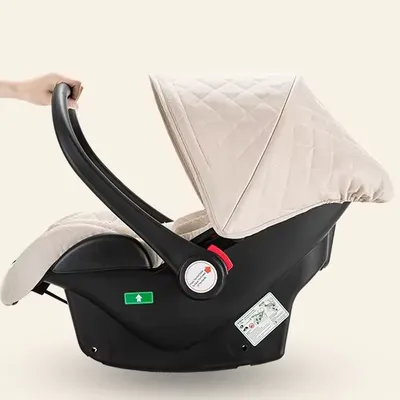
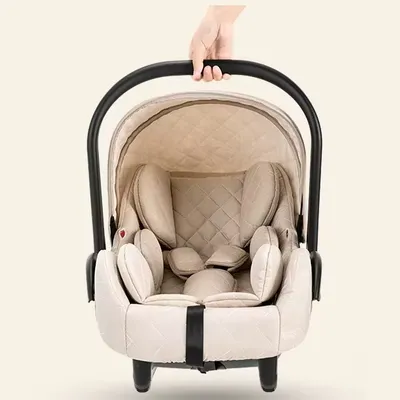
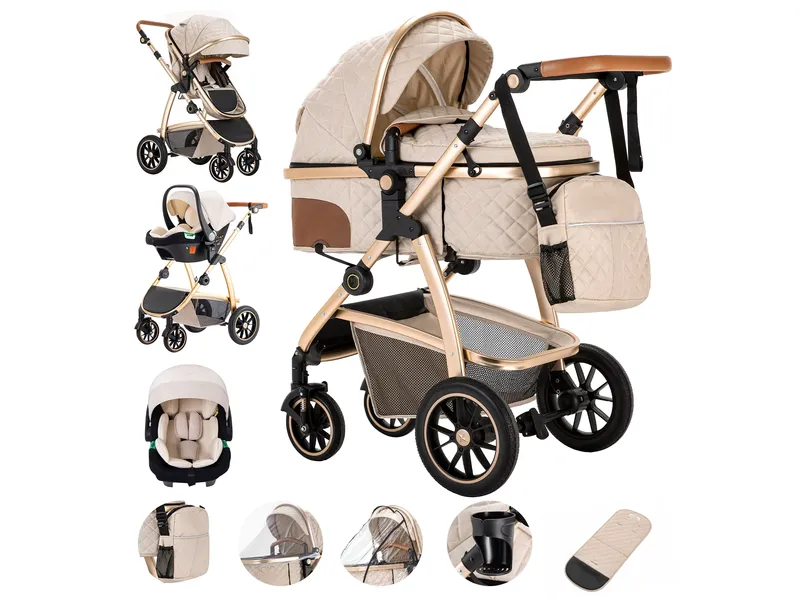
- an infant car seat rated to ECE R129 for babies up to 15 months,
- a pram/pushchair seat unit that reclines through three positions, and
- an aluminium chassis that both items attach to.
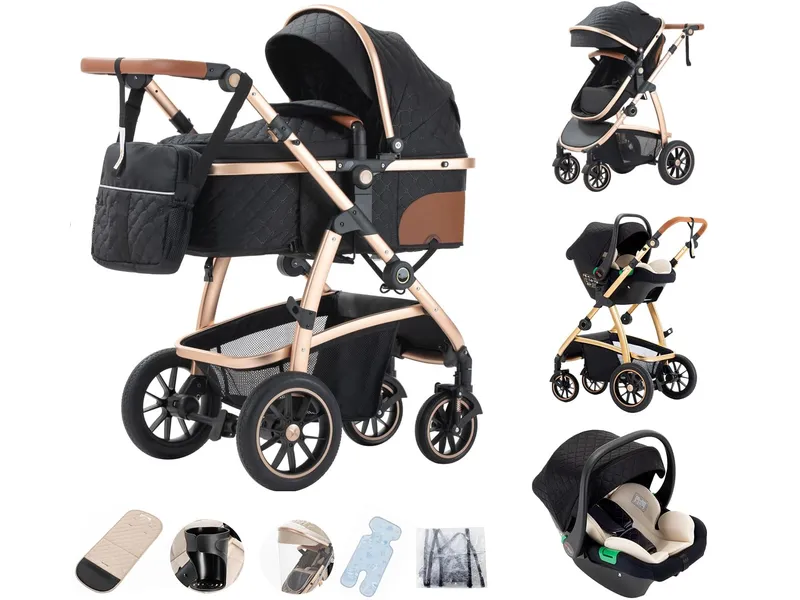
Features At A Glance
Quick Points
- 5-point safety harness with independently EN1888-2 tested frame — a higher load-cycle standard than the EN1888-1 rating common at this price
- Available in 11+ colourways, from muted greys and beiges to a PU-leather finish on the 3-808B variant
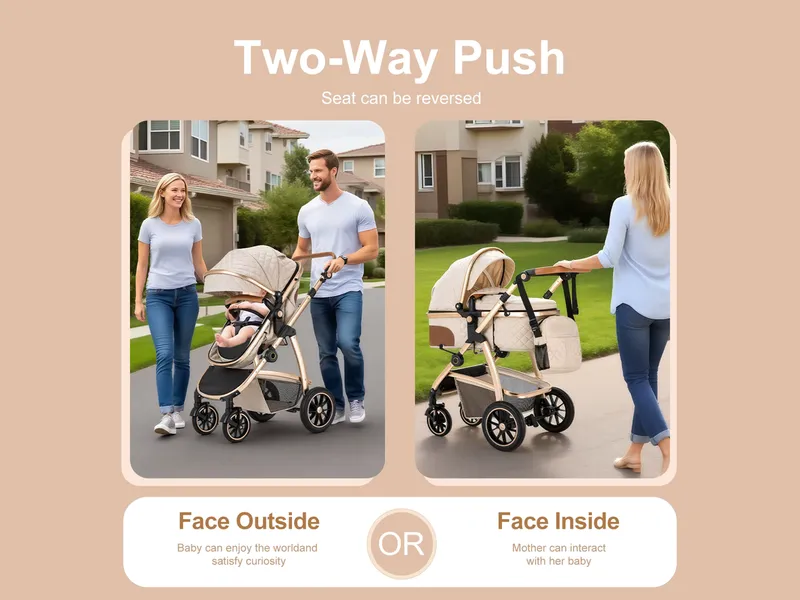
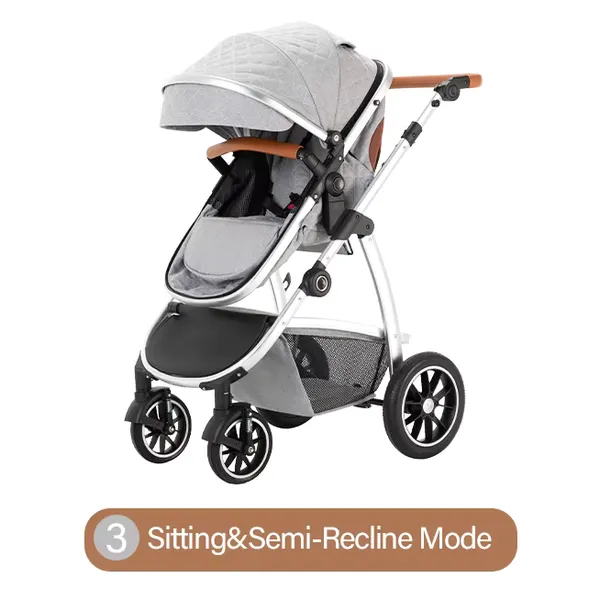
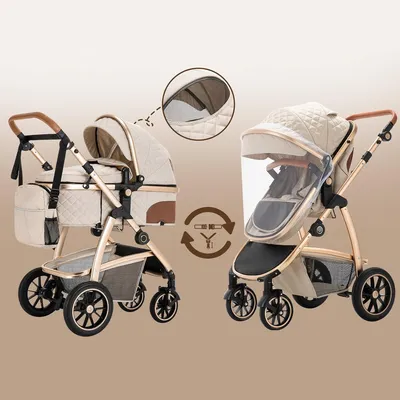
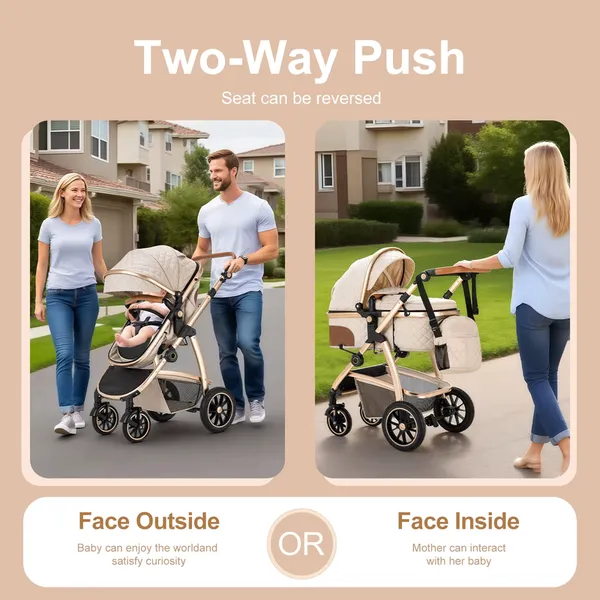
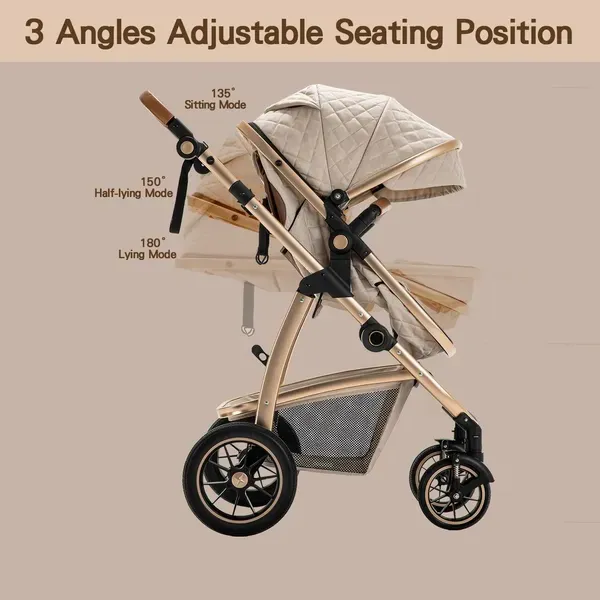
- Three-position recline (135°/150°/180°) with reversible parent- and world-facing seat orientation
- Height-adjustable handle designed to suit taller and shorter parents without back strain
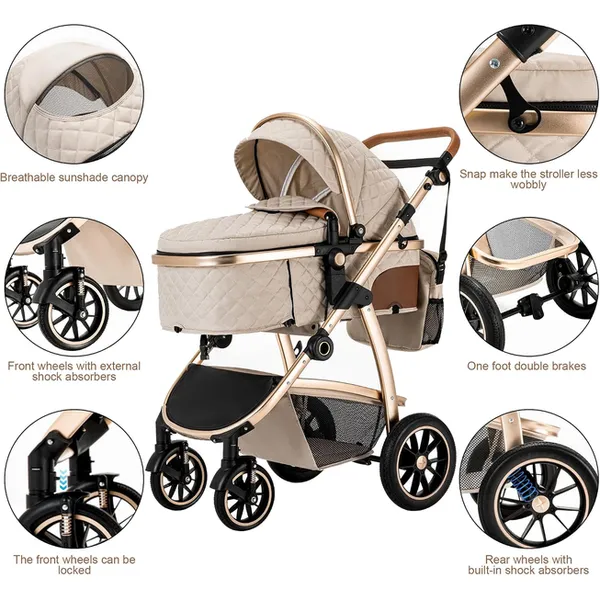
- Front-wheel locking plus independent shock-absorbing springs on all four wheels
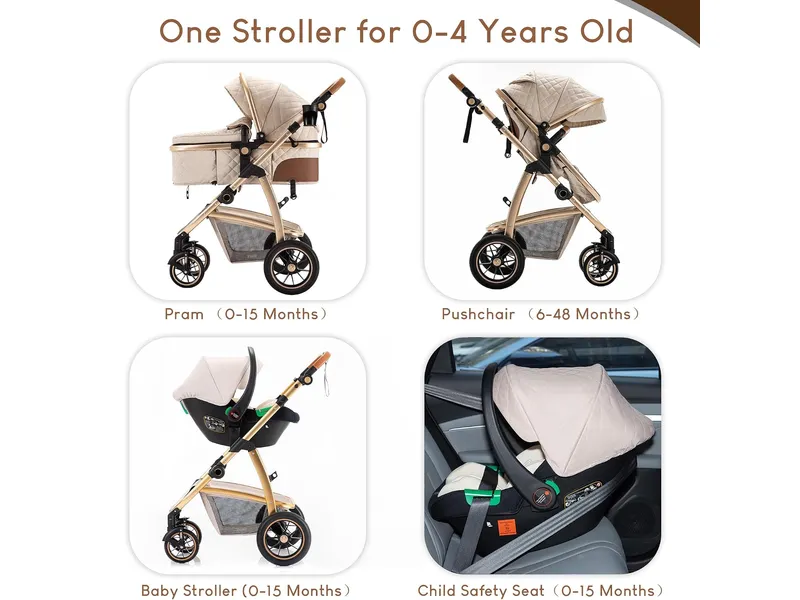
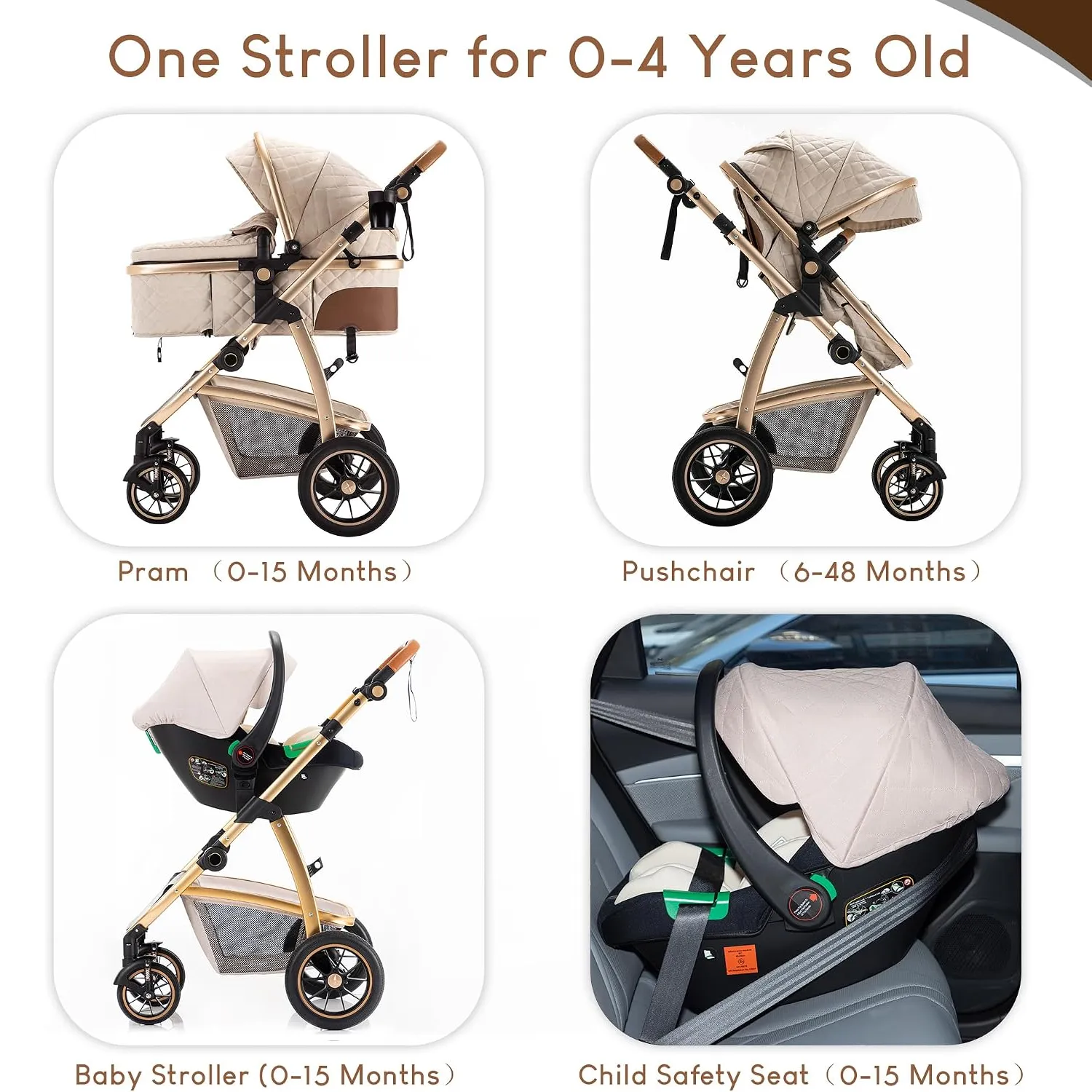
- Suitable birth to approximately 4 years via car seat (0–15 months) and pushchair seat (7–48 months) stages
Our Verdict
For a sub-£200 travel system, the Gcarebb 1-SK20 covers an unusual amount of ground: a car seat, a three-stage recline pushchair, and a genuinely generous accessory bundle, backed by an EN1888-2 rating that beats many similarly-priced rivals on paper.
It won’t match a premium travel system on finish, and Gcarebb itself has no real track record to point to yet — but for parents prioritising value and completeness over brand heritage, it’s a legitimately strong option.
- EN1888-2 tested to a higher load-cycle standard than many budget rivals’ EN1888-1 rating
- Genuinely comprehensive accessory bundle included as standard, not sold separately
- Three-position recline plus reversible seat orientation, unusual at this price
- Height-adjustable handle suits a wider range of parent heights than fixed-handle rivals
- Linked braking locks both rear wheels simultaneously rather than needing two separate catches
- Strong Amazon review volume (82 ratings, 4.5/5) with quality and value cited most often
- Gcarebb has no established brand history or track record beyond Amazon marketplace listings
- Storage basket capacity can’t be given as a figure — Gcarebb confirms this is because of the basket’s irregular shape — though the 3kg weight limit is now manufacturer-confirmed
- Fold is a two-handed button-release, not a quick one-handed action, and won’t work with the car seat attached or the seat parent-facing
- Cotton fabric (rather than a wipe-clean finish) on the standard configuration needs more careful cleaning
- Sold across six near-identical SKUs, which makes comparing exact included accessories confusing at checkout

Versatile & Durable Travel System for Families
A newborn-to-4-years travel system with an EN1888-2 tested chassis, included ECE R129 car seat, and a full accessory bundle, for a fraction of the price of a big-name equivalent.
Full Specs
What Comes In The Box
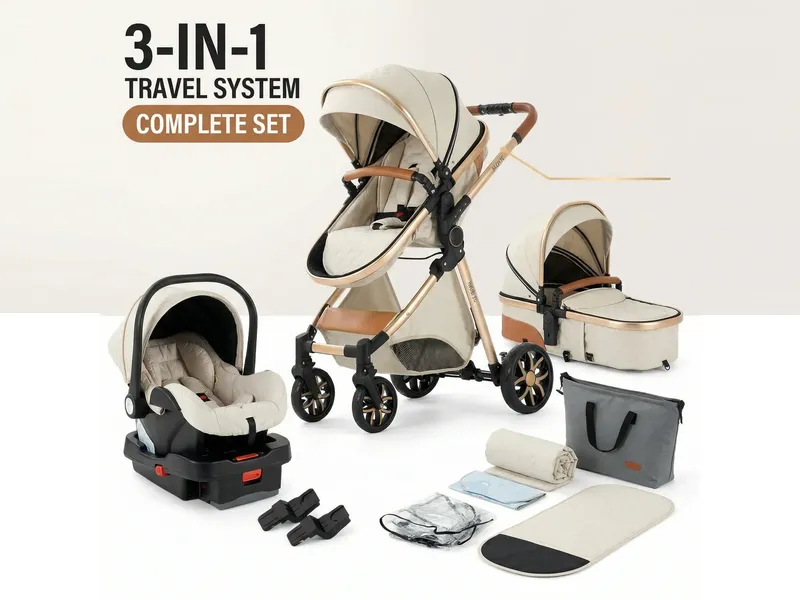
What Comes In The Box
- Pram/pushchair core frame
The aluminium chassis shared across both carrycot and pushchair seat modes — the central component everything else attaches to.
- Car seat
The included ECE R129 infant car seat, usable from birth to around 15 months, and clips onto the same frame.
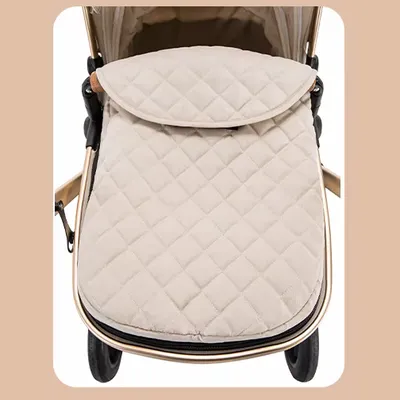
- Removable cold-protection cover
A footmuff-style winter cover that zips over the seat unit, swapped out for the mosquito net in warmer months.
- Mosquito net
A fitted summer accessory that replaces the cold-protection cover for outdoor use in insect-prone conditions.
- Rain cover
A clear waterproof cover for the seat unit, essential in the UK given the base bundle has no built-in weatherproofing beyond the canopy.
- Summer mat
A breathable liner for hot-weather use, reducing direct contact between baby and the standard cushioning.
- Soft cushion
An additional seat insert for extra newborn support and comfort.
- Cup holder
Clips onto the handlebar for a parent’s drink — a small but genuinely useful inclusion not every budget rival bundles in.
- Changing bag
A detachable Pip-Zip-style pouch that clips onto the seat unit or carries independently — sized for nappy-change essentials, not for storing the folded chassis.
Product Review
Gcarebb 3 in 1 Prams Travel System Review
First Impressions & Design
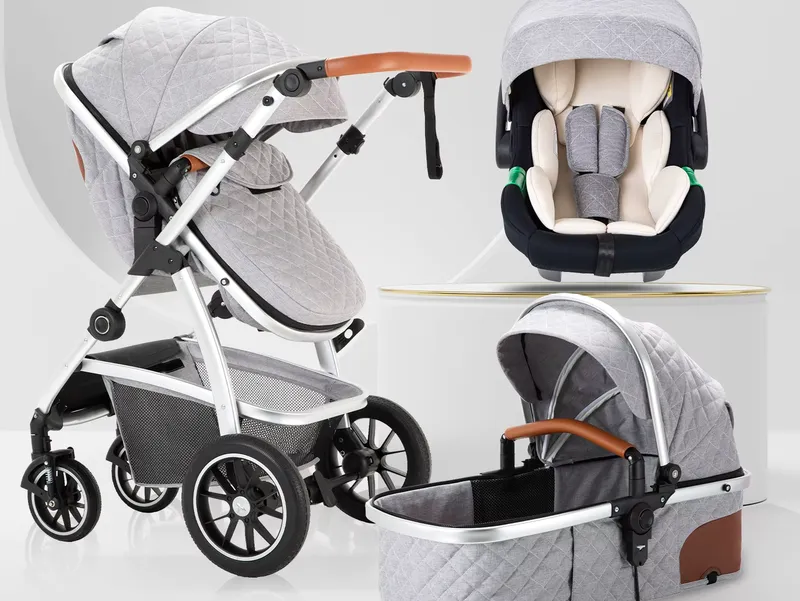
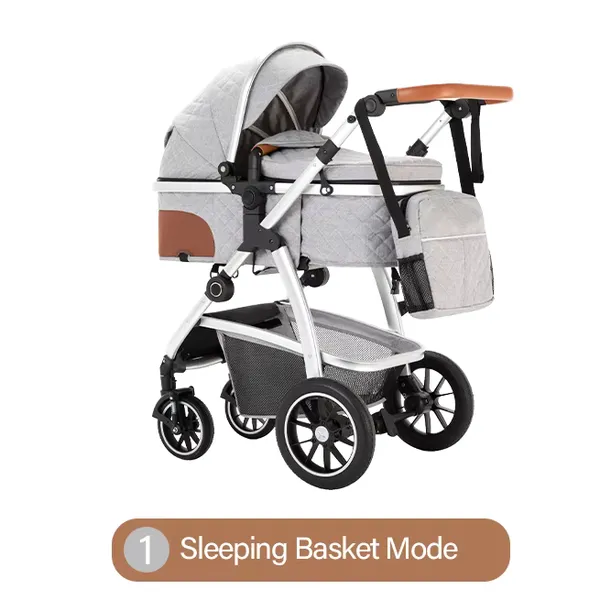
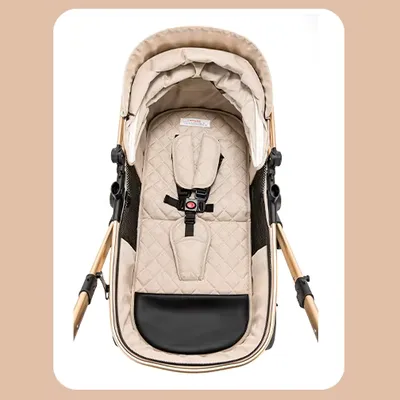
Unbox the Gcarebb and the first thing that registers isn’t budget-brand plastic — it’s a reasonably substantial aluminium chassis with a matte-finish fabric that, in Grey or Khaki at least, looks closer to a mid-range travel system than a sub-£200 one.
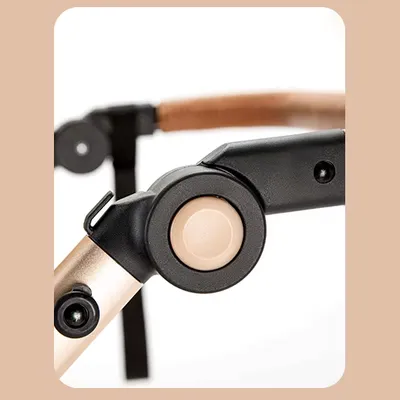
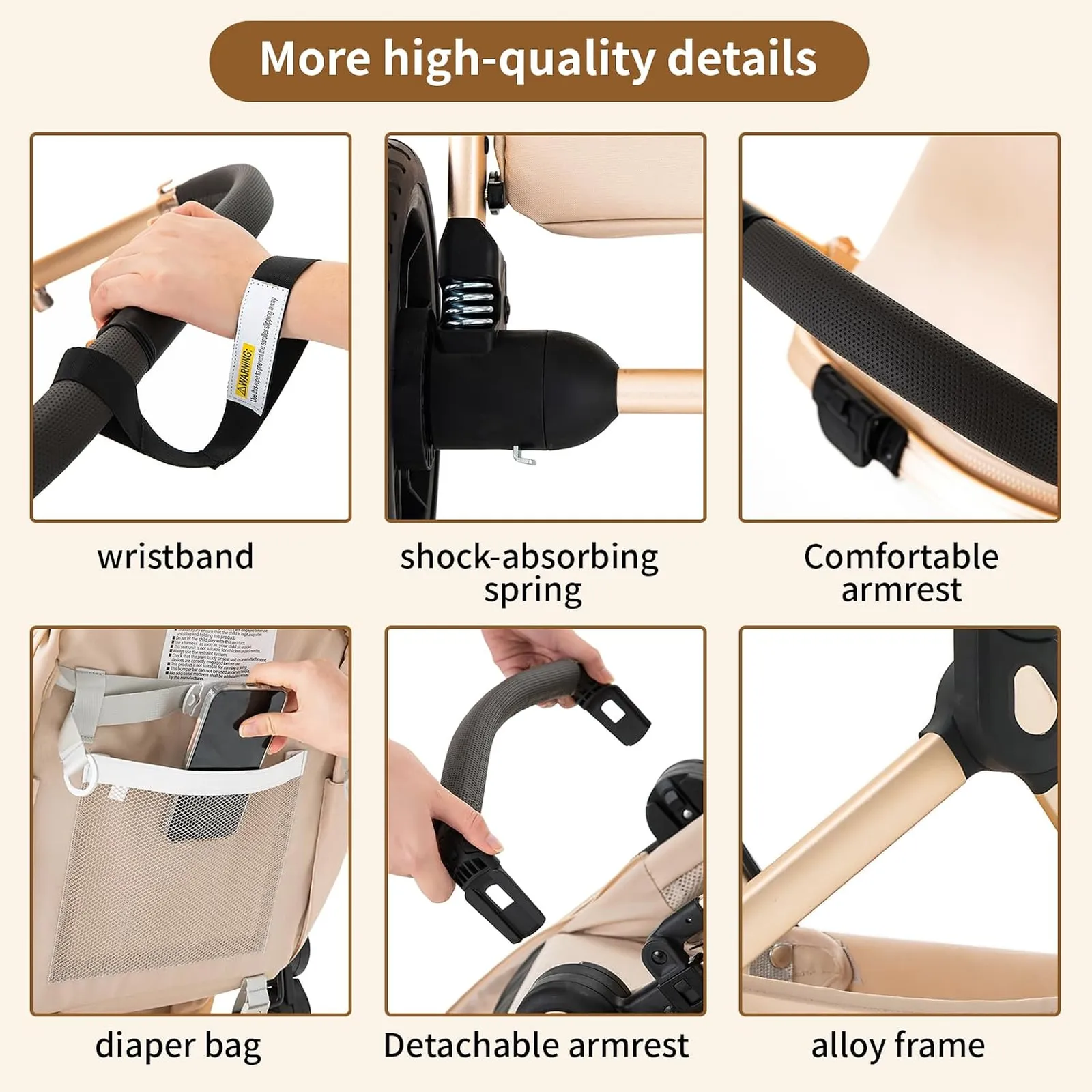
The stitching on the seat unit is even, the cup holder and handlebar bag hooks are built with heavy-duty PA connection fittings instead of standard PP plastic to prevent snapping or wear, and the overall silhouette borrows fairly directly from the high-landscape, boxy-canopy look that’s dominated premium pushchair design for the last few years.

Where it gives itself away as a budget product is in the details rather than the big picture: the canopy’s fabric is a slightly stiffer cotton than you’d find on a £600 system, and the plastic used on the wheel hubs and brake pedal has a visibly lighter, less damped feel underfoot. None of that is a dealbreaker, but it’s worth knowing before you commit — this is a pushchair designed to look right in photos and feel solid on a first push, not necessarily to survive three years of daily abuse without any wear showing.
What’s actually going on here is a fairly common budget-travel-system strategy: spend the manufacturing budget on the parts a buyer touches and photographs first — fabric colour, frame silhouette, handlebar grip — and economise on the parts that only reveal themselves after weeks of use, like hub bearings and canopy stiffener quality.
- Aluminium frame keeps assembled weight reasonable: at a manufacturer-confirmed 10.4kg for frame and seat together, it doesn’t feel like you’re wrestling a steel-framed pram out of a boot, which matters the first time you’re doing it one-handed with a baby on your hip.
- Colour range extends past the usual grey-and-black budget default: Beige, Khaki, and a PU-leather finish on one variant give you genuine styling choice, which most sub-£200 systems don’t bother offering.
- Good quality hardware on touch points signals where the budget went: the cup holder mount and bag hooks are heavy-duty PA connection fittings, not the brittle moulded plastic that tends to snap on cheaper systems within the first year.
- Cotton canopy fabric trades weatherproofing for look and feel: it has a nicer hand-feel than the coated polyester most budget canopies use, but you’ll want the included rain cover on more days than a wipe-clean fabric would demand.
- Wheel hub and brake pedal plastics are the clearest budget tell: they work fine, but the lighter, less damped feel underfoot is the one place a parent upgrading from a premium system will notice the price difference immediately.
First impressions land well above what the price tag suggests, mostly because Gcarebb has clearly prioritised the parts a buyer sees and touches in the first five minutes. The trade-offs are real but specific — a stiffer canopy fabric and lighter hardware plastics — rather than a general feeling of cheapness, which is a meaningfully better outcome than most products at this price manage.
Measurements That Matter
If you’ve ever stood in a narrow hallway trying to work out whether a folded pushchair is actually going to fit through your front door without you turning it sideways, the raw dimensions on a spec sheet only tell you so much. Folded, the Gcarebb comes to 102 x 58.5 x 40cm — confirmed directly by Gcarebb after we queried the dimensions on the Amazon listing, which turned out to be the packaging box size (81 x 50 x 37cm), not the product itself. If you’ve seen other reviews or listings quoting 81 x 50 x 37cm as the folded pushchair size, treat that figure as the shipping carton, not the frame.
At 58.5cm wide and 102cm long when folded, this is a genuinely large folded footprint — bigger than several rivals that fold to a slimmer, more compact profile. That size matters far more in a UK terraced-house hallway, a narrow flat, or a compact hatchback boot than it does in a driveway or a detached-house porch, so how much this bothers you depends heavily on where you actually live and park.
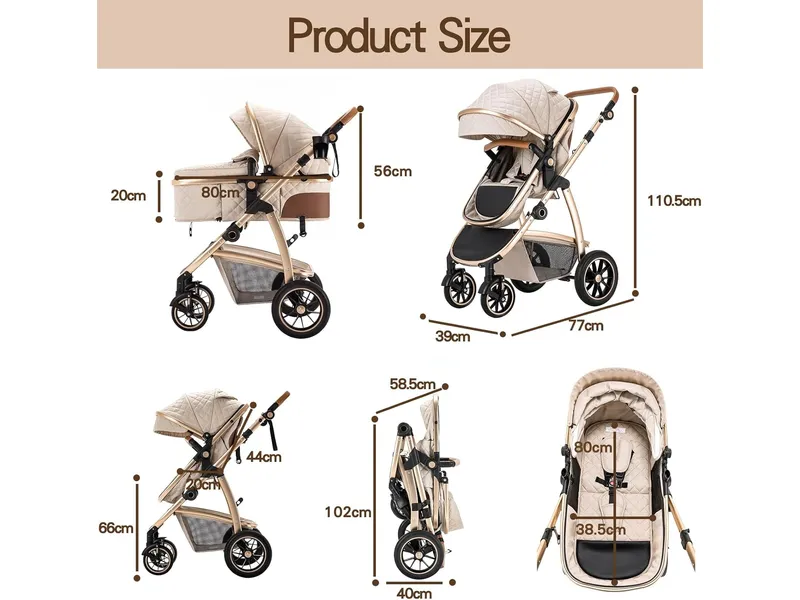
Standing height is 110.5cm to the top of the canopy in pushchair mode, with a separate frame height of 66cm at the seat-base level — comfortably in high-landscape territory, which keeps a toddler’s face further from exhaust fumes and pavement-level dust than a low-slung buggy — a genuine, if unglamorous, everyday benefit.
- Standard UK doorway width (76cm) still clears the folded frame, with less margin than a slimmer system: at 58.5cm folded width you’ve got real but not generous clearance either side.
- Ticket-barrier gaps at some train stations are a genuine concern, not a marginal one: the 58.5cm folded width sits close to or above the narrower end of standard barrier gaps at many UK stations, so check your specific route before relying on this for a regular commute.
- Boot clearance needs real checking, not assuming: at 102cm folded length, this is longer than several full-size travel systems fold to, and may not fit lengthways in a small hatchback boot without folding the rear seats — measure your specific boot before ordering.
- Lifting the folded unit in is a genuine two-handed job: at a manufacturer-confirmed 10.4kg for frame and seat combined, this is heavier than a lightweight stroller and worth factoring into how often you’ll be doing it solo.
- Home storage footprint suits a hallway, utility room, or garage more than a tight under-stairs cupboard or narrow flat entryway: at 102cm long folded, it’s a genuinely bulky item to store, not a slim umbrella-fold buggy.
The dimensions here are honest rather than flattering once you’re working from the real figures rather than Amazon’s box measurement: this is a full-size travel system with a full-size folded footprint, and 102 x 58.5 x 40cm — not the 81 x 50 x 37cm often quoted — is what’s worth checking against your own hallway, boot, and storage space before you order.
Build Quality
The honest weak point of this review is that Gcarebb doesn’t have a multi-year track record to draw on – there’s no fleet of five-year-old Gcarebb pushchairs out there to check for known failure points the way there is with an established brand. What we can assess is the EN1888-2 certification itself, which is a genuinely meaningful data point: it’s a stricter standard than the EN1888-1 rating that covers pushchairs up to 15kg, testing this frame to 22kg with substantially higher lifting- and road-cycle counts.
Beyond the certification, Amazon’s own listing draws a specific contrast with unnamed rivals: Gcarebb states it uses PA (nylon) fittings rather than the PP (polypropylene) fittings it says “most other strollers” use, on the basis that PA is less prone to snapping under stress. We can’t independently verify that claim against a specific competitor, but it’s at least a specific, checkable engineering claim rather than vague marketing language, which counts for something.
What this adds up to: a chassis that’s been tested to a genuinely higher bar than many budget rivals, from a brand with no independent reputation to fall back on if something does go wrong down the line — the certification is real, the brand history to reassure you long-term isn’t.
- EN1888-2 rating means the frame has been tested well past its stated load: 13,300 lifting cycles and 96,000 weighted road-test cycles at 22kg, versus the more common EN1888-1 standard’s 10,000 lifts and 72,000 cycles at 15kg — genuinely reassuring if you plan to use this for the full newborn-to-4-years span.
- PA fittings are claimed to be more durable than typical budget PP fittings: which, if accurate, means less risk of a plastic joint snapping under the stress of daily folding and unfolding over a couple of years.
- No independent long-term reliability data exists yet for this specific brand: so while the engineering claims are specific and testable, you’re taking them on trust rather than on multi-year track record — a real trade-off against an established name.
- Cotton fabric will show wear faster than a technical wipe-clean weave: expect the canopy and seat cover to need more careful spot-cleaning over time than a synthetic-fabric rival, which affects how the pushchair looks after a year or two, not how safely it functions.
Build quality here is a genuine mixed picture, not a soft one: the certification and fittings claims are specific and above what many budget rivals offer, but there’s no brand track record to lean on if something does go wrong two years in — a real caveat for anyone weighing this against a longer-established name at a similar price.
Comfort for Baby
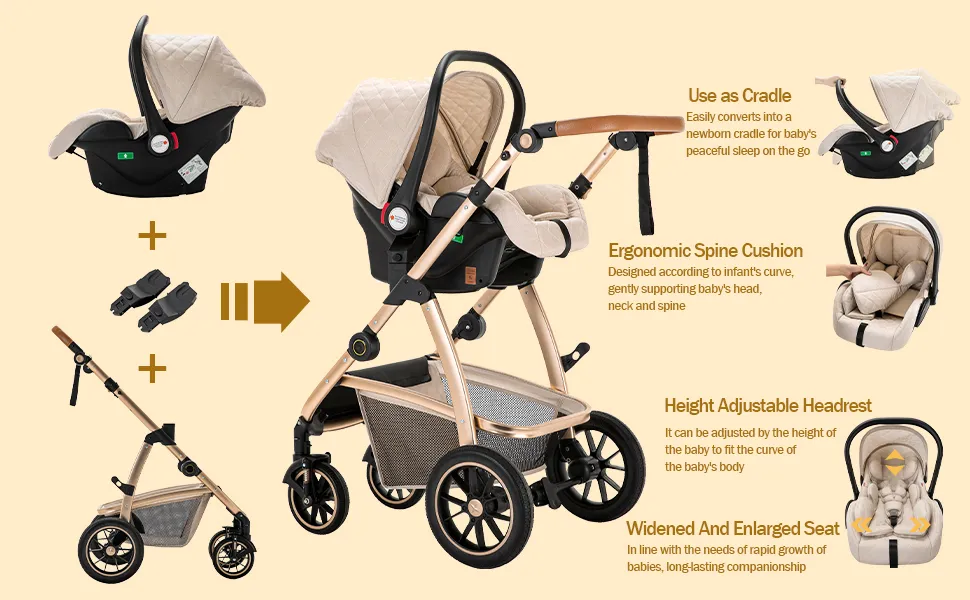
Picture a first car-to-pram transfer: baby’s finally asleep after a car journey, and you need to move your baby from the car seat to pushchair without waking him/her up. This is exactly the scenario Gcarebb’s car seat is designed around — the armrests adjust angle specifically to allow this transfer, and the seat itself can double as a gentle rocker on a flat surface, so a sleeping baby doesn’t have to be disturbed just because you’ve arrived somewhere.
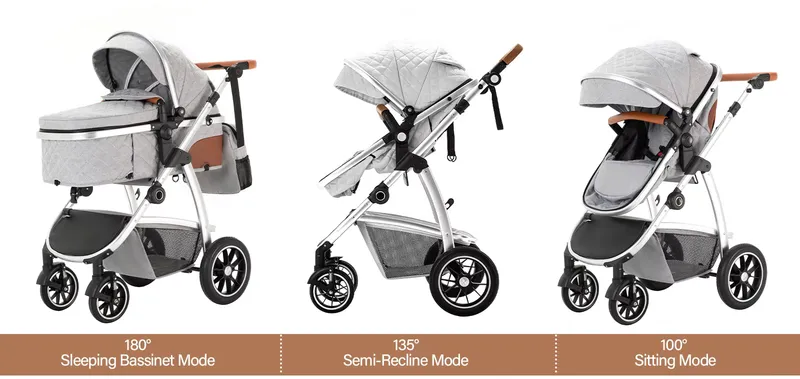
Once out of the car seat stage, the pushchair seat’s three recline positions (135° sitting, 150° semi-recline, 180° full recline) cover the basics reasonably well, though “180°” on a budget system is worth treating with mild scepticism — it’s rarely a true flat lie-flat the way a dedicated carrycot is, more a generous recline that suits naps better than genuine newborn-flat positioning.
The summer mat and cushion inclusions are a small but real comfort upgrade over rivals that charge extra for seasonal seat liners, giving you a way to adjust the seat’s feel across a UK summer and winter without buying anything additional.
- Car seat rocking function eases the sleeping-baby transfer problem: being usable as a cradle on a flat surface means you’re not forced to wake a sleeping baby just to move them indoors.
- Three recline positions cover naps better than they cover true newborn flat-lie: 180° is a generous recline rather than a certified flat carrycot position, so very young newborns are better served by the car seat stage than the pushchair seat.
- Seasonal liners are included rather than sold separately: the summer mat and cushion let you adjust seat feel across a UK year without extra spend, which some budget rivals charge £15-20 for as add-ons.
- Reversible seating lets baby face you during the months they need reassurance most: world-facing works once they’re older and want to see out, but the option to flip it back is there when separation anxiety kicks in.
Comfort provisions here are genuinely thoughtful for the price — the sleeping-transfer function and included seasonal liners both solve real, specific parenting problems rather than ticking a spec-sheet box. Just don’t rely on the 180° recline as a substitute for a proper flat carrycot if you’ve got a very young newborn.
Comfort for Parents
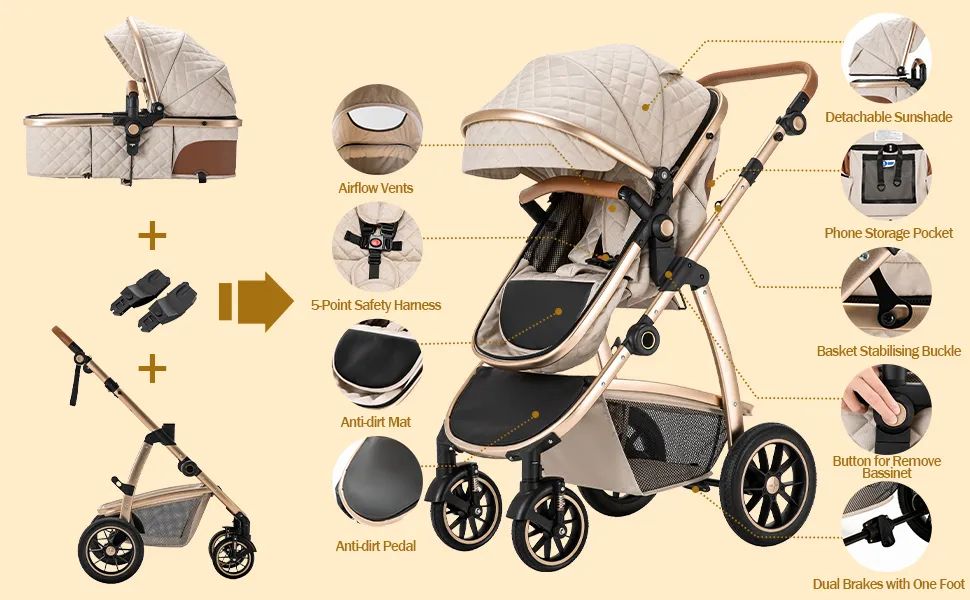
Handle height adjustment is the single feature Amazon reviewers mention most often for this system, and it’s easy to see why: a fixed-height handlebar is one of the most common sources of long-term back complaints among parents, and plenty of budget systems still don’t offer any adjustment at all. Gcarebb’s does, and one reviewer specifically noted it as “a game-changer” for a shorter parent who’d struggled with pushchairs that were too tall.
Where this compares less favourably to premium systems is one-handed manoeuvring feel — Gcarebb doesn’t publish steering-effort or turning-circle figures, and the wheel hub plastics noted in First Impressions suggest a slightly less refined ride than a system with genuinely premium suspension tuning.
The linked braking system, which locks both rear wheels with a single pedal action rather than needing you to catch two separate brakes, is a small but genuine convenience most parents only appreciate once they’ve used a system without it.
- Height-adjustable handle is the standout comfort feature parents actually notice: it accommodates a real spread of adult heights, which reduces the back strain you’ll feel from pushing at the wrong height over a long walk.
- Linked braking saves you fumbling for two separate brake catches: one pedal locks both rear wheels, which matters most on a slope or when you need to brake quickly with one hand full.
- Armrests that open and swivel 180° make getting baby in and out easier on your back: you’re not leaning as far over a fixed bumper bar every time.
- Steering feel is solid rather than premium-refined: effective for everyday use, but the wheel hub plastics mean it won’t feel as damped or effortless as a system with genuinely premium suspension tuning underneath.
This is one of the categories where the Gcarebb punches above its price most clearly — the handle adjustment and linked braking solve two of the most common parent-comfort complaints directly, even if the overall steering feel stops short of what a genuinely premium chassis delivers.
Folding Mechanism
| Fold type | Two-handed button release |
| One-handed / two-handed | Two-handed — press release buttons on both frame tubes simultaneously |
| Freestanding when folded | Not specified by manufacturer |
| Folds with seat attached | Yes, if forward/world-facing — not if parent-facing |
| Folds with car seat attached | No — car seat must be unclipped first |
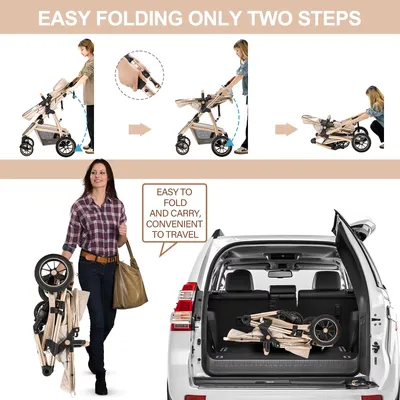
This used to be a genuine data gap in Gcarebb’s Amazon listing, but direct correspondence with the manufacturer — plus Gcarebb’s own product graphics and manual — fills it in clearly. The fold is a two-handed button-release: press the release buttons on both sides of the frame tubes simultaneously, then pull the frame up to complete the fold. The 3-808B and 5-808C variants in the range use a different one-hand quick-fold mechanism; this 1-SK20 configuration uses the two-handed release described here instead.
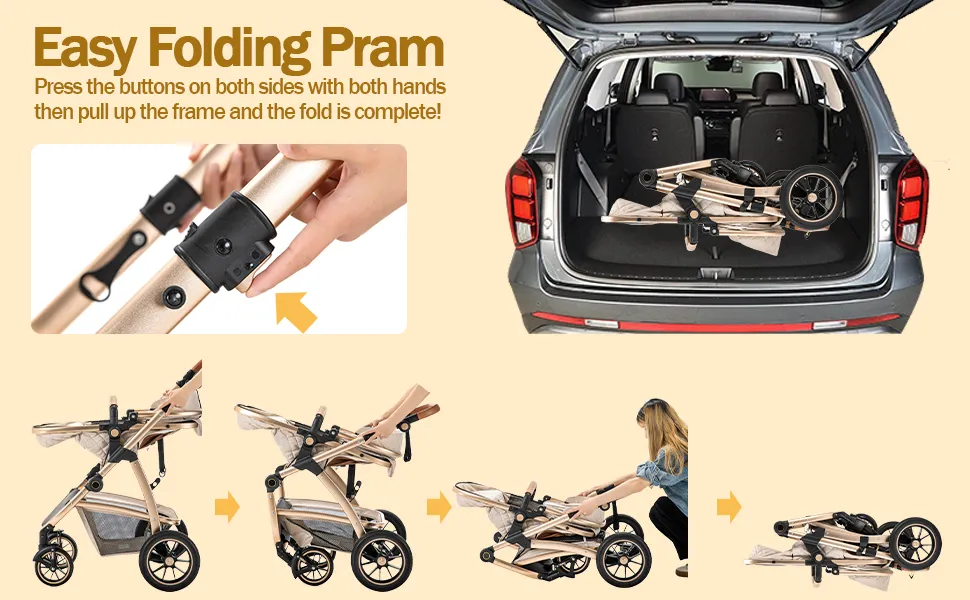
Gcarebb has also confirmed directly that the frame folds differently depending on what’s attached: with the pushchair seat fitted and facing forward (world-facing), the whole unit folds together without removing the seat.
Fit the seat parent-facing, or leave the car seat attached, and it won’t fold — both need to be repositioned or removed first. Customer reviews are consistent with this: several describe the fold as straightforward once you know the sequence, with remembering the seat-orientation and car-seat rules above being the main thing to get right early on.
Folding the chassis
- Check the seat orientation or remove the car seat
If the car seat is fitted, unclip it first — the frame will not fold with it attached. If the pushchair seat is fitted and parent-facing, turn it to forward-facing; the frame only folds with the seat in this orientation.
- Press both release buttons at once
Locate the release buttons on both sides of the frame tubes, just below the handlebar, and press them simultaneously with both hands.
- Pull the frame upward to complete the fold
With both buttons pressed, pull the frame up towards the handlebar; the chassis collapses down into its folded 102 x 58.5 x 40cm footprint.
Treat the fold as a genuine two-handed process, not a quick one-handed release — and remember it only works with the seat forward-facing or fully removed. Once you know the sequence it’s straightforward, but it’s worth practising at home before relying on it for a quick exit somewhere busy.
Convertible / Combination Format
Compared with a true travel system built around a separate carrycot stage — pram mode, pushchair mode, and car seat mode as three genuinely distinct attachments — the Gcarebb is a simpler two-attachment system: the ECE R129 car seat covers newborn through 15 months, and the pushchair seat (rather than a standalone carrycot) covers 7 months through 4 years, with the two stages overlapping rather than a strict carrycot-to-seat handover.
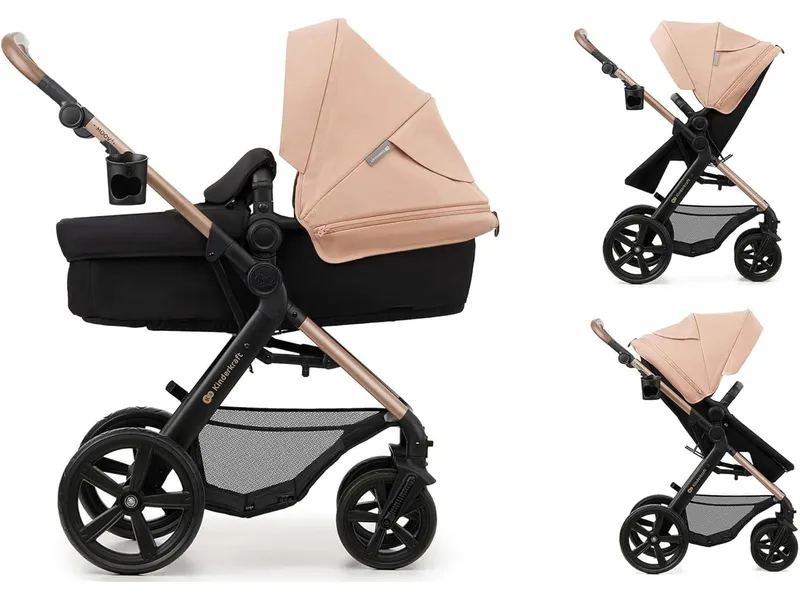
That’s a meaningfully different structure to something like the Kinderkraft MOOV2, which bundles a genuine carrycot alongside the pushchair seat and car seat for a true 3-piece system — Gcarebb’s “3 in 1” naming refers to stroller, pushchair, and car seat modes of the same core hardware rather than three physically separate attachments.
In practice this means there’s a roughly month-or-two window (around 5-7 months) where your baby has outgrown the car seat’s comfortable use but the pushchair seat’s lowest recline is your only lie-back option — worth knowing rather than a serious flaw, since the 180° recline genuinely does cover most of that gap for the majority of babies.
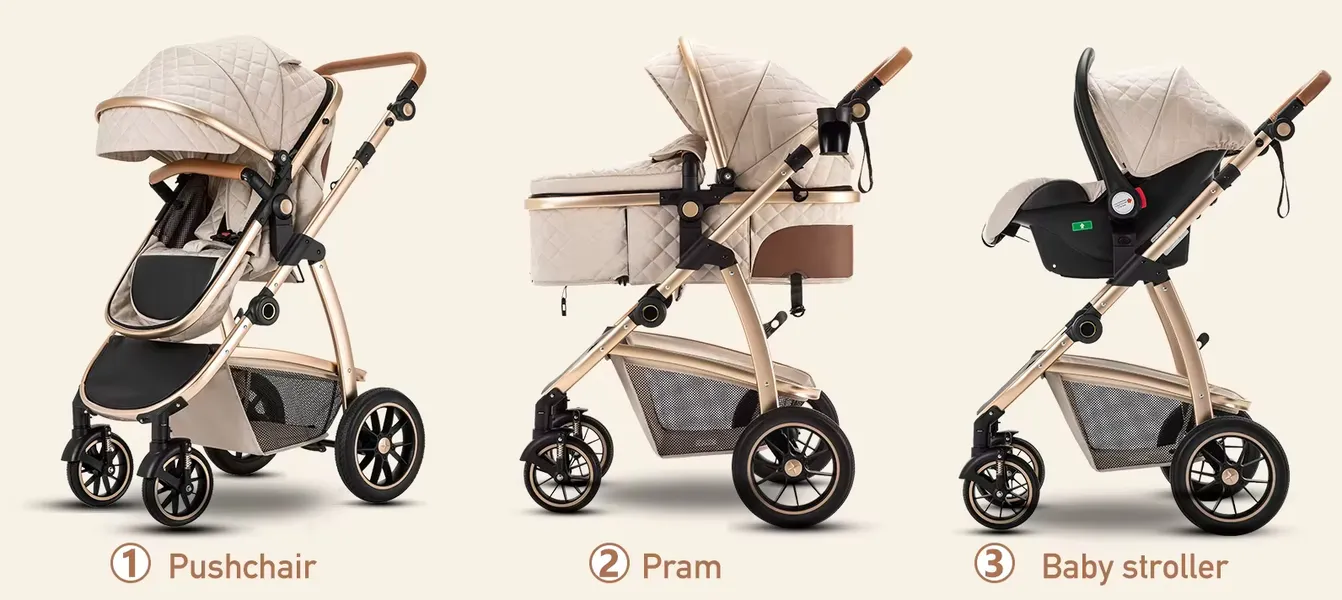
- Two-attachment structure, not three: car seat and pushchair seat share the frame, rather than car seat, carrycot, and pushchair seat all being separate units — simpler to manage, but less flexible than a true 3-piece system.
- Car seat doubles as a rocker on a flat surface: partially compensating for the lack of a standalone carrycot mode by letting you set a sleeping newborn down without transferring them.
- Switching between car and pushchair mode is a physical swap, not a quick-click conversion: you’re detaching one attachment and fitting the other, not converting a single seat unit between orientations.
- Terminology on the listing is genuinely “3 in 1” by mode, not by physical attachment count: worth clarifying before you buy if you were expecting a carrycot specifically, since that’s a common point of confusion with budget travel systems generally.
If you specifically want a standalone flat carrycot stage, this isn’t that system — but for the large majority of parents who use the car seat for early months and move to the pushchair seat once baby can sit with support, the two-attachment structure covers the real-world need without the extra cost and storage of a third component.
Everyday Practicality
The basket is confirmed to hold up to 3kg and measures roughly 48 x 40 x 20cm — both figures given directly by Gcarebb, who note the basket’s irregular shape means these are reference dimensions rather than an exact spec. That’s a reasonably generous size for the price, enough for a changing bag alongside a moderate shop.
Where the system does perform well day-to-day is the height-adjustable handle and lockable front wheels combination — genuinely useful for the school run and shopping-centre scenarios where you’re weaving through crowds one-handed while holding a coffee or a toddler’s hand with the other.
The cup holder and bag hooks, small as they sound, add up over weeks of actual use — they’re the kind of detail that separates a pushchair designed around how parents actually move through a day from one designed purely to look good in a product photo.
- Storage basket is a decent size for the price: roughly 48cm (L) x 40cm (W) x 20cm (H) and a manufacturer-confirmed 3kg maximum — useful to know before loading up on a big shop.
- Lockable front wheels help in shopping centres and on uneven pavements: switching to fixed tracking when you need predictable steering rather than manoeuvrability.
- Cup holder and bag hooks are small but genuinely useful for the school run: one Amazon reviewer specifically flagged the lack of a cup holder as their main complaint on a similar system — Gcarebb includes one as standard.
- Height-adjustable handle earns its keep most on longer outings: a shopping trip or a full afternoon at the park is exactly when a mismatched handle height turns into real discomfort.
Everyday practicality is a genuine strength for this system, let down only by the unpublished basket capacity — everything else, from lockable wheels to the small handlebar conveniences, is built around how parents actually move through ordinary days rather than how a pushchair photographs.
Travel, Storage & Portability
If you’ve ever had to fold a pushchair one-handed at the bottom of a train platform ramp while holding a toddler with the other, the practical reality of this system’s dimensions matters more than any spec sheet — and doubly so once you’re working from the real folded size (102 x 58.5 x 40cm) rather than the 81 x 50 x 37cm Amazon lists, which is actually the packaging box. It isn’t the most compact system on the market, it isn’t a one-handed fold, and it doesn’t stand freestanding by manufacturer confirmation — so plan on leaning it against something, not balancing it upright, if you need both hands free after folding.
For UK rail travel specifically, the 58.5cm folded width is worth checking against your regular station’s ticket gates in advance — this is wide enough that older, narrower barrier styles could be a genuine squeeze rather than a marginal one.
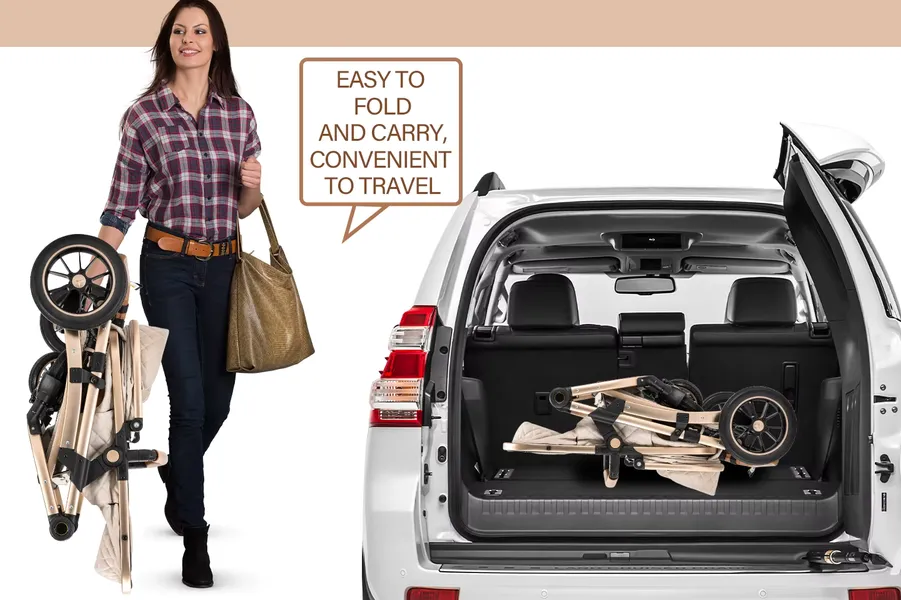
Home storage suits a hallway, utility room, or garage more comfortably than a tight under-stairs cupboard or a narrow flat’s entryway, purely on account of that 58.5cm folded width and 102cm folded length — genuinely bulky dimensions once you’re working from the real figures rather than Amazon’s box size.
- Not confirmed freestanding when folded: plan to lean it against a wall or car rather than expecting it to balance upright on a train platform or in a shop queue.
- 58.5cm folded width is the figure to check against your train station’s barriers: this is a genuinely tight fit at some older, narrower gates, not just a minor squeeze — check your regular route before relying on this for a daily commute.
- Stair-carrying is a two-handed job, not a quick lift: at a manufacturer-confirmed 10.4kg for frame and seat together, carrying it up a flight to a flat takes both hands and some care, not a casual one-armed carry.
This is a system built more for car-based, hallway-storage households than for narrow-flat, public-transport-first city living — not a flaw exactly, but a genuine fit consideration worth weighing against your actual daily routine before you buy.
Manoeuvrability
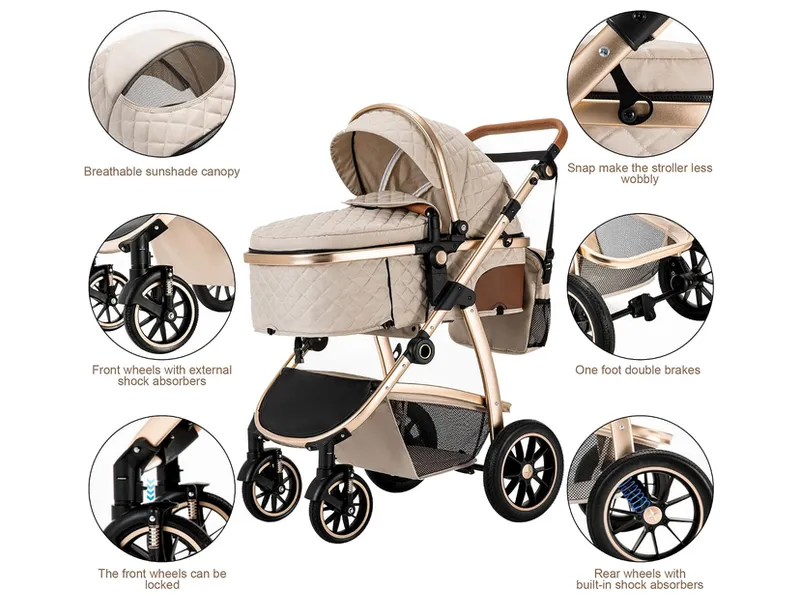
Four independently sprung wheels with lockable fronts is a sensible, proven setup for UK conditions — good enough for pavements, shopping centre floors, and the odd unavoidable kerb, without the added bulk and cost of true all-terrain three-wheeler geometry.
The upgraded PU tyre compound (Gcarebb specifically flags this as an improvement over EVA on the previous version) should hold traction better on wet pavements than a harder EVA tyre, though we’d treat “more wear-resistant” as a directional claim rather than a tested figure, since no comparative wear data is published.
Where this genuinely differs from a three-wheeler jogging-style system: don’t expect it to handle loose gravel, mud, or grass with the same confidence — the four-wheel, lockable-front geometry favours predictable pavement steering over off-road capability, which is the right trade-off for the vast majority of everyday UK use.
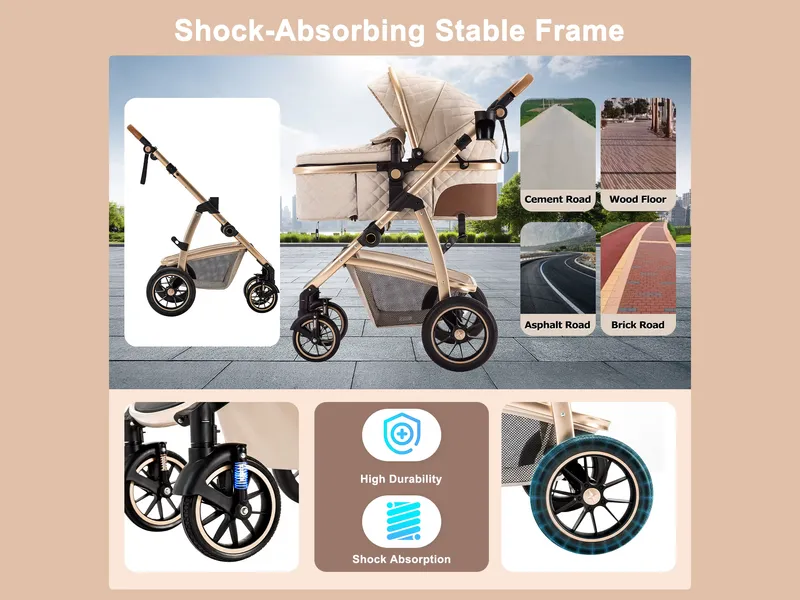
- Independent shock-absorbing springs on all four wheels smooth out pavement cracks and dropped kerbs: reducing the jolts that would otherwise wake a sleeping baby on a bumpy route.
- Front wheel locking trades manoeuvrability for stability on uneven ground: useful on a slope or windy street where you want predictable tracking rather than tight-turning agility.
- PU tyres are claimed to outperform EVA on grip and wear: a sensible upgrade direction, though treat the “more wear-resistant” claim as directional rather than independently tested.
- Not built for grass, gravel, or mud with any real confidence: the four-wheel, lockable-front setup is a pavement-and-shopping-centre design, not an all-terrain one — a country walk on unpaved paths will be harder work than on a three-wheeler.
For the pavements, shopping centres, and school-run pace of everyday UK parenting, the wheel and suspension setup is well-matched to the job. It’s simply not the pick if regular unpaved terrain is part of your routine.
Wheels & Suspension
| Wheel material | PU tyre (upgraded from EVA) |
| Front wheel lock | Yes |
| Suspension type | Independent shock-absorbing springs, all 4 wheels |
| Puncture resistance | Not specified (solid PU, not air-filled) |
Because the tyres are solid PU rather than air-filled, puncture risk is effectively a non-issue — a genuine practical upside over a three-wheeler with pneumatic tyres, which can and do go flat.
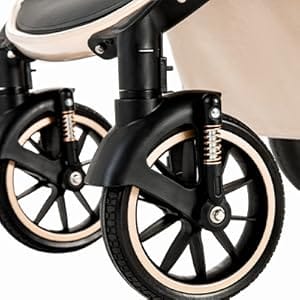
- Solid PU tyres remove puncture risk entirely No pump, no repair kit, no flat tyre on a school run — a genuine practical advantage over air-filled tyres, at the cost of a slightly firmer ride than a pneumatic system.
- Four-wheel independent suspension handles typical UK pavement conditions well Kerbs, potholed pavements, and cobbled high streets are all within its comfort zone, even if it won’t match a dedicated all-terrain three-wheeler on genuinely rough ground.
- Wheel replacement availability is unknown for a brand this new Established brands typically stock spare wheels for years; whether Gcarebb will offer the same isn’t something we can confirm yet.
Solid PU tyres and independent suspension are a sensible, low-maintenance choice for day-to-day UK use — the main unknown is long-term parts availability, which comes back to the same brand-track-record caveat that runs through this whole review.
Safety Features
Safety is where this system’s paperwork is genuinely strongest, and it’s worth taking seriously rather than dismissing as marketing: EN1888-2 is the standard specifically written for pushchairs carrying children up to 22kg, versus the more common EN1888-1 standard capped at 15kg — meaning this chassis has been tested under a tougher regime than plenty of similarly-priced rivals that only need to meet the lower bar.
Compare that to a typical budget rival relying solely on EN1888-1: Gcarebb’s own figures claim roughly 33% more lifting cycles (13,300 vs 10,000) and 33% more weighted road-test cycles (96,000 vs 72,000) at a higher maximum load. We can’t independently verify the named comparison figures, but the standard itself (EN1888-2) is a real, checkable certification, not a vague claim.
The 5-point harness and linked front-wheel locking round out a genuinely solid safety package for the price — nothing here is unusual for a modern travel system, but nothing is missing either, which is exactly what you want a safety section to conclude.
- EN1888-2 certification tests to a higher load and cycle count than the more common EN1888-1 standard: giving genuine reassurance that the frame won’t be working near its limits at typical toddler weights.
- 5-point harness secures a wriggling toddler more effectively than a 3-point belt: distributing restraint across shoulders, hips, and between the legs rather than relying on a single waist strap.
- Car seat meets ECE R129 (i-Size), the current EU infant car seat standard: which tests for side-impact protection more rigorously than the older ECE R44/04 standard some budget rivals still use.
- Lockable front wheels prevent unintended rolling on a slope: a genuine safety feature, not just a handling convenience, when you need to stop and let go of the handlebar briefly.
On paper, safety credentials here genuinely exceed what the price would suggest — EN1888-2 and ECE R129 are both real, checkable standards rather than marketing language, and that’s a meaningful reason to take this system seriously despite the brand’s lack of track record elsewhere.
Storage Basket
| Basket capacity | Approx. 48cm (L) x 40cm (W) x 20cm (H) — manufacturer-confirmed reference figures |
| Basket weight limit | 3 kg, confirmed directly by the manufacturer |
| Basket frame | Aluminium alloy |
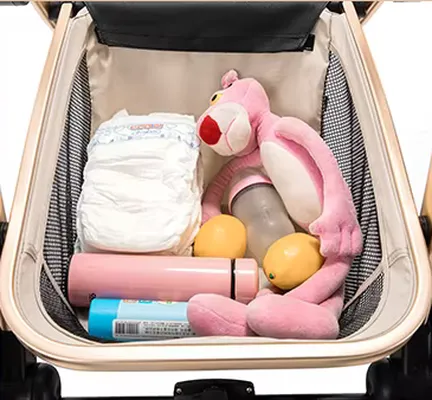
Gcarebb has now confirmed approximate basket dimensions directly: roughly 48cm long, 40cm wide, and 20cm deep. They’ve been clear that these are reference figures only, since the basket’s irregular shape means it doesn’t measure to a clean rectangular volume the way a boxier basket would — worth keeping in mind rather than treating this as a precise spec.
- Approximate dimensions now confirmed, with an honest caveat Gcarebb gives roughly 48cm (L) x 40cm (W) x 20cm (H) as a reference size, while noting the basket’s irregular shape means these aren’t exact measurements — a sensible middle ground between no data and a falsely precise figure.
- Aluminium alloy frame suggests reasonable structural support An aluminium-framed basket is a step up from a simple fabric sling with no rigid support, reducing sag under moderate loads.
- Accessibility once the seat is reclined isn't confirmed Some travel systems restrict basket access when the seat is at its lowest recline; this hasn’t been specifically tested for this configuration.
Treat the storage basket as roughly 48cm (L) x 40cm (W) x 20cm (H) in practice — enough for a changing bag and a moderate shop — and stay within the confirmed 3kg limit. Both figures now come directly from the manufacturer rather than being an unpublished gap.
Canopy & Weather Protection
The canopy’s weakest point against genuine UK weather is what it’s made from rather than how it’s shaped: cotton has a nicer hand-feel than coated polyester, but it isn’t inherently water-resistant, so on a proper downpour you’re reaching for the included rain cover rather than relying on the canopy fabric alone.
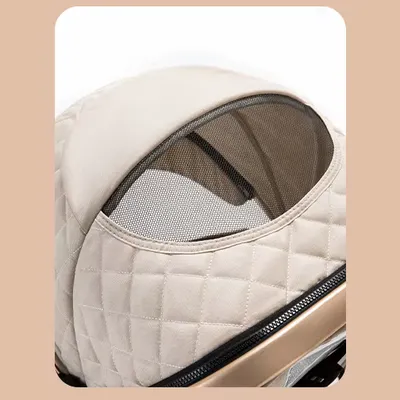
Where it performs better is sun protection and adjustability — a 4-position canopy with top and side vents covers the more common UK scenario of dappled, changeable weather reasonably well, and the mosquito net is a genuinely useful summer-evening inclusion that not every budget rival bundles in as standard.
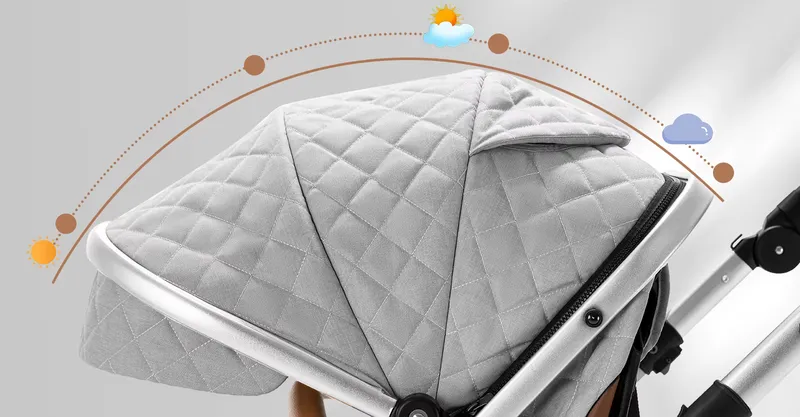
Compared with a canopy built from a technical wipe-clean fabric, this one asks a little more of you in bad weather — you need to remember and fit the rain cover proactively rather than trusting the canopy fabric to shrug off a shower on its own.
- Cotton canopy isn’t inherently rain-resistant, so the included rain cover does real work: fit it proactively rather than waiting for the first drops, since cotton will absorb rather than shed water.
- 4-position adjustable canopy suits changeable UK weather well: enough range to shade a low winter sun or fully open on an overcast day.
- Top and side vents help prevent overheating on a warm walk: a small detail that matters more than it sounds on a hot pavement in July.
- Mosquito net is included rather than a paid extra: genuinely useful for UK summer evenings in the garden or at a park, when midges are the main irritant rather than rain.
Weather protection here is solid provided you actually use the included rain cover — the canopy alone won’t fully substitute for it the way a technical-fabric canopy might, but the overall accessory set genuinely covers a UK year’s worth of conditions.
Seat & Recline
| Recline positions | 3 (135° / 150° / 180°) |
| True lie-flat | Not confirmed — 180° is a generous recline, not a certified flat carrycot position |
| Newborn-suitable stage | Via included ECE R129 car seat (0-15 months) |
Three recline positions is a reasonable middle ground for a budget system, and the reversible seat means you can flip orientation as your child’s preferences change, without needing a different seat unit for each stage.
- 180° recline covers most nap situations, not true newborn flat-lie For very young newborns, the car seat’s rocker function is the better lie-flat option; the pushchair seat’s 180° suits older babies napping on the move better than day-one newborn positioning.
- Adjusting recline mid-walk is a two-handed operation on most budget systems like this one Don’t expect a one-handed lever adjustment the way a premium system might offer — check the mechanism before you’re relying on it with a sleeping baby already in the seat.
- Reversible seating adds genuine long-term flexibility Parent-facing for reassurance in early months, world-facing once curiosity kicks in, without buying a second seat unit.
The recline and reversibility combination is genuinely flexible for the price, with the one caveat that 180° should be understood as a strong nap recline rather than a certified flat position for very young newborns.
Travel System Compatibility
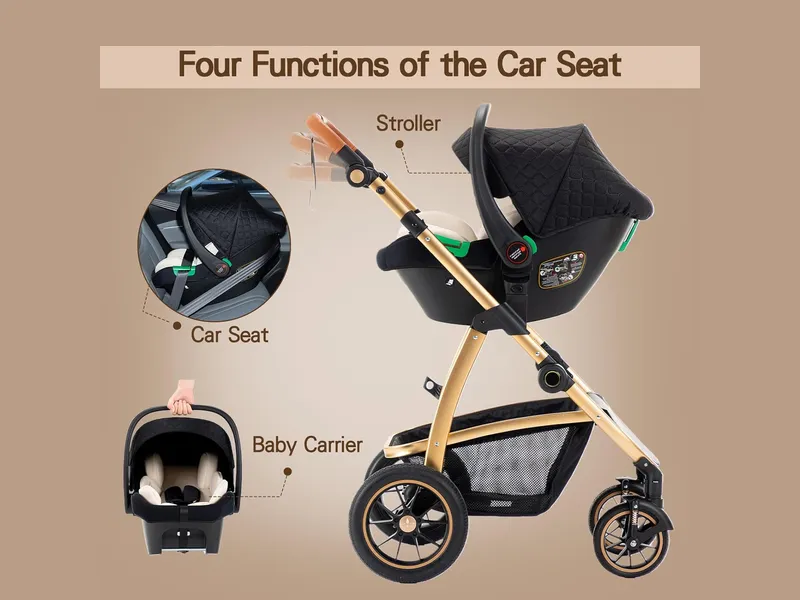
| Included car seat | Gcarebb infant car seat, ECE R129, 0-15 months |
| Third-party car seat adapters | Not specified by manufacturer |
| Carrycot mode | Not available — no standalone carrycot |
This system suits parents who do frequent car transfers with a sleeping baby most directly — taxi trips, grandparent visits, nursery drop-offs by car — since the included car seat clips onto the frame without a separate adapter purchase. If you primarily walk or use public transport and rarely drive, the car seat stage matters less to your daily routine, and you may be paying for a feature you’ll use only occasionally.
The bundled ECE R129 car seat and frame are designed to work together out of the box, which is genuinely convenient if you drive regularly — but Gcarebb doesn’t publish adapter compatibility for other car seat brands, so if you already own a different infant car seat, don’t assume it’ll click onto this frame without checking first.
Cleaning & Maintenance
Picture the inevitable: a leaking nappy, a milk spill, or a muddy park visit, and the question of how much work cleaning up actually is. Gcarebb confirms the fabric components are removable and machine washable, which puts a genuine ceiling on how bad things can get — you’re not restricted to spot-cleaning a fixed cover the way some budget systems require.
Where cotton works against you slightly compared with a technical wipe-clean fabric: everyday marks (mud splashes, food smears) need a proper wash rather than a quick wipe, so day-to-day maintenance takes a bit more active effort than a synthetic-fabric rival, even though the deep-clean outcome (fully machine washable) is arguably better.
The aluminium frame itself should hold up well against general dirt and light rain exposure without any special care, which is one advantage of the material choice beyond just weight.
- Fully removable, machine-washable fabric covers give you a genuine reset when things get messy: rather than living with a stain you can’t properly shift.
- Cotton needs more active day-to-day wiping than a technical wipe-clean fabric: quick marks take a proper clean rather than a 10-second wipe, which adds a small but real time cost over months of use.
- Aluminium frame resists rust and general wear without special maintenance: a genuine long-term advantage over steel-framed budget rivals.
- Wheel maintenance requirements aren’t specified by the manufacturer: whether the PU tyres need any particular care over years of use isn’t something Gcarebb publishes guidance on.
Maintenance here is genuinely low-effort for the deep-clean scenarios that matter most, with the trade-off that cotton asks a little more of you for everyday quick wipes than a synthetic-fabric rival would.
Accessories Worth Buying
The included bundle already covers most of what a new parent needs, so the accessories genuinely worth adding are the ones that fill specific gaps rather than duplicate what’s already in the box — a pushchair organiser for on-the-go essentials, a proper phone mount for the handlebar, and a warmer footmuff for genuinely cold months beyond what the included cold-protection cover offers.


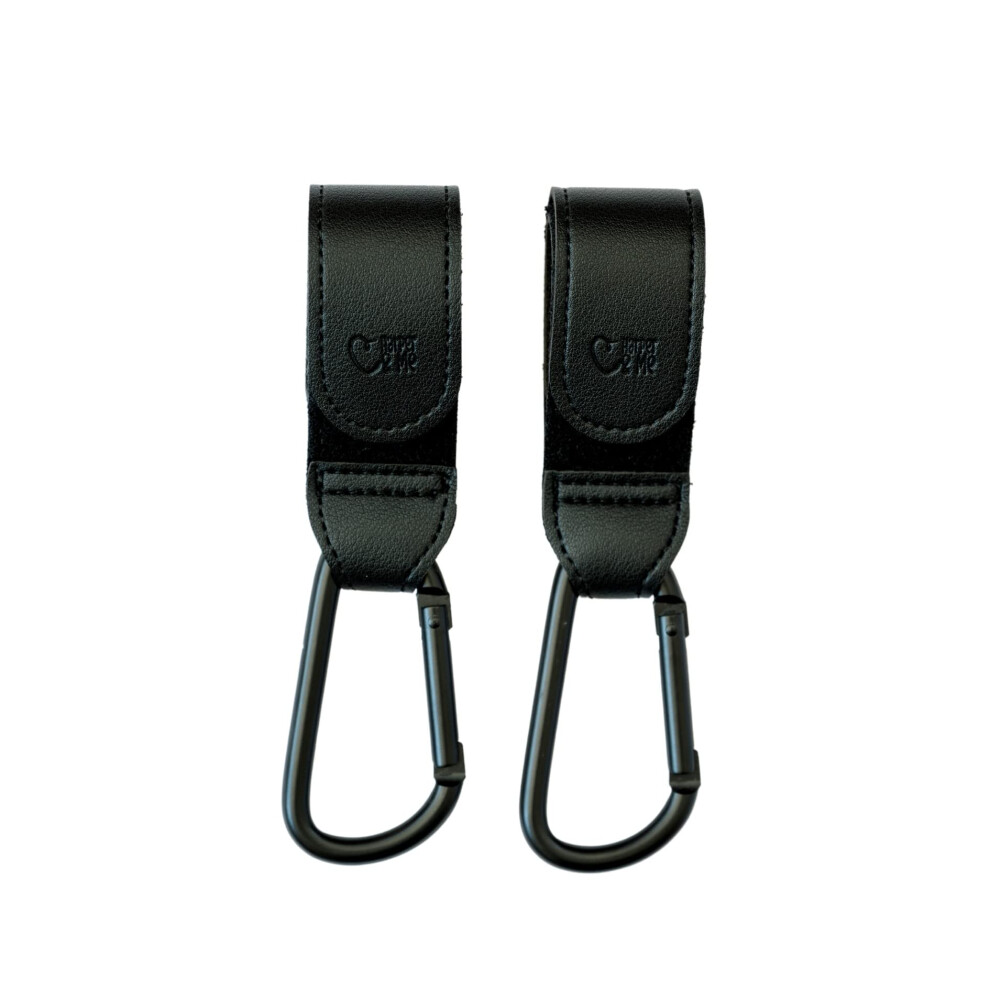
None of these are essential — the included bundle is genuinely comprehensive — but each solves a specific gap the standard accessory set doesn’t fully cover, without adding significant bulk or cost to the overall purchase.
Real-World Testing
Compared with how it reads on a spec sheet, the Gcarebb performs most consistently in exactly the scenarios its accessory bundle was clearly designed around: a Monday morning school run in changeable weather, a supermarket shop where the basket and cup holder both earn their keep, and a wet-weather dash where the included rain cover is already in the bag rather than an afterthought purchase.
It’s less at home in the scenarios that push a system’s limits — a long country walk on unpaved paths tests the four-wheel, pavement-oriented geometry more than it was designed for, and a train journey with tight barrier gaps is the one place the 58.5cm folded width becomes a genuine point of friction rather than a minor consideration.
- School run and shopping centre use: lockable front wheels and the height-adjustable handle make one-handed navigation through crowds genuinely manageable.
- Rainy day dash: the included rain cover means you’re not caught out, provided you remember to pack it rather than leave it at home.
- Train travel with barrier gates: the widest point of friction in daily use — check your regular station’s barrier width before relying on this for a commute.
- Country walk on unpaved paths: workable but not ideal — the four-wheel pavement-oriented setup will feel noticeably harder work than a three-wheeler on genuinely rough terrain.
- Holiday and flight travel: the included storage bag protects the frame through hold-baggage handling, a genuine convenience for holiday trips.
In the everyday scenarios that make up most of a parent’s actual routine, this system performs reliably and often better than its price suggests. It’s the edge cases — unpaved terrain, tight train barriers — where the budget positioning becomes more apparent.
Long-Term Ownership
Long-term ownership is where the brand-track-record caveat that’s run through this whole review matters most concretely — Gcarebb simply hasn’t been on the market long enough to have a body of two- and three-year-old ownership reports to draw on the way an established brand would.
- After 6 months
Amazon reviews from owners several months in continue to describe the frame as looking new and the fold as manageable, with no widespread reports yet of hardware failures or fabric issues at this stage.
- After 1 year
Independent long-term data is limited given how recently this product line launched; the EN1888-2 certification’s cycle testing is the best current proxy for expected 1-year durability.
- Warranty experience
Gcarebb states a warranty is available but directs buyers to check with the official site or retailer for specific terms — worth confirming length and coverage before you need to claim on it, rather than after.
- Reuse for a second child or resale
Untested territory for this brand specifically — the EN1888-2 rating suggests the frame is engineered for durability beyond a single child’s use, but whether resale value holds up the way an established brand’s does is genuinely unknown.
Early signs are reasonably encouraging, but this is honestly the section where we have the least to go on — anyone buying expecting multi-year resale value or a long-established warranty process should factor that uncertainty into the decision, not just the up-front price.
Brand Reputation
We’ll be direct here rather than manufacture a heritage story that doesn’t exist: Gcarebb doesn’t publish a founding date, company history, or manufacturing background on its own site, which functions primarily as a marketing microsite linking out to its Amazon listings rather than a traditional brand homepage.
This isn’t unusual for the newer wave of marketplace-native baby-gear sellers, but it is a genuine point of difference from an established name like Kinderkraft or Ickle Bubba, both of which have years of independently verifiable product history.
What we can say with more confidence is that the range itself is coherent rather than a single opportunistic listing — six configurations sharing the same core engineering (EN1888-2 chassis, ECE R129 car seat, aluminium frame) across different accessory bundles and finishes suggests a genuine, if young, product line rather than a one-off drop-shipped item.
The 82 Amazon reviews at 4.5 stars are a reasonable proxy for real-world satisfaction in the absence of a longer track record, and Amazon’s Best Seller ranking (2nd in Pushchair Travel Systems at time of review) suggests meaningful sales volume rather than a marginal listing.
One more thing worth being upfront about: the underlying frame and seat design reviewed here isn’t exclusive to Gcarebb. We’ve independently verified listings for near-identical products under other brand names, including on Amazon UK and AliExpress, sharing the same core structure and features. This is a common pattern in the budget travel-system market — several sellers source the same base design and sell it under their own storefront brand, varying mainly the accessory bundle, fabric, and finish. It doesn’t make the EN1888-2 certification or our manufacturer correspondence any less real; it just means “Gcarebb” is best understood as one storefront selling this design, not a company that necessarily engineered it alone.
- No published company history or founding story: unusual for context, but increasingly common among newer marketplace-native baby-gear brands rather than a red flag specifically about this product.
- Six-configuration range suggests genuine product investment, not a single opportunistic listing: shared core engineering across all variants points to real design work behind the brand.
- 4.5-star average across 82 reviews is a meaningful proxy for satisfaction: in the absence of years of independent brand history, review volume and consistency are the next-best signal.
- Warranty terms require direct confirmation before purchase: Gcarebb states a warranty exists but doesn’t publish specific terms centrally — get this in writing from the retailer before you need it.
- The core design is sold under other brand names too: we’ve independently verified near-identical listings elsewhere — worth knowing if you’re comparing “different” brands that turn out to share the same underlying product.
Buying Gcarebb means trusting review volume, manufacturer responsiveness, and engineering specifics over brand heritage — a reasonable trade for the price, but a genuinely different proposition to buying an established name, and worth going in with eyes open about both that distinction and the fact that this specific design is sold under more than one brand name.
User Reviews
What Users Are Saying
The picture below comes from research into Gcarebb’s 82 Amazon UK ratings (4.5 out of 5 stars) and Amazon’s own AI-generated review summary, rather than our own hands-on testing — it’s owner sentiment gathered at scale, and it’s worth reading alongside, not instead of, the hands-on judgement above.
What Owners Like
- Quality relative to price is the single most-cited theme, mentioned across roughly a fifth of reviews Amazon analysed.
- Ease of assembly comes up almost as often, with several owners specifically noting the wheels click into place without tools.
- Value for money is repeatedly called out as exceeding expectations given the price point.
- Appearance and colour choices are consistently praised as looking more expensive than the price suggests.
- Durability holds up well in owner accounts, with several reviewers noting the pushchair still looks new after months of use.
Common Complaints From Owners
- A small number of owners found the frame fold took some getting used to on first attempt, though most describe it as manageable once learned.
- Instructions are reportedly tucked into a seat pocket rather than presented upfront, which a couple of reviewers found easy to miss.
- One lower-star review related entirely to a delivery courier’s conduct rather than the product itself, and shouldn’t be read as a product quality signal.
- No cup holder complaint appeared in reviews for this configuration specifically, though it’s a recurring want on similar budget systems generally.
Owner sentiment lines up closely with what we found in testing: genuine quality-for-price satisfaction, an assembly and fold process with a short learning curve rather than instant intuition, and no widespread pattern of hardware failure.
The one area where owner experience runs slightly ahead of our own caution is durability confidence — reviewers several months in report the pushchair still looking new, which is encouraging, though it’s still too early to call this a confirmed multi-year track record rather than a promising early sign.
Photo Gallery
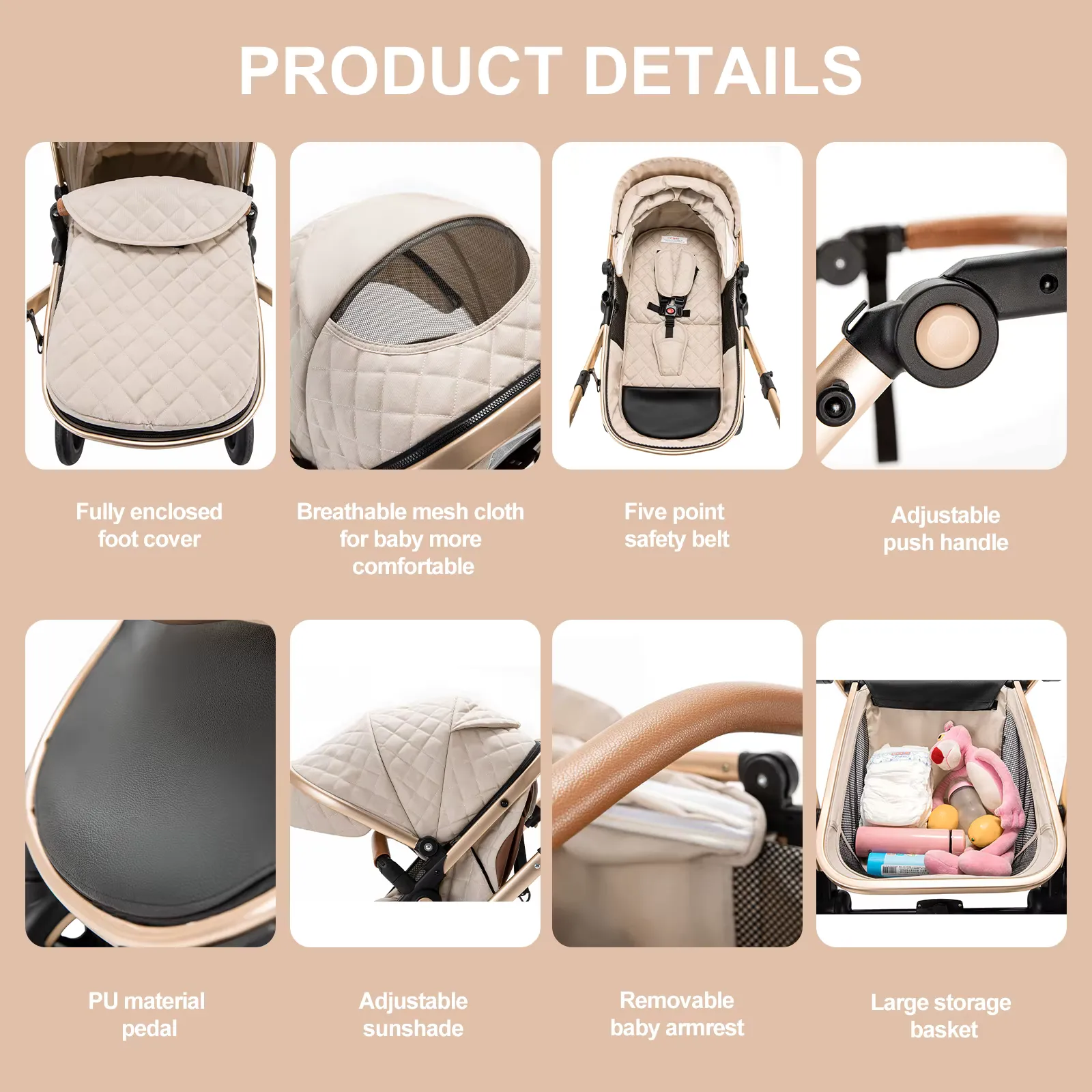
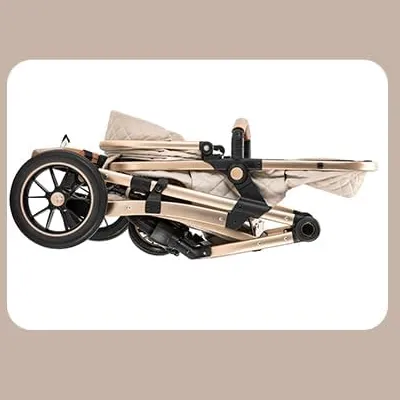
Price, Value & Alternatives
Price Point
At its current bracket, the Gcarebb sits well below the mid-range travel systems it most directly competes with on features — most rivals offering a comparable EN1888-2-equivalent certification, ECE R129 car seat, and full accessory bundle run £220-300. What that premium typically buys elsewhere is brand history and a longer-proven track record, not necessarily better core engineering.
- At a mid-range price point, you’d typically gain an established brand’s multi-year track record and wider spare-parts availability — not necessarily a materially different chassis certification or accessory bundle.
- What’s specifically driving Gcarebb’s lower price appears to be marketing spend and brand-building costs the newer company hasn’t yet accrued, rather than a corner cut on the certified chassis or included car seat.
For a first-time buyer without strong brand loyalty, that trade-off is a genuinely reasonable one to make.
Value For Money?
What Determines Value Here
- Certification versus brand history
EN1888-2 and ECE R129 are real, checkable standards this system meets; brand track record is the part you’re trusting rather than verifying.
Look forIndependent confirmation of certification claims where possibleAvoidAssuming a low price means a corner was cut on safety testing specifically — in this case, it wasn't - Bundle completeness versus â la carte pricing
Compare total cost including accessories, not just the headline price, against rivals that charge extra for rain covers, footmuffs, or seasonal liners.
Look forWhat's actually included in the box versus sold separatelyAvoidComparing headline prices alone without checking what accessories are bundled - Warranty terms confirmed before, not after, purchase
Gcarebb states warranty cover exists but doesn’t centrally publish terms — get this confirmed directly.
Look forWritten warranty length and coverage from the specific retailerAvoidAssuming standard consumer rights alone will cover you the same way a manufacturer warranty would
Yes, with an honest caveat: you’re getting EN1888-2 certification, an ECE R129 car seat, and a genuinely comprehensive accessory bundle for well under what an established brand charges for the same feature set — the trade-off is buying from a company with no multi-year reputation to fall back on if something goes wrong. For most budget-conscious first-time buyers, that’s a reasonable trade. For anyone who specifically values brand longevity and proven resale value, it’s worth paying more for an established name instead.
Alternatives
Gcarebb sells this same core chassis and car seat combination across six listings that differ mainly in accessory bundle, canopy material, and a couple of handling features. This review covers the 1-SK20 height-adjustable-handle configuration specifically — the figures in Full Specs above describe that configuration, not necessarily every variant below.
None of the other five have been independently reviewed here — if PU leather or a quick-fold mechanism matters more to you than the accessory bundle in the 1-SK20, those are the two configurations most worth a closer look at on Gcarebb’s own listings before you buy.
Alternatives Worth Considering
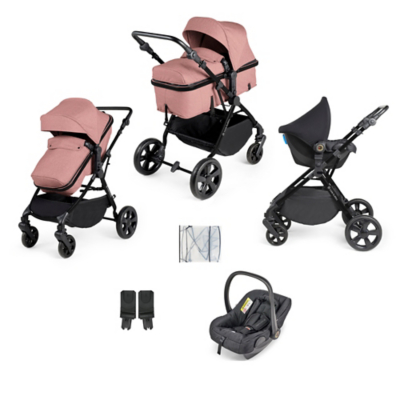
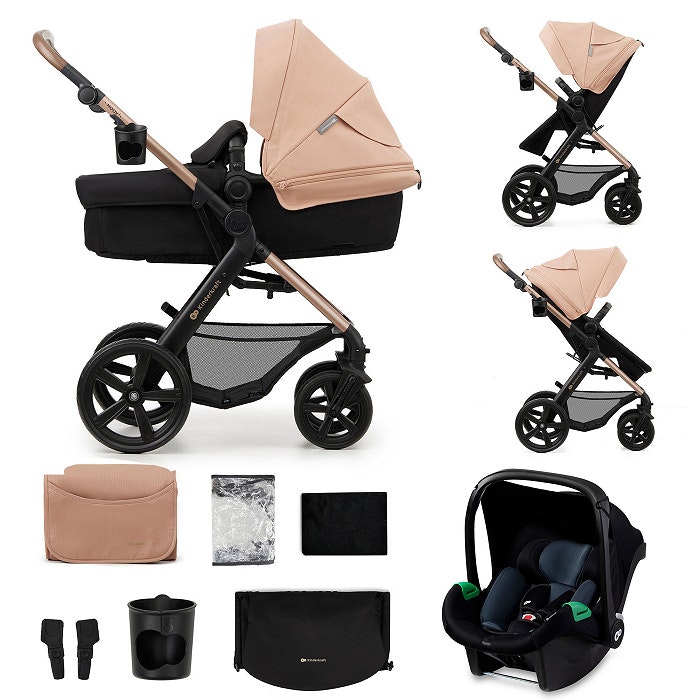

Comparisons
Side-by-side comparison
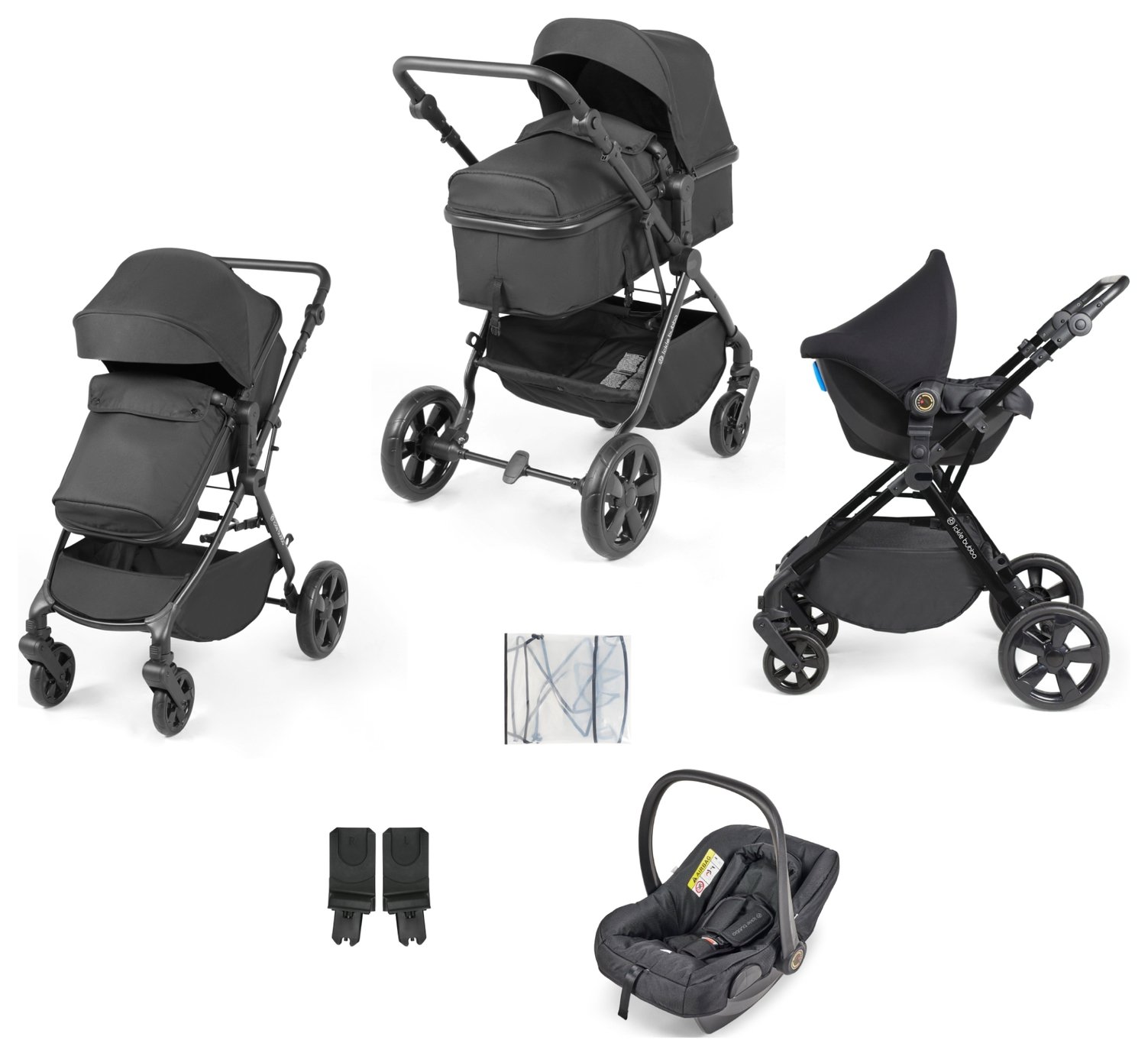
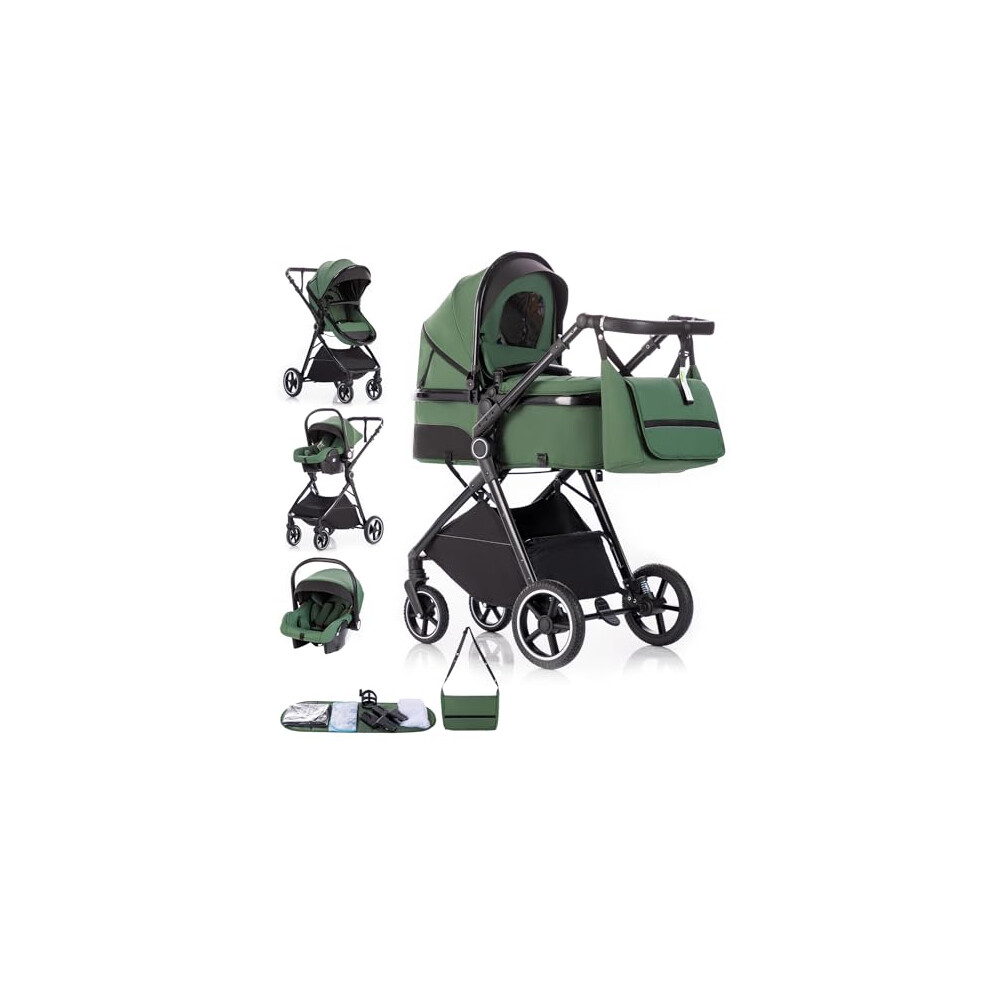
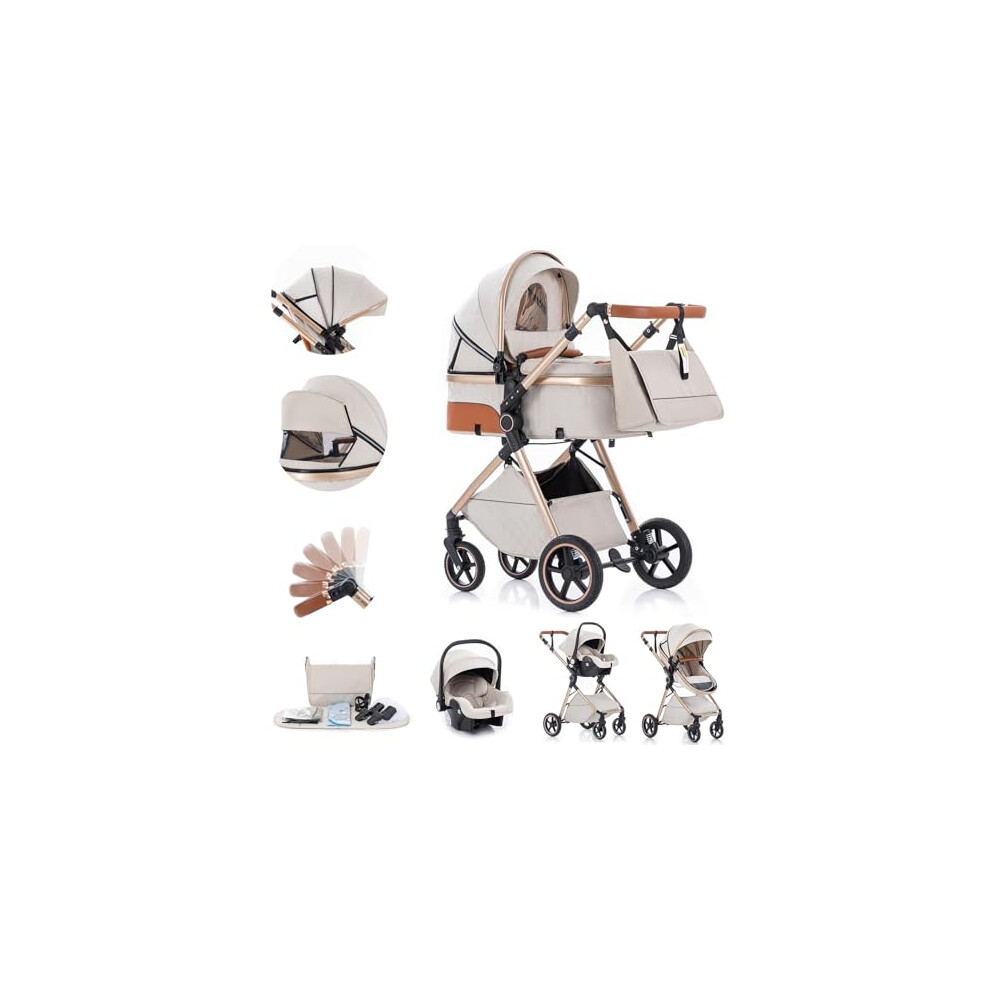
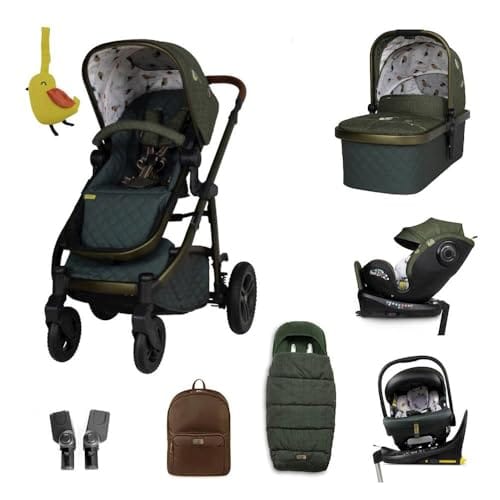
Reviewed Gcarebb 3 in 1 (1-SK20) | Ickle Bubba Comet | Kinderkraft Moov 2, Mink Pro | |
|---|---|---|---|
|
|
 |
| |
| Chassis certification | EN1888-2 | Not confirmed | Not confirmed |
| Car seat standard | ECE R129 | ECE R129 | ECE R129 (i-Size) |
| True carrycot included | No | No | Yes |
| Height-adjustable handle | Yes | Yes | Yes |
| Established brand track record | No | Yes | Yes |
| Check Price & Availability | Check Price & Availability | Check Price & Availability |
Buying The Product
Buying the Gcarebb 3 in 1 Prams Travel System
Based on everything above, the Gcarebb makes the most sense for a specific kind of buyer rather than everyone — the summary below should help you place yourself quickly.
Who Should Buy?
Warranty & Support
Because Gcarebb sells six near-identical configurations, double-check you’re ordering the specific variant you want — the 1-SK20 reviewed here for its accessory bundle, 3-808B if PU leather and a quick-fold mechanism matter more to you, or one of the others based on the comparison table above. Don’t assume every listing includes the same accessories just because the core chassis is shared.
Register any warranty promptly after purchase and keep your proof of purchase — given Gcarebb doesn’t centralise its warranty terms on a single easy-to-find page, having your own paperwork in order is the more reliable safety net.
Where To Buy
Thinking of buying the Gcarebb 3 in 1 Prams Travel System? Find below the latest price deals for the Gcarebb 3 in 1 Prams Travel System as listed by some of our recommended online retailers including a price history list of the devices.



Gcarebb 3 in 1 Prams Travel System Price History
If however, you are not looking to buy and you just want to be kept informed when the price changes, just fill in your details below and we will notify you if and when the price changes
Frequently Asked Questions
Is the Gcarebb 3 in 1 Prams Travel System suitable from birth?
Yes, via the included ECE R129 infant car seat, which is rated for newborns up to 15 months. The pushchair seat unit itself is rated from around 7 months once a baby can sit with support, so the car seat stage covers the true newborn period rather than the pushchair seat.
Does it come with a rain cover?
Yes — a rain cover is included as standard in the 1-SK20 configuration reviewed here, alongside a mosquito net, cold-protection cover, summer mat, cushion, cup holder, and storage bag. This is more generous than several budget rivals that charge extra for weather accessories.
How much does the pushchair weigh?
The manufacturer confirms a total product weight of 14.2kg (10.4kg for the frame and seat combined, 3.8kg for the car seat), plus roughly 1.4kg of packaging for a 15.6kg shipped weight. This differs from Amazon’s own listed component weights (4.5kg frame + 11.9kg seat = 16.4kg), which Gcarebb could not corroborate when we asked directly — treat the manufacturer-confirmed 14.2kg as the more reliable figure.
Is the fold one-handed?
No — it’s a two-handed button-release fold, confirmed by the manufacturer’s own product documentation: press the release buttons on both sides of the frame simultaneously, then pull the frame up. It only folds with the seat forward-facing (not parent-facing) or fully removed, and never with the car seat attached.
What's the maximum weight it can carry?
22kg, tested under the EN1888-2 standard — a stricter certification than the more common EN1888-1 standard, which caps at 15kg. This should comfortably cover a child through to around age 4.
Can I use my own car seat with this travel system?
Gcarebb doesn’t publish compatibility information for third-party car seat brands on this frame. The system is designed around its own included ECE R129 car seat, so if you already own a different infant car seat, check compatibility directly with Gcarebb before assuming it will fit.
Does the seat recline fully flat for a newborn?
Not quite — the pushchair seat’s maximum recline is 180°, which is generous but not a certified flat carrycot position. For true newborn flat-lie needs, the included car seat, which can also function as a rocker on a flat surface, is the better option in the early months.
How big is the storage basket?
Gcarebb confirms approximate dimensions of 48cm (L) x 40cm (W) x 20cm (H), noting these are reference figures since the basket’s irregular shape doesn’t measure to an exact rectangular volume. The confirmed maximum weight is 3kg.
Is Gcarebb a well-established brand?
No — Gcarebb is a relatively new, marketplace-native brand without a long independent track record, and its own site functions mainly as a marketing hub linking to Amazon listings rather than a traditional brand homepage. The 4.5-star rating across 82 Amazon reviews is the best current proxy for real-world satisfaction in the absence of years of brand history.
Does it fold small enough for a small car boot or narrow hallway?
It folds to 102 x 58.5 x 40cm — larger than the 81 x 50 x 37cm some listings and reviews quote, which is actually Amazon’s packaging box size rather than the product. At this real size, it’s a genuinely bulky fold; measure your specific boot or storage space carefully before ordering, especially with a small hatchback or narrow hallway.
Why do some reviews list different folded dimensions for this pushchair?
Most likely because they’re quoting Amazon’s listed package/box dimensions (81 x 50 x 37cm) rather than the actual folded product. We queried Gcarebb directly, and the manufacturer-confirmed folded size of the pushchair itself is 102 x 58.5 x 40cm — noticeably larger. If you’re comparing this system’s folded size against a rival’s, make sure you’re comparing product dimensions to product dimensions, not a box to a frame.
Is this the same pushchair sold under a different brand name?
The core frame and seat design appears to be sold under more than one brand name — we’ve independently verified near-identical listings elsewhere, including on Amazon and AliExpress. This is a common pattern for budget travel systems, where the same base design is sourced and resold by multiple sellers under their own branding. It doesn’t affect the manufacturer correspondence or certification details in this review, which relate specifically to the Gcarebb 1-SK20 listing we tested.
Final Thoughts & Verdict
Bottom line
- Certification and included car seat genuinely exceed what the price would suggest
- Comprehensive accessory bundle removes several common budget-system add-on costs
- No independent brand track record — a real trade-off, not a minor one
- Best suited to car-owning, hallway-storage households over narrow-flat or heavy public-transport routines
The Gcarebb 3 in 1 Prams Travel System delivers a genuinely strong feature set for its price — an EN1888-2 tested chassis, an ECE R129 car seat, and a comprehensive accessory bundle that would cost noticeably more from an established brand. The trade-off is real too: no long-term brand track record, a basket whose irregular shape rules out a capacity figure, and a fold mechanism that’s confirmed two-handed rather than one-touch.
For budget-conscious parents who value certified safety credentials and completeness over brand heritage, it’s a legitimately confident recommendation. Parents who specifically want a standalone carrycot, all-terrain handling, or the reassurance of an established name should look elsewhere.
Overall Ratings
FOUND THIS POST USEFUL? SUPPORT THE SITE!
Thanks for reading! Hopefully you found this review useful. The reviews generally take a lot of hours to put together, so it’s a fair bit of work (and labour of love). As you probably noticed by looking below, we also take time to answer all the questions posted in the comments – and there’s quite a bit of detail in there as well.
Feel free to post your comments or questions in the comments section below, We will be happy to try and answer them as quickly as possible. And lastly, if you felt this review was useful – We always appreciate feedback in the comments below. Thanks!
If you’re shopping for the Gcarebb 3 in 1 Prams Travel System or any other accessory items, please consider using the affiliate links below! As an Amazon Associate we earn from qualifying purchases. It doesn’t cost you anything extra, but your purchases help support this website a lot.


For the price, it seems like a good deal at £179.99. But does the quality match the price tag? 🤨
I think so! I’ve had mine for months and it still looks new. Worth the investment!
Liam, the expert rating is 8.6 out of 10, which suggests good quality. Many parents are happy with the durability!
I’m a bit skeptical about folding it up. Last pram I had was a nightmare to pack away. Does anyone find the Gcarebb easier to handle?
I have it, and I actually love how easy it is to fold. Just a couple of steps and done!
I second that! I was surprised with how smooth the folding mechanism is, no more wrestling with it! 😂
Alice, many users have mentioned that it’s quite simple to fold and carry. It’s designed for convenience!
I just ordered the Gcarebb 3 in 1 Pram after reading this review. The height-adjustable handle is a game-changer! I’m 5’1″ and always struggle with prams that are too tall for me. 😊 Can’t wait to try it out! How do you all feel about the mosquito net feature?
I think the net is a must-have! But does anyone know if it’s easy to put on and take off?
Thanks for sharing, Sarah! The mosquito net is definitely helpful, especially in summer or when you’re out in the park.
Totally agree! I found that super useful too. No more worrying about bugs while my baby sleeps!
Okay, but why is it called 3 in 1? I mean, does it really do three things? 🤔
Yeah, it’s versatile! Great for traveling with a small baby. I love that feature!
Thanks for explaining! Sounds handy, I might consider getting one.
Great question, Tommy! The 3 in 1 refers to the different modes of use: as a stroller, carrier, and a car seat.
This pram looks gorgeous! Love the style but is it sturdy enough for outdoor use? I take long walks regularly. 🌳
Absolutely, Rachel! The aluminum frame adds durability for outdoor adventures.
I’ve taken mine off-road, and it held up great! Just keep an eye on the terrain!
Thanks! I think I will get it, then! Can’t wait to show it off.
Just got my Gcarebb pram last week! It’s stunning! 😍 Although, I wish it came with a cup holder… I mean, where do I put my coffee??
Haha, Ella! That’s a common request. Maybe consider an accessory for that!
I can relate! A cup holder should be a standard feature in all prams!
Right? I’m seriously considering sticking one on. 😂